A professional drywall layout is one of the most overlooked yet critical steps in creating durable, long-lasting interior walls. While many people focus on finishing, painting, or texture, the way drywall sheets are planned, aligned, and installed plays a major role in preventing cracks, sagging, and recurring damage. Choosing a professional drywall layout from the start significantly reduces future repairs and maintenance costs.
Poor drywall layout often leads to weak seams, uneven stress distribution, and premature surface failures. In contrast, a professional drywall layout considers structural framing, load distribution, and environmental factors. This strategic approach ensures walls remain stable, visually smooth, and resistant to common issues that typically require repairs over time.
What Is a Professional Drywall Layout and Why Does It Matter
A professional drywall layout refers to the strategic planning and placement of drywall sheets before installation begins. Professionals measure wall dimensions, stud spacing, and stress points to minimize seams and material weaknesses. This careful planning directly reduces future repairs by preventing structural and cosmetic failures.
Unlike random or rushed installations, a professional drywall layout ensures sheets are aligned correctly with framing members. This reduces movement, cracking, and joint separation over time. Proper layout also allows drywall to expand and contract naturally without damaging finishes.
How Professional Drywall Layout Reduces Structural Stress
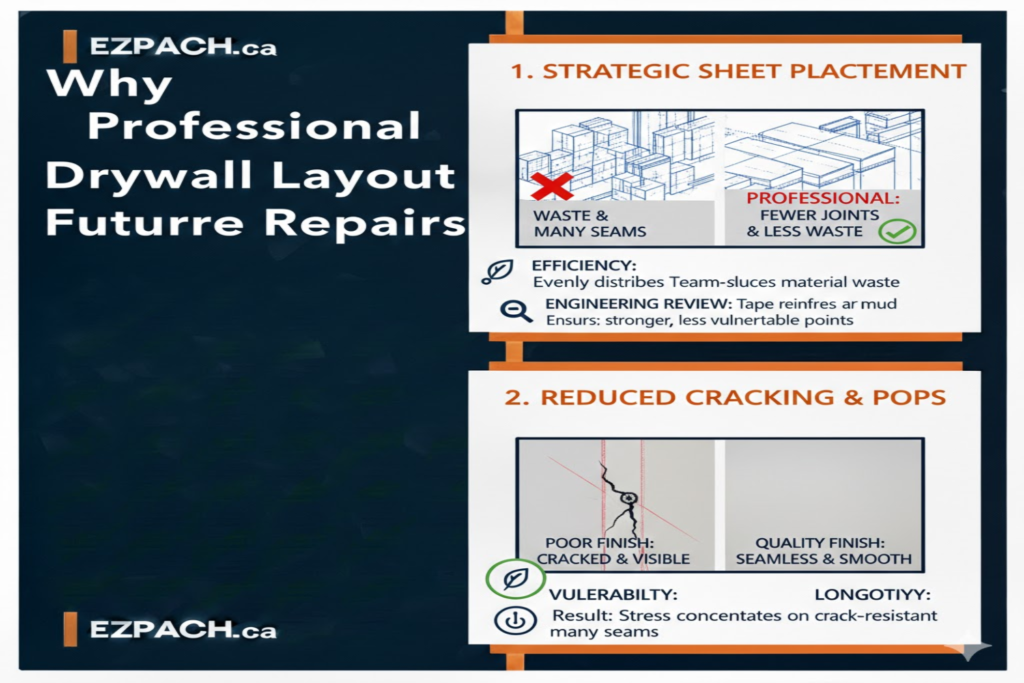
Professional drywall layout reduces structural stress by distributing weight evenly across framing members. When drywall sheets are installed without proper planning, stress concentrates at weak seams and corners. Over time, this leads to cracks and recurring repair needs.
A professional drywall layout aligns sheet edges with studs and ceiling joists, preventing unsupported joints. This alignment minimizes flexing caused by temperature changes and building movement. Reduced stress equals fewer cracks and longer-lasting walls.
Proper Stud Alignment
Professionals align drywall seams directly over studs for maximum support. This prevents joint movement and reduces nail pops. Proper stud alignment strengthens the entire wall system.
Load Distribution
Drywall sheets are positioned to distribute weight evenly. This reduces pressure on individual joints and fasteners. Balanced load distribution extends drywall lifespan.
Structural Movement Accommodation
Buildings naturally shift over time. A professional drywall layout allows controlled movement. This flexibility prevents cracking and separation.
Minimizing Seams Through Professional Drywall Layout
One major advantage of professional drywall layout is seam minimization. Every seam is a potential failure point if not handled correctly. Fewer seams mean fewer chances for cracks, tape failure, or visible lines.
Professionals plan layouts using larger sheets where possible and stagger seams strategically. This reduces seam density and avoids weak vertical alignment lines. As a result, walls remain smoother and more durable long-term.
Why Joint Placement Matters in Reducing Future Repairs
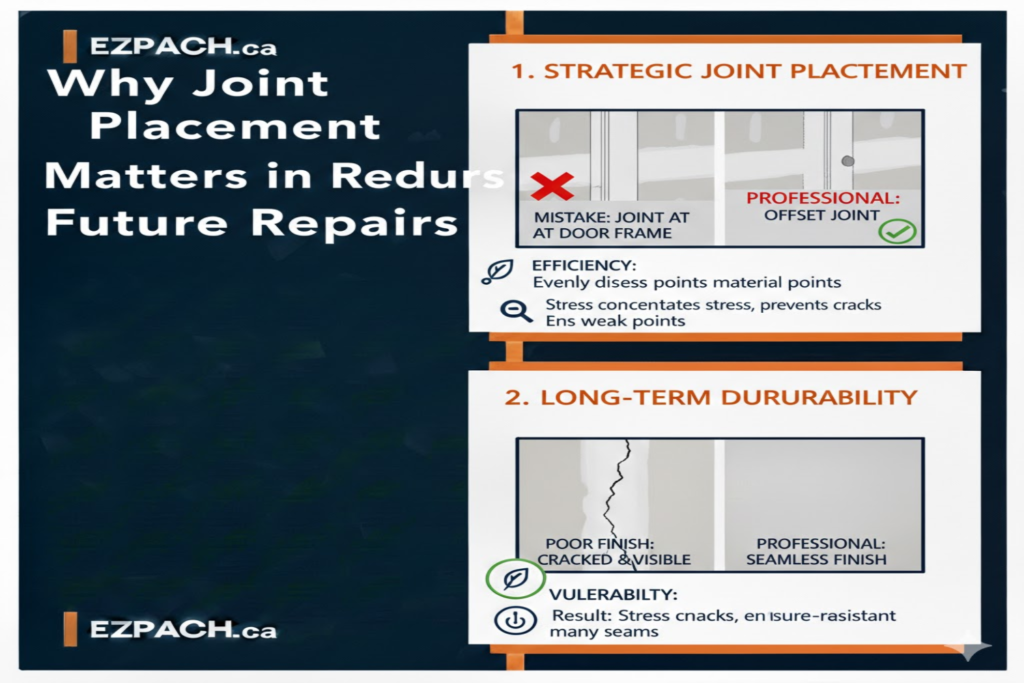
Joint placement plays a critical role in drywall performance. Poor joint placement near doors, windows, or stress points increases the likelihood of cracking. A professional drywall layout avoids placing joints where movement and vibration are highest.
Professionals position joints away from corners and openings whenever possible. This strategic placement significantly reduces the stress placed on joint compound and tape. Proper joint positioning is a key reason professional drywall layout reduces future repairs.
Avoiding Door and Window Corners
Corners experience high stress during movement. Professionals avoid placing joints near these areas. This reduces cracking around openings.
Staggered Joint Patterns
Staggering prevents continuous stress lines. It strengthens the wall surface overall. This method reduces visible seam failures.
Horizontal vs Vertical Placement
Horizontal drywall placement often improves strength. Professionals choose orientation based on wall height and load. Correct orientation enhances durability.
Professional Fastening Techniques and Their Role
A professional drywall layout includes precise fastening techniques. Fasteners placed incorrectly can cause nail pops, surface dimpling, and future repairs. Professionals follow exact spacing guidelines to ensure secure attachment without overdriving screws.
Correct fastening supports the drywall without weakening the paper surface. This balance prevents future repairs caused by fastener failure. Proper screw placement works hand-in-hand with professional drywall layout.
Material Optimization Through Professional Drywall Layout
A professional drywall layout maximizes material efficiency while maintaining strength. Sheets are cut and placed to minimize waste and weak spots. This optimization ensures full panel strength is used rather than relying on small filler pieces.
Using full sheets whenever possible reduces the number of joints and patches. Fewer patches mean fewer areas vulnerable to cracking or separation. Material optimization is a long-term repair prevention strategy.
Environmental Adaptation in Professional Drywall Layout
Humidity, temperature changes, and seasonal expansion all affect drywall. A professional drywall layout accounts for environmental conditions in the building. This foresight prevents moisture-related damage and stress fractures.
Professionals leave proper expansion gaps and choose layout patterns that tolerate movement. This proactive approach reduces future repairs caused by environmental stress. Climate-aware layout planning is essential for long-term drywall performance.
Humidity Considerations
High humidity causes drywall expansion. Professional layouts allow controlled movement. This prevents buckling and seam cracks.
Temperature Fluctuations
Temperature changes cause material contraction. Layout planning reduces stress buildup. This limits seasonal cracking.
Ventilation-Aware Placement
Airflow impacts moisture exposure. Professionals avoid vulnerable placements. This reduces mold-related repairs.
Why DIY Layouts Often Lead to Future Repairs
DIY drywall layouts often focus on speed rather than strategy. This leads to misaligned seams, unsupported joints, and improper fastening. These mistakes significantly increase the likelihood of future repairs.
Without professional planning, drywall is more prone to cracking, sagging, and visible defects. A professional drywall layout eliminates these risks by addressing problems before installation begins. This proactive approach saves time and money long term.
Long-Term Cost Savings from Professional Drywall Layout
Although professional drywall layout may cost more initially, it reduces repair expenses over time. Fewer cracks, nail pops, and seam failures mean lower maintenance costs. Walls last longer and maintain a high-quality appearance.
Investing in a professional drywall layout prevents repeated patching, repainting, and refinishing. Over the lifespan of a building, these savings can be substantial. Long-term value is a key benefit of professional planning.
How Professional Drywall Layout Prevents Future Repairs
- Reduces Seam Density: Fewer seams mean fewer failure points over time.
- Improves Structural Support: Proper alignment strengthens the wall system.
- Prevents Cracking: Strategic joint placement minimizes stress fractures.
- Enhances Durability: Correct fastening prevents nail pops and sagging.
- Controls Environmental Stress: Layout planning accommodates expansion and contraction.
FAQs
Q1: Is a professional drywall layout necessary for small rooms?
Yes, even small rooms benefit from strategic drywall placement.
Proper layout prevents cracks and cosmetic issues regardless of room size.
Q2: Can professional drywall layout reduce repainting needs?
Yes, smoother walls and fewer cracks reduce repaint frequency.
This helps maintain a consistent finish longer.
Q3: Does drywall layout affect soundproofing?
Yes, proper layout improves sound control by reducing gaps.
Better alignment enhances acoustic performance.
Q4: Can poor drywall layout cause ceiling sagging?
Yes, improper layout increases load stress on ceilings.
Professional planning prevents sagging and separation.
Q5: Is horizontal drywall always better than vertical?
Not always; professionals choose based on wall height and framing.
Correct orientation reduces joint stress.
Q6: How does layout affect drywall finishing quality?
Good layout simplifies finishing and taping.
This results in smoother, longer-lasting surfaces.
Q7: Can a professional drywall layout prevent mold growth?
Indirectly, yes, by reducing moisture traps and weak seams.
Better airflow and sealing reduce mold risks.
Q8: Is professional drywall layout important for renovations?
Absolutely, especially when blending new and old walls.
Proper layout prevents future mismatch repairs.
Conclusion
A professional drywall layout is the foundation of durable, long-lasting walls. By reducing seams, optimizing joint placement, and aligning materials correctly, it significantly reduces future repairs. This strategic approach prevents common drywall failures that lead to costly maintenance.
Investing in professional drywall layout ensures better performance, improved aesthetics, and long-term savings. When walls are planned and installed correctly from the beginning, homeowners and builders can enjoy stronger, more reliable interiors with fewer repair concerns over time.
Drywall Repair Halifax
EZ Patch offers clean, professional drywall, ceiling, plaster, and water damage repair services in Halifax with minimal mess and long-lasting results.
EZ Patch – Drywall Repair Experts
Trusted drywall repair professionals serving Halifax and nearby areas.
Drywall Patch & Repair
Seamless drywall repairs for holes, cracks, dents, and damaged walls.
Ceiling Repairs
Professional ceiling repair services for stains, cracks, and water damage.
Drywall Installation
Complete drywall installation services for renovations and new builds.
Taping & Mudding
Smooth, paint-ready wall finishes by expert drywall finishers.
Plaster Repair Experts
Precision plaster repair services while maintaining original wall texture.
Water Damage Repair
Drywall and ceiling restoration for properties affected by water damage.
Texture Matching
Accurate texture blending so repaired areas match existing finishes.
Installation, Repair & Removal
End-to-end drywall installation, repair, and removal solutions.