Old homes are treasured for their charm, character, and architectural detail. From ornate plaster ceilings to solid brick walls, these houses often have features that are hard to replicate in modern builds. However, one common issue with older homes is their tendency to crack, whether in plaster walls, ceilings, or foundations. These cracks can range from cosmetic hairlines to more serious structural problems.
Newer homes, by contrast, are built using modern materials, stricter building codes, and advanced construction techniques that minimize cracking. Understanding why old homes crack more frequently helps homeowners identify the difference between harmless cosmetic cracks and those requiring professional intervention. This knowledge is essential for maintenance, repair planning, and preserving the long-term value of a property.
Structural Settling and Foundation Shifts
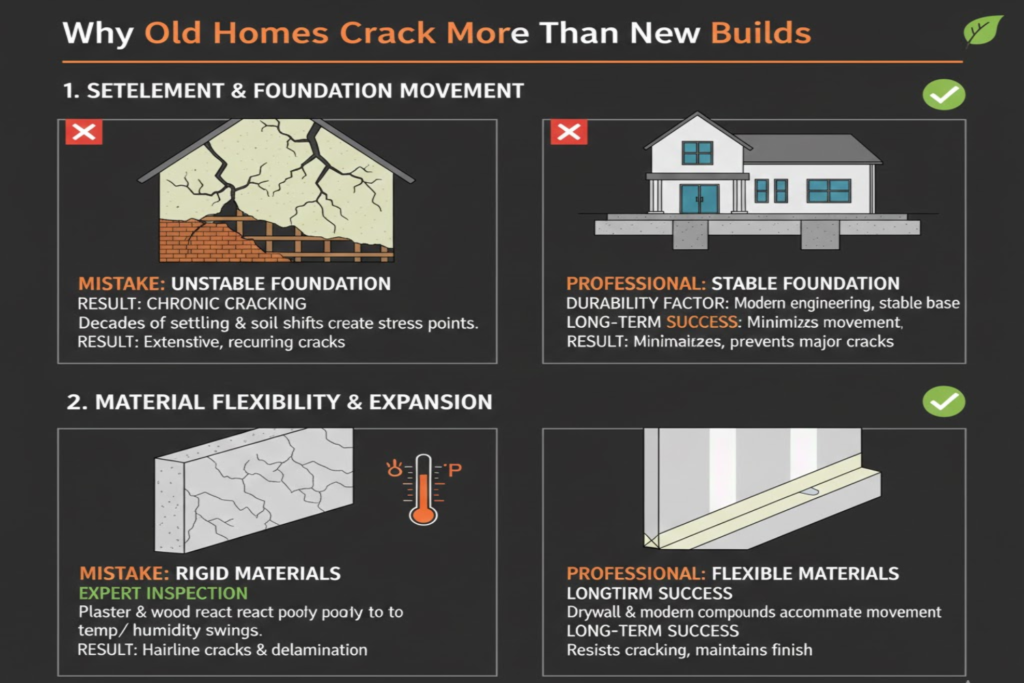
Old homes are more susceptible to cracking due to natural settling over time. As the house ages, the weight of the structure and soil conditions can cause minor shifts that manifest as cracks in walls, ceilings, and foundations.
Soil Movement
Soil naturally compresses and shifts over decades, especially if drainage is poor or the soil is clay-heavy. These movements can create pressure on the foundation and walls, leading to visible cracks.
Foundation Aging
Older foundations may have been built with materials and techniques that were adequate at the time, but do not perform as well over the decades. Cracks can appear along joints, corners, or around windows and doors where the foundation shifts most.
Uneven Settling
Not all parts of an old home settle uniformly. This uneven settling can cause differential stress on plaster walls and ceilings, often resulting in diagonal or stair-step cracks.
Material Degradation Over Time
Materials naturally degrade with age, contributing to cracks in old homes. Wood, plaster, and masonry all change properties over decades, affecting wall stability.
Plaster Walls
Old plaster can become brittle, losing flexibility and adhesion to lath or drywall. Seasonal movement or minor foundation shifts can cause cracks that appear larger than the actual structural movement.
Wooden Framework
Wooden studs, beams, and joists shrink, warp, or rot over time. As these supporting structures shift, they can cause cracks in walls and ceilings, especially along joints and corners.
Masonry Aging
Bricks and mortar deteriorate over decades, especially in areas exposed to moisture or freeze-thaw cycles. Cracks often form along mortar joints or where walls meet foundations.
Differences Between Old and New Construction
Older homes were built using traditional plaster, solid wood framing, and masonry foundations, while new builds often incorporate gypsum drywall, engineered wood, and reinforced concrete. Modern homes are designed to accommodate movement more effectively, reducing visible cracking.
| Feature | Old Homes | New Builds | Impact on Cracking |
| Wall Material | Plaster over lath | Gypsum drywall | Plaster is brittle, cracks easily; drywall is flexible |
| Foundation Type | Stone or brick | Reinforced concrete | Older foundations settle unevenly; modern foundations are engineered |
| Framework | Solid timber | Engineered lumber or steel studs | Timber shrinks/warps over decades; engineered lumber is more stable |
| Construction Codes | Minimal regulation | Strict building codes | Older builds may not account for stress points; new builds are designed to minimize cracking |
| Moisture Resistance | Limited moisture barriers | Modern vapor barriers and insulation | Old homes are more prone to moisture-related cracks; new builds resist damage |
Environmental and Seasonal Factors
Old homes have endured decades of environmental changes, which increase their susceptibility to cracking.
- Temperature fluctuations: Repeated heating and cooling cycles cause expansion and contraction in materials, leading to cracks over time.
- Humidity changes: Older plaster and wood are sensitive to moisture variations, which cause swelling or shrinkage.
- Tree roots and landscaping: Roots near foundations can shift soil, putting stress on walls.
- Roof leaks and water damage: Prolonged moisture infiltration weakens materials, accelerating crack formation.
- Freeze-thaw cycles: In colder climates, water in masonry can freeze and expand, creating cracks over decades.
Types of Cracks Found in Old Homes
Hairline Cracks
Thin cracks are often caused by minor settling, shrinkage, or seasonal movement. Cosmetic, but should be monitored for growth.
Diagonal or Stair-Step Cracks
Common in older brick homes with foundation movement. Typically appear at corners of windows, doors, or along masonry joints.
Vertical Cracks
Often occur in plaster or drywall walls as a result of minor settling or differential stress. Usually cosmetic unless widening over time.
Ceiling Cracks
Plaster ceilings in old homes may crack due to sagging laths or wood joists. These are often worsened by moisture or seasonal movement.
Preventing and Managing Cracks in Old Homes
While some cracking is inevitable in older homes, there are measures to minimize damage.
Foundation Inspections
Regular inspections help detect early foundation shifts. Addressing minor settlement issues with underpinning or soil stabilization can prevent cracks from worsening.
Moisture Control
Ensure proper drainage around the foundation, repair roof leaks, and manage indoor humidity to reduce stress on walls and foundations.
Wall Reinforcement
Use wall anchors, braces, or plaster repair techniques that accommodate minor movement to stabilize walls and prevent new cracks.
Routine Maintenance
Regularly check for hairline cracks, ceiling sagging, or warped frames. Early repairs prevent small issues from escalating into major structural problems.
Professional Evaluation
Large or widening cracks may indicate serious structural concerns. Consult structural engineers or restoration specialists to assess and repair safely.
Advantages of Understanding Why Old Homes Crack
- Identifies cosmetic versus structural cracks.
- Prevents costly repairs by addressing issues early.
- Preserves the historical and architectural value of the home.
- Helps plan maintenance schedules effectively.
- Improves safety by preventing unexpected wall or ceiling failures.
FAQs
1. Are all cracks in old homes dangerous?
No, hairline and small vertical cracks are usually cosmetic, while diagonal or stair-step cracks may indicate structural issues.
2. Can cracks be repaired without affecting historical integrity?
Yes, using traditional plaster repair techniques preserves the home’s character while fixing cracks.
3. How often should I inspect my old home for cracks?
At least twice a year, preferably during seasonal transitions when movement is most noticeable.
4. Do old homes settle more than new builds?
Yes, older foundations have had decades to shift, making them more prone to cracks.
5. Can moisture cause cracks in old homes?
Yes, prolonged exposure to leaks or humidity can weaken plaster and wood, resulting in cracks.
6. Are ceiling cracks common in old homes?
Yes, plaster ceilings often crack due to sagging laths, joist movement, or moisture.
7. Should I monitor cracks after repairs?
Absolutely, regular monitoring ensures minor repairs are effective and prevent recurrence.
8. Can new construction methods prevent all cracks?
While modern builds reduce the risk, some minor settling and shrinkage cracks can still occur.
Conclusion
Old homes crack more than new builds due to a combination of foundation settling, material degradation, environmental exposure, and outdated construction techniques. While many cracks are cosmetic, understanding their causes helps homeowners prioritize repairs and preserve the structural integrity of their property. Regular inspections and maintenance are key to preventing minor issues from developing into serious problems.
By addressing moisture, reinforcing walls, and consulting professionals when needed, homeowners can maintain the beauty and safety of old homes. Recognizing why old homes crack more frequently ensures informed decisions about restoration, repair, and long-term care. Proper understanding and proactive measures help these historic properties remain functional and aesthetically appealing for generations.
Drywall Repair Halifax
EZ Patch offers clean, professional drywall, ceiling, plaster, and water damage repair services in Halifax with minimal mess and long-lasting results.
EZ Patch – Drywall Repair Experts
Trusted drywall repair professionals serving Halifax and nearby areas.
Drywall Patch & Repair
Seamless drywall repairs for holes, cracks, dents, and damaged walls.
Ceiling Repairs
Professional ceiling repair services for stains, cracks, and water damage.
Drywall Installation
Complete drywall installation services for renovations and new builds.
Taping & Mudding
Smooth, paint-ready wall finishes by expert drywall finishers.
Plaster Repair Experts
Precision plaster repair services while maintaining original wall texture.
Water Damage Repair
Drywall and ceiling restoration for properties affected by water damage.
Texture Matching
Accurate texture blending so repaired areas match existing finishes.
Installation, Repair & Removal
End-to-end drywall installation, repair, and removal solutions.