Old plaster walls are a hallmark of traditional construction, valued for their durability, texture, and historic character. However, many homeowners and contractors encounter persistent issues when attempting modern repairs. Despite the best intentions, repairs often fail because they do not account for the unique composition and behavior of aged plaster.
Modern repair materials, designed for drywall or contemporary walls, are frequently incompatible with older plaster surfaces. Applying these materials without understanding the substrate can cause cracking, flaking, or detachment. Recognizing why modern repairs fail is crucial for preserving both the appearance and structural integrity of historic walls.
How Material Incompatibility Causes Failure
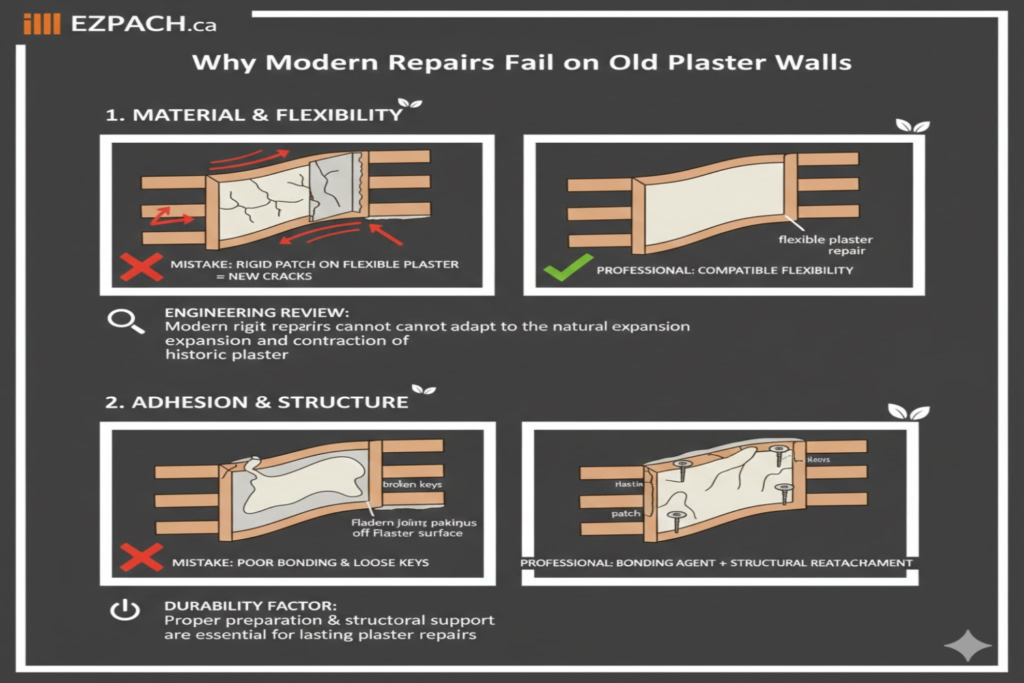
Modern repair compounds often differ chemically from traditional plaster. Older walls may contain lime-based or gypsum plaster that has hardened over decades. Using cement-based fillers or acrylic compounds creates tension between old and new materials.
The new material cannot expand and contract at the same rate as the original plaster. This mismatch leads to cracking or separation along seams and corners. Professionals emphasize choosing repair materials that closely mimic the original plaster for long-term durability.
Differences Between Modern and Traditional Plaster
- Composition: Older plaster often contains lime and sand, whereas modern compounds are cement- or polymer-based.
- Flexibility: Lime plaster is slightly elastic, allowing walls to shift without cracking. Modern materials are rigid and prone to breaking under stress.
- Moisture Handling: Historic plaster “breathes,” managing humidity. Modern fillers trap moisture, leading to delamination or mold growth.
What Happens When Modern Compounds Are Applied
Applying modern compounds to old plaster may seem convenient, but the results are often short-lived. Cracks reappear within months, and surface finishes may bubble or peel. These failures can be costly to repair and may further damage the historic material.
Even minor incompatibility creates stress points at joints or areas where the wall flexes. Over time, these weak points expand, undermining the repair and the surrounding plaster. Without material compatibility, repairs cannot maintain structural stability or visual integrity.
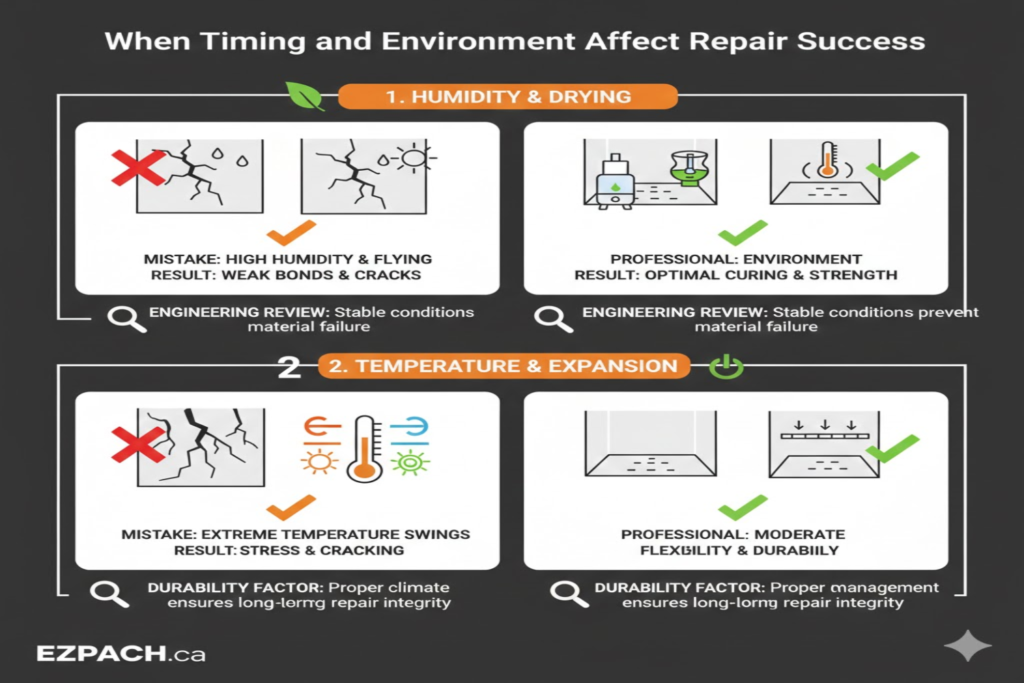
When Timing and Environment Affect Repair Success
Timing and environmental conditions are critical factors in plaster repair. Repairs performed in high-humidity environments or during seasonal temperature swings are prone to failure. Moisture causes traditional plaster to swell or contract, which modern compounds cannot accommodate.
Proper preparation includes ensuring the wall is dry, the temperature is stable, and any leaks or damp sources are addressed. Modern repair materials applied under unfavorable conditions are more likely to fail quickly.
Key Factors That Lead to Repair Failure
Several interrelated factors contribute to why modern repairs fail on old plaster walls. Understanding these factors is essential for successful restoration.
Structural Movement
Old houses settle over time, causing walls to shift slightly. Rigid modern materials do not absorb movement, resulting in cracks along repairs.
Surface Preparation Issues
Historic plaster often contains dust, loose particles, or flaking layers. Applying new compounds without proper preparation prevents adhesion and leads to peeling.
Lack of Skilled Labor
Many contractors are trained primarily for drywall repairs. Without knowledge of traditional plaster techniques, modern repairs are applied incorrectly.
Moisture and Dampness
Hidden moisture behind old plaster can compromise new repair compounds. Proper assessment and remediation are required before repair begins.
How Repair Techniques Influence Longevity
Repair techniques must align with the characteristics of old plaster. Modern “quick fix” methods rarely address the underlying structural issues.
- Fillers should be compatible with lime or gypsum substrates.
- Layering repairs gradually allows the plaster to cure properly.
- Avoid sanding aggressively, which can weaken the historic surface.
- Reinforcing weak areas with mesh can prevent cracking.
- Ensure joints are prepared to receive repair compounds without tension.
What Common Mistakes Lead to Failure
Modern repairs fail due to several frequent mistakes that homeowners and contractors make:
- Using cement-based patching on lime plaster
- Ignoring moisture problems behind walls
- Applying repairs in uneven thicknesses
- Failing to match the texture of historic plaster
- Rushing the curing time before painting or finishing
Preventive Measures for Successful Repairs
Preventive measures significantly improve the longevity of repairs on old plaster walls.
- Always identify the plaster type before selecting repair materials.
- Use compatible lime-based or gypsum fillers where appropriate.
- Control humidity and moisture levels in the room.
- Apply repairs in thin, well-layered coats.
- Employ skilled artisans familiar with historic plaster techniques.
FAQs
1. Can modern drywall compounds be used on old plaster?
Not typically, as they are often too rigid and fail to bond properly. Lime-based compounds are usually recommended.
2. How long do repairs last when using incompatible materials?
They may fail within a few months to a year, especially in high-humidity areas.
3. Is sanding necessary for old plaster repairs?
Only lightly, to remove loose debris; aggressive sanding weakens the wall.
4. Can moisture behind walls affect repairs?
Yes, hidden damp can cause modern compounds to delaminate or bubble.
5. Are mesh reinforcements helpful?
Yes, mesh can strengthen weak areas and prevent future cracking.
6. How important is curing time?
Curing time is essential; insufficient curing leads to cracks and adhesion failure.
7. Can DIY repairs work on historic plaster?
Minor repairs may succeed, but professional knowledge is recommended for structural and long-term results.
8. Do decorative moldings require special techniques?
Yes, moldings require precise material matching and skilled application to maintain historic integrity.
Conclusion
Modern repairs fail on old plaster walls primarily due to material incompatibility, poor technique, and environmental factors. Historic plaster behaves differently from modern drywall, requiring specialized approaches. Ignoring these differences often leads to cracking, peeling, and premature repair failure.
By understanding wall composition, controlling moisture, and using compatible materials, repairs can last longer and preserve the historic character of the walls. Skilled craftsmanship, proper preparation, and careful technique ensure that old plaster surfaces remain structurally sound and visually authentic for years to come.
Drywall Repair Halifax
EZ Patch offers clean, professional drywall, ceiling, plaster, and water damage repair services in Halifax with minimal mess and long-lasting results.
EZ Patch – Drywall Repair Experts
Trusted drywall repair professionals serving Halifax and nearby areas.
Drywall Patch & Repair
Seamless drywall repairs for holes, cracks, dents, and damaged walls.
Ceiling Repairs
Professional ceiling repair services for stains, cracks, and water damage.
Drywall Installation
Complete drywall installation services for renovations and new builds.
Taping & Mudding
Smooth, paint-ready wall finishes by expert drywall finishers.
Plaster Repair Experts
Precision plaster repair services while maintaining original wall texture.
Water Damage Repair
Drywall and ceiling restoration for properties affected by water damage.
Texture Matching
Accurate texture blending so repaired areas match existing finishes.
Installation, Repair & Removal
End-to-end drywall installation, repair, and removal solutions.