Ceiling repairs require different techniques than walls because ceilings face gravity-related stress that walls don’t. They also tend to hide structural elements like joists, wiring, and insulation, making repair work more delicate and technical. Understanding these differences ensures safer, longer-lasting results for homeowners and professionals alike.
Another reason why ceiling repairs require different techniques than walls is the way materials respond to moisture, temperature, and pressure overhead. Cracks, sagging, and water stains on ceilings behave differently compared to similar issues on walls. By learning the right repair methods, you can avoid repeated damage and keep your interior strong and stable.
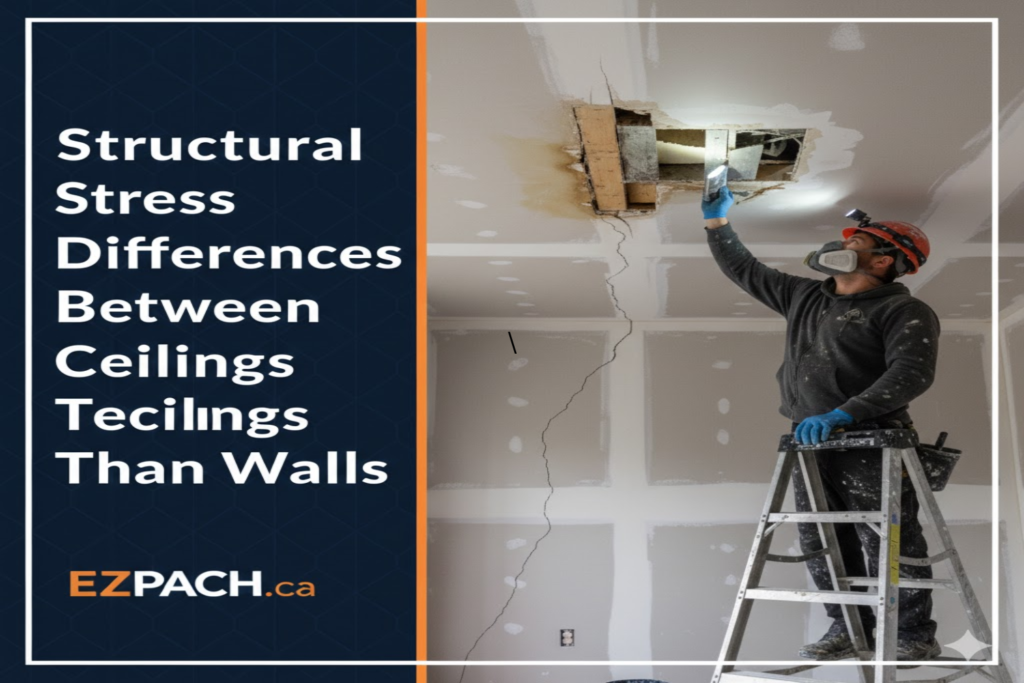
Structural Stress Differences Between Ceilings and Walls
Ceilings experience downward gravitational pressure that causes cracks to widen and plaster to loosen faster than wall surfaces. This is one major reason why ceiling repairs require different techniques than walls, as the direction of stress influences how materials should be reinforced. Workers also need overhead tools and safety measures that aren’t necessary for standard wall repairs. Repair compounds need stronger binding agents to withstand vertical pull.
In addition, the structural framing behind ceilings is oriented differently, meaning locating damage requires more skill and precision. Wall studs are easier to trace, but ceiling joists often run in varying patterns, complicating repairs. Ceilings may also conceal HVAC ducts, making it riskier to cut or patch. These factors combine to demand advanced methods for accurate, secure repairs.
Gravity-Driven Movement
Gravity pulls ceiling materials downward, causing cracks, sagging, and separation from framing. Workers must use stronger adhesives and mesh tape to stabilize repairs. Ceiling repair techniques often include multiple layers of compound for added support.
Hidden Utilities
Electrical cables, insulation, and ventilation ducts usually run above a ceiling. Cutting blindly risks serious damage or safety hazards. Mapping the utility layout is essential before starting any repair.
Temperature Accumulation
Warm air rises and collects near ceilings, causing material expansion. This contributes to cracks and peeling paint. Repair compounds must be heat-resistant to avoid future damage.
Moisture Behavior in Ceilings vs. Walls
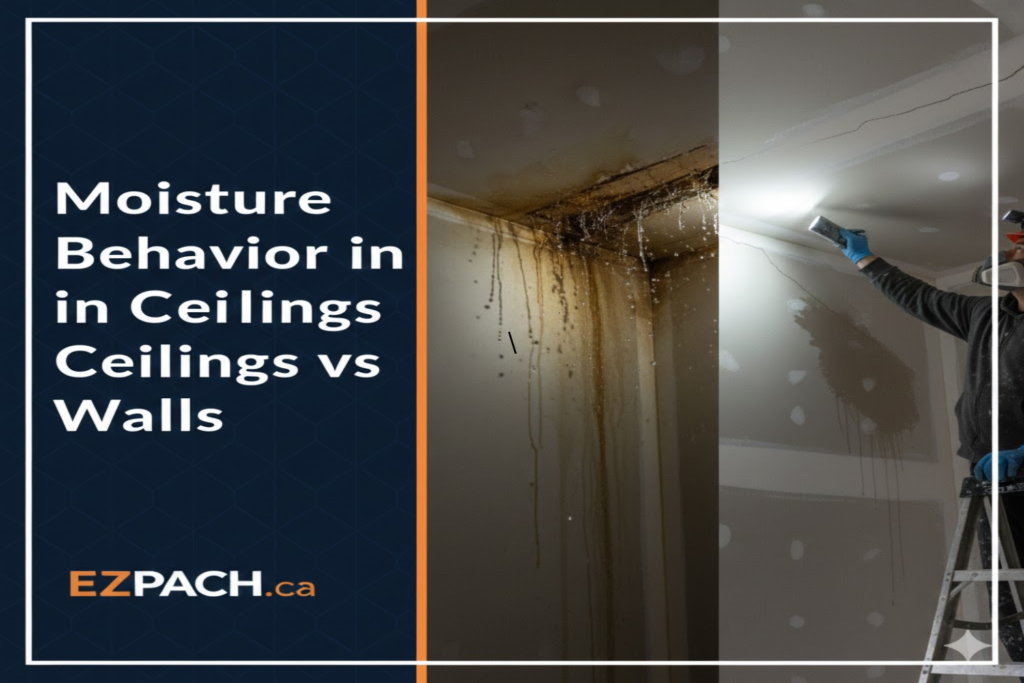
Moisture tends to accumulate on ceilings due to plumbing leaks, roof problems, or condensation buildup. This is another reason why ceiling repairs require different techniques than walls, because water-damaged ceilings behave unpredictably. Stains can mask deeper issues, requiring advanced diagnostic tools. Wall moisture is easier to detect and treat, while ceiling moisture often spreads outward.
When ceilings absorb water, they lose strength faster than walls and may collapse if not treated quickly. This makes the repair urgency higher for ceilings compared to walls. Professionals also use special drying tools and stain-blocking primers for ceilings since discoloration is harder to conceal overhead. Every step must be done carefully to prevent mold growth.
Hidden Water Paths
Water travels across ceiling surfaces differently from walls. It spreads laterally rather than straight downward. This makes detecting the source more challenging.
Risk of Sagging
Water-soaked ceilings lose rigidity and begin to bulge. This creates a collapse hazard if neglected. Reinforcement panels or full replacement may be needed.
Stain-Blocking Needs
Ceiling stains reappear even after painting unless special primers are used. Overhead stain blocks prevent yellowing. Walls generally need fewer coats.
Material Composition Differences
Ceilings are often built using lighter, more flexible drywall sheets to reduce weight on overhead framing. Because of this, cracks and holes react differently on ceilings, which is a major reason why ceiling repairs require different techniques than walls. Materials must be reinforced carefully to prevent additional stress. This lightweight construction requires gentle sanding and layering approaches.
Wall surfaces, in contrast, can handle stronger compounds and deeper fastening methods. On a ceiling, aggressive sanding causes dust to fall into your eyes and can dislodge fresh compound. This is why professionals use upward-angled sanders and slow-pressure techniques. Understanding these material differences ensures lasting results.
Safety Challenges of Ceiling Repairs
Repairing ceilings involves physical strain because workers must hold tools overhead for extended periods. Neck, shoulder, and arm fatigue increase the risk of mistakes. This is another clear example of why ceiling repairs require different techniques than walls — ergonomics matter. Walls don’t require such strenuous positioning.
Additionally, dust and debris fall directly onto the worker’s face during ceiling sanding or cutting. This requires safety goggles, masks, and controlled-dust tools. Safety ladders, stable platforms, and careful body positioning are essential. These added challenges demand specialized skills.
Overhead Tool Handling
Working overhead weakens grip strength. Repairs must be completed in shorter intervals. Tools must be lightweight for safe use.
Ladder and Platform Safety
Ceiling repairs often require elevated work surfaces. Stability is crucial to avoid falls. Proper ladder positioning prevents slipping.
Dust Control Measures
Ceilings generate falling dust that can irritate eyes and lungs. Wet-sanding or vacuum-sanding reduces debris. Workers must use protective gear.
Repair Techniques Unique to Ceilings
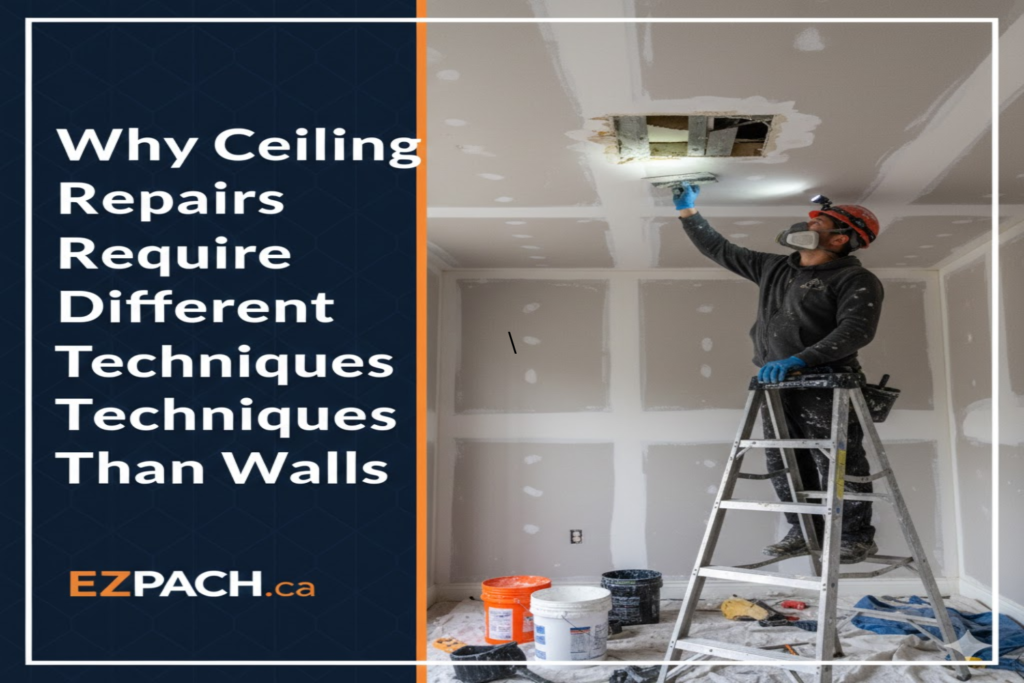
Ceiling repairs require mesh reinforcement more than wall repairs because overhead surfaces crack more widely. This is why ceiling repairs require different techniques than walls, especially when handling joint compounds. Multiple layers must be applied to keep them from dropping. Quick-setting compounds are often used to speed up the process.
Textured ceilings also demand unique approaches since patterns need to be matched seamlessly. Walls rarely pose texture-matching challenges. Ceilings also need feathering techniques applied outward in wider circles. This improves blending and prevents visible patch marks.
Situations Where Walls Are Easier to Repair
Walls are easier to inspect and patch because damage is at eye level. Tools are easier to handle, and materials bond faster because gravity isn’t fighting the repair process. This is one of the key contrasts explaining why ceiling repairs require different techniques than walls.
Walls also allow deep sanding without discomfort. Paint blending is easier, and texture matching is less demanding. The straightforward nature of wall repairs makes them quicker and less labor-intensive compared to ceilings.
When a Ceiling Requires Full Replacement
Ceilings need replacement more often than walls because water damage, sagging, and structural shifting compromise safety. A severely damaged ceiling can collapse, making replacement necessary. This highlights why ceiling repairs require different techniques than walls — the stakes are higher overhead.
Replacement often involves removing insulation, redirecting wires, and adjusting joist systems. These steps make the ceiling work more complex. Wall replacements rarely involve such an extensive teardown.
Signs of Irreparable Damage
Deep sagging, cracks wider than half an inch, or multiple soft spots indicate total failure. These problems cannot be patched safely. Replacement protects the structure.
Mold Infestation
Ceiling mold spreads faster because warm air accumulates above. If mold penetrates drywall deeply, replacement is the only solution. Mold-resistant boards can be installed afterward.
Structural Separation
If drywall pulls away from joists, nails pop, and screws loosen. This is a structural red flag requiring removal. Reinforced boards should be installed with proper fastening patterns.
Cost of Ceiling Repairs vs. Wall Repairs
Ceiling repairs generally cost more than wall repairs because they require extra safety setup, stronger materials, and more labor effort. Techniques must be more precise and time-consuming, which raises overall pricing. This difference clearly explains why ceiling repairs require different techniques from walls.
Cost Comparison Table
| Repair Type | Typical Cost Range | Difficulty Level | Special Requirements |
| Basic Wall Patch | Low | Easy | Standard tools only |
| Basic Ceiling Patch | Moderate | Medium | Overhead tools, mesh tape |
| Water-Damaged Wall | Moderate | Medium | Moisture treatment |
| Water-Damaged Ceiling | High | Hard | Drying, reinforcement, insulation |
| Textured Ceiling Repair | High | Hard | Texture matching tools |
Conclusion
Ceiling repairs require different techniques than walls because ceilings face gravity, hidden utilities, and moisture risks that walls rarely encounter. These overhead surfaces demand more precision, advanced tools, and careful reinforcement to maintain long-term strength. Understanding these differences helps homeowners make better repair decisions and avoid repeated problems. Because ceiling repairs require different techniques from walls, choosing the correct method ensures safety and durability.
In addition, ceilings involve unique structural, safety, and material challenges that influence how repairs should be carried out. Workers must approach ceilings with added caution and technical knowledge to prevent future cracks or failures. The right techniques protect your home’s integrity and reduce long-term maintenance costs. Ultimately, knowing why ceiling repairs require different techniques than walls empowers you to handle home damage more effectively.
FAQs
1. Why do ceiling cracks spread faster than wall cracks?
Ceilings are under constant downward pressure from gravity. This causes cracks to widen and spread more rapidly.
2. Can ceiling damage affect the floor above it?
Yes, severe ceiling damage can signal problems in the flooring above. Water or structural issues may impact both levels.
3. Are ceiling paints different from wall paints?
Most ceiling paints are flatter to hide imperfections. They also drip less when applied overhead.
4. Does ceiling repair take longer than wall repair?
Usually, yes, because working overhead slows productivity. More drying layers are also needed for ceilings.
5. Can I repair a ceiling crack without mesh tape?
It’s not recommended because ceiling cracks reopen easily. Mesh tape provides essential reinforcement.
6. Why do ceiling nail pops happen more often?
Temperature changes and gravity pull fasteners away from joists. This causes visible bumps called nail pops.
7. Is textured ceiling repair harder than a smooth ceiling?
Yes, textures must be matched precisely to blend evenly. Any mismatch becomes very noticeable overhead.
8. Can LED lights increase ceiling cracks?
Sometimes, because heat from fixtures can dry materials unevenly. This may lead to small cracks around light openings.
Drywall Repair Halifax
EZ Patch offers clean, professional drywall, ceiling, plaster, and water damage repair services in Halifax with minimal mess and long-lasting results.
EZ Patch – Drywall Repair Experts
Trusted drywall repair professionals serving Halifax and nearby areas.
Drywall Patch & Repair
Seamless drywall repairs for holes, cracks, dents, and damaged walls.
Ceiling Repairs
Professional ceiling repair services for stains, cracks, and water damage.
Drywall Installation
Complete drywall installation services for renovations and new builds.
Taping & Mudding
Smooth, paint-ready wall finishes by expert drywall finishers.
Plaster Repair Experts
Precision plaster repair services while maintaining original wall texture.
Water Damage Repair
Drywall and ceiling restoration for properties affected by water damage.
Texture Matching
Accurate texture blending so repaired areas match existing finishes.
Installation, Repair & Removal
End-to-end drywall installation, repair, and removal solutions.