Ceiling repairs are generally more expensive than wall repairs, a fact that many homeowners only realize when faced with unexpected damage. While wall repairs are often straightforward, ceilings present unique challenges that affect labor, materials, and time. Overhead positioning, structural factors, and aesthetic considerations make ceiling repair projects more complex.
Understanding why ceilings cost more to repair involves analyzing multiple factors, from physical accessibility to specialized materials and safety requirements. By examining these elements, homeowners can plan budgets, make informed decisions, and prevent future issues, ultimately saving time and money.
Accessibility and Work Positioning
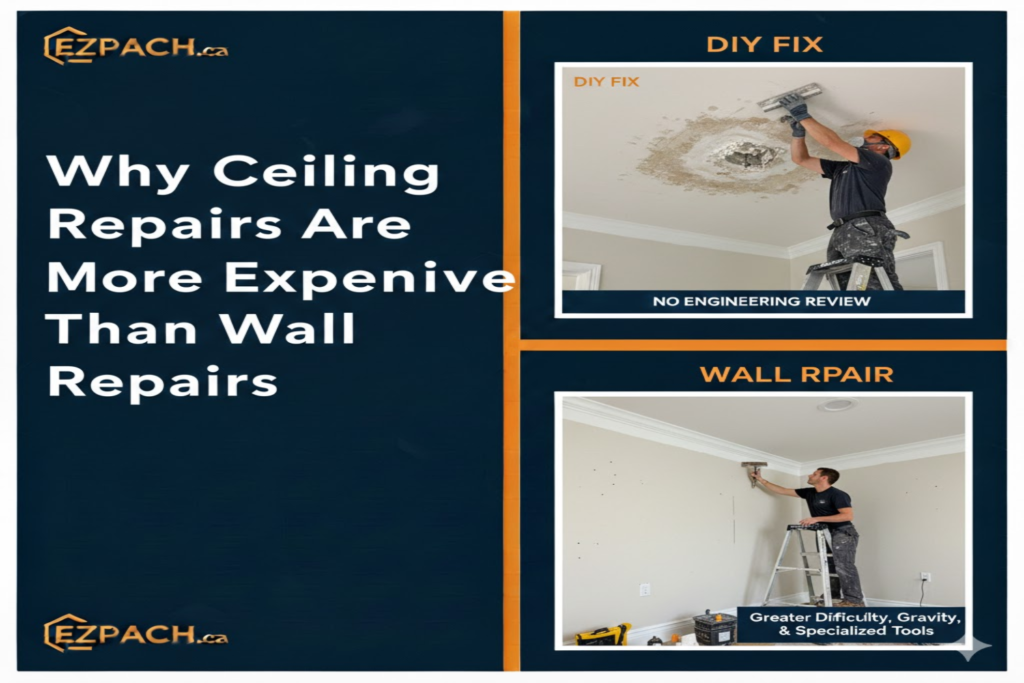
One of the main reasons ceilings cost more to repair is accessibility. Working overhead is physically demanding and often slows down the repair process.
High Ceilings
Repairing high ceilings requires ladders, scaffolding, or hydraulic lifts. The setup and removal of these tools takes extra time, increasing labor costs.
Vaulted Ceilings
Vaulted ceilings have angles and slopes that make applying plaster or joint compound more difficult. Contractors often need extra personnel and specialized techniques to ensure smooth finishes.
Corners and Beams
Tight spaces near beams, rafters, or vents increase difficulty. Workers must maneuver carefully, slowing the repair process and increasing the chance of errors.
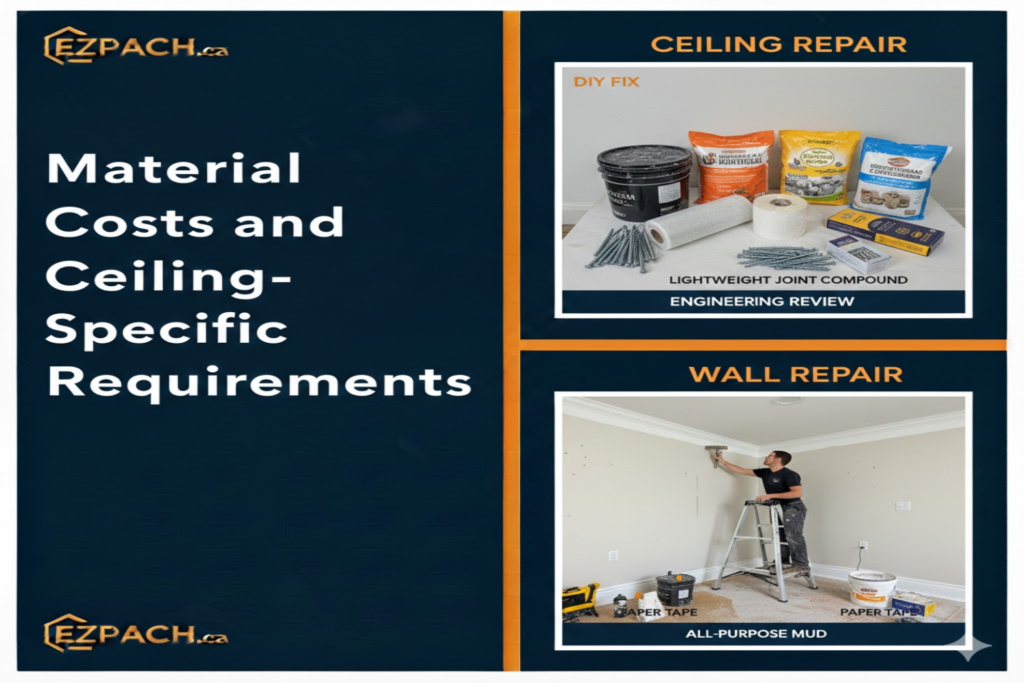
Material Costs and Ceiling-Specific Requirements
Ceilings often require specialized materials, thicker drywall, or reinforced plaster, making them costlier than walls.
Material Factors Increasing Costs
- Ceiling drywall is typically 5/8 inch thick to resist sagging, compared to 1/2 inch for walls.
- Plaster ceilings require multiple thin layers, drying time, and sometimes mesh reinforcement.
- Fiber-reinforced joint compounds add material cost but prevent future cracking.
- Textured ceilings, such as popcorn or knockdown finishes, require additional finishing materials.
- Paint and primer may need extra coats to achieve uniform coverage on overhead surfaces.
Labor Intensity
Ceiling repairs are labor-intensive due to overhead work, precision requirements, and multiple steps.
Overhead Challenges
Working above the head for prolonged periods increases fatigue and slows productivity. This leads to higher labor hours compared to wall repairs.
Step-by-Step Repair Process
- Prepping the ceiling surface by removing loose material
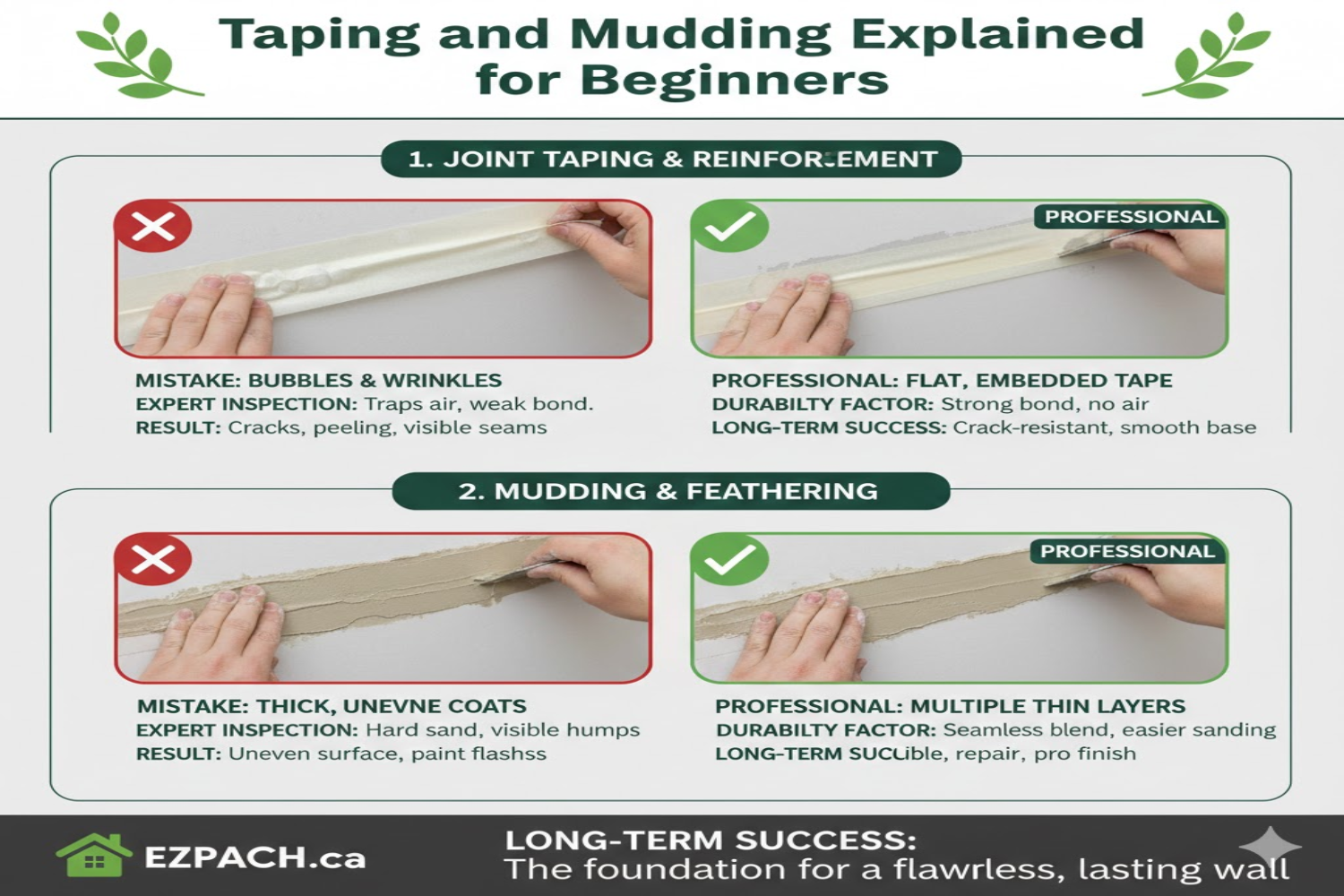
- Applying joint compound or plaster in layers
- Sanding each layer for a smooth finish
- Applying primer and final paint
Skilled Workforce Requirement
Precision is critical because imperfections are highly visible from below. Contractors with experience in ceiling repair command higher rates, which further increases costs.
Ceiling Features Increasing Complexity
Ceiling elements that are rarely present on walls contribute to higher repair costs.
Decorative Moldings and Cornices
Damage to crown molding or cornices often requires reconstruction rather than simple patching. Material costs and labor increase when precise matching is necessary.
Lighting Fixtures
Ceiling-mounted lights and fans must often be removed and replaced during repairs. Licensed electricians are sometimes needed for safety, adding additional costs.
HVAC and Ventilation
Vents and ducts may need protection or temporary removal to allow repair work. Mishandling these systems can lead to additional damage, further increasing expenses.
Safety Considerations
Working on ceilings carries a higher risk of accidents, which contributes to the overall cost.
Safety-Related Cost Factors
- Ladders, scaffolding, and lifts require proper setup and inspection.
- Helmets, gloves, and eyewear protect workers from debris.
- Drop cloths prevent damage to flooring and furniture.
- Pre-repair structural inspection ensures the ceiling can support workers safely.
- Contractors include insurance and liability coverage in the overall pricing.
Types of Ceiling Damage
Ceilings are susceptible to various damage types, each affecting repair cost differently.
Water Damage
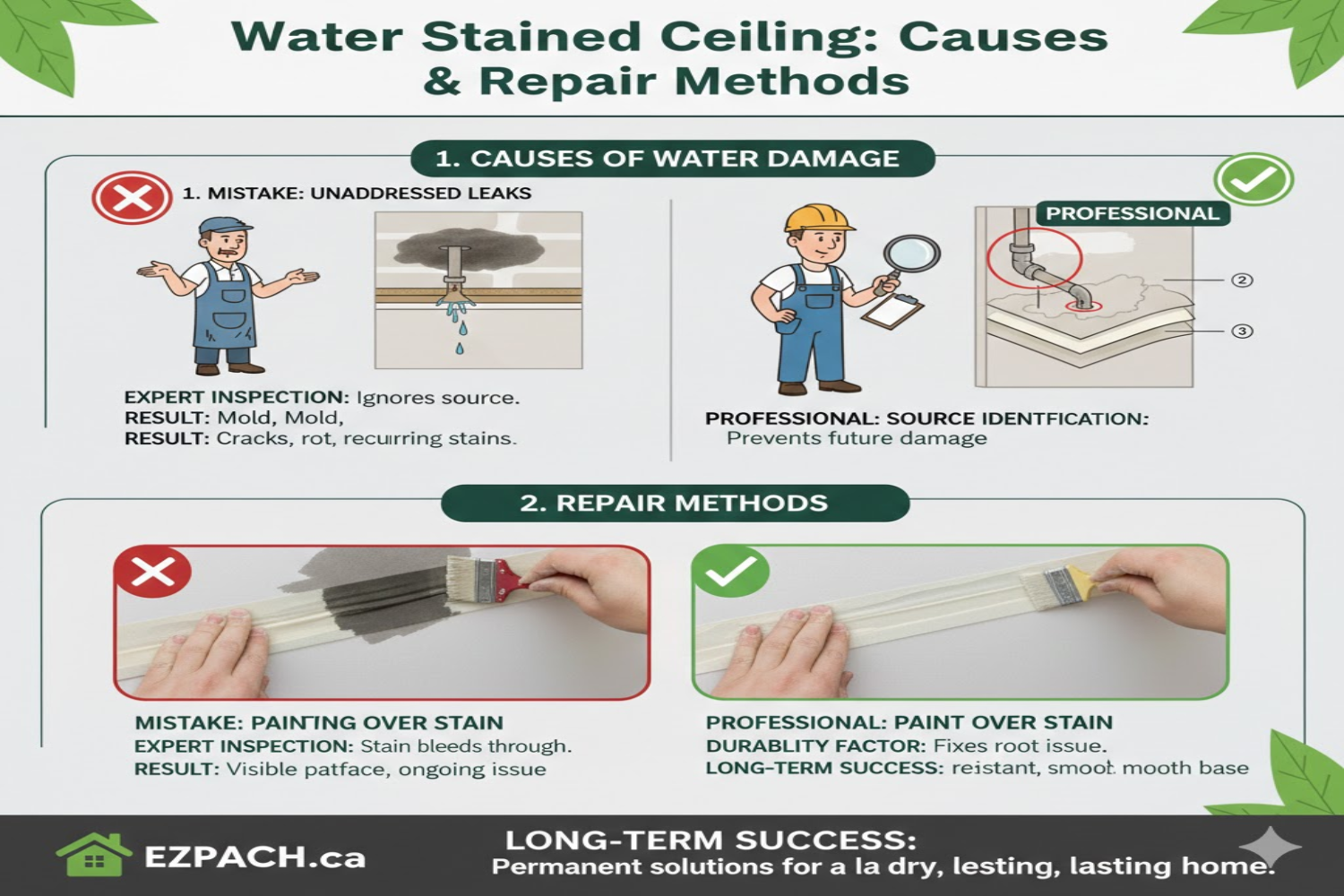
Leaking roofs or plumbing issues can cause sagging, staining, or mold. Repairs may include replacing drywall or plaster, mold remediation, and refinishing, which is more extensive than typical wall repairs.
Cracks and Sagging
Structural movement, temperature changes, or moisture can cause cracks and sagging. Reinforcement and multiple compound layers are often needed to restore stability and aesthetics.
Other Common Damage Types
- Popcorn ceiling deterioration
- Settlement-related cracks
- Failed previous repairs needing removal
- Damage near heavy fixtures or beams
Preventive Measures to Reduce Costs
Proper maintenance can reduce ceiling repair frequency and expense.
Moisture Control
Prevent leaks and excess humidity through proper ventilation and moisture barriers. Bathrooms and kitchens benefit from exhaust fans and dehumidifiers.
Structural Inspections
Regularly check joists, beams, and ceiling supports. Detecting minor stress or movement early can prevent major damage.
Material Choices
High-quality drywall or fiber-reinforced plaster reduces sagging or cracking. Choosing proper joint compounds and finishing materials increases ceiling durability.
Advanced Factors Affecting Ceiling Repairs
Certain hidden or technical factors increase ceiling repair costs beyond standard issues.
Old Construction Materials
Plaster-and-lath ceilings require specialized techniques compared to modern drywall. This process is labor-intensive and takes longer to cure.
Uneven Surfaces
Ceilings with uneven areas may need leveling or skim coating, adding labor and material costs. Walls generally do not require this extra step.
Hidden Water Damage or Mold
Damage concealed behind the surface may require additional demolition, mold remediation, or structural reinforcement. Identifying and fixing these issues increases both time and cost.
Conclusion
Ceiling repairs are more expensive than wall repairs due to accessibility challenges, specialized materials, labor intensity, structural dependencies, and additional safety measures. Overhead work, decorative elements, fixtures, and safety precautions all contribute to higher costs.
Homeowners can minimize expenses by performing preventive maintenance, choosing quality materials, and scheduling regular inspections. Understanding the reasons behind ceiling repair costs enables better budgeting and more informed decisions, ultimately reducing the likelihood of unexpected and costly repairs.
FAQs
1. Why do high ceilings cost more to repair?
High ceilings require scaffolding or lifts, increasing labor and equipment expenses.
2. Are ceiling repairs riskier than wall repairs?
Yes, overhead work increases the risk of falls and injury, requiring safety measures.
3. Does water damage always mean full ceiling replacement?
Not always, but sagging or mold often requires partial or complete replacement.
4. Are vaulted ceilings harder to repair than flat ceilings?
Yes, angles and hard-to-reach areas make repairs more complex.
5. Do decorative moldings increase repair costs?
Yes, damaged moldings often need precise reconstruction or replacement.
6. Can preventive maintenance reduce ceiling repair costs?
Yes, inspections, moisture control, and quality materials help prevent major damage.
7. Why do ceilings with lighting fixtures cost more?
Fixtures need careful removal and electrical safety measures, increasing labor.
8. Is popcorn ceiling removal more expensive than wall texturing?
Yes, scraping, disposal, and texture matching make ceiling work more labor-intensive.
Drywall Repair Halifax
EZ Patch offers clean, professional drywall, ceiling, plaster, and water damage repair services in Halifax with minimal mess and long-lasting results.
EZ Patch – Drywall Repair Experts
Trusted drywall repair professionals serving Halifax and nearby areas.
Drywall Patch & Repair
Seamless drywall repairs for holes, cracks, dents, and damaged walls.
Ceiling Repairs
Professional ceiling repair services for stains, cracks, and water damage.
Drywall Installation
Complete drywall installation services for renovations and new builds.
Taping & Mudding
Smooth, paint-ready wall finishes by expert drywall finishers.
Plaster Repair Experts
Precision plaster repair services while maintaining original wall texture.
Water Damage Repair
Drywall and ceiling restoration for properties affected by water damage.
Texture Matching
Accurate texture blending so repaired areas match existing finishes.
Installation, Repair & Removal
End-to-end drywall installation, repair, and removal solutions.