Walls are more than just partitions—they protect, insulate, and define the character of a home. Choosing the right wall finish can have long-term implications for durability, aesthetics, and home value. When to choose plaster over drywall is a question that both homeowners and professionals often face, especially in renovation projects or historic home restorations.
Plaster and drywall have distinct properties, benefits, and installation requirements. While drywall offers speed and cost-efficiency, plaster provides longevity, aesthetic depth, and superior structural performance. Understanding the circumstances where plaster is the better choice ensures walls that not only look refined but also stand the test of time, enhancing both comfort and property value.
Understanding the Fundamental Differences Between Plaster and Drywall
Plaster and drywall differ significantly in materials, installation methods, and performance characteristics. Plaster is traditionally applied in multiple layers over a lath or mesh, creating a dense, durable wall system. Drywall, on the other hand, consists of prefabricated gypsum boards that are fastened to studs, then taped and finished with joint compound.
The installation method heavily influences the wall’s durability, soundproofing, and aesthetic outcome. Plaster walls, while more labor-intensive, are less prone to minor dents, provide better insulation, and can accommodate decorative finishes that drywall cannot. Drywall is convenient and cost-effective, but often lacks the longevity and refinement of plaster.
Durability and Strength
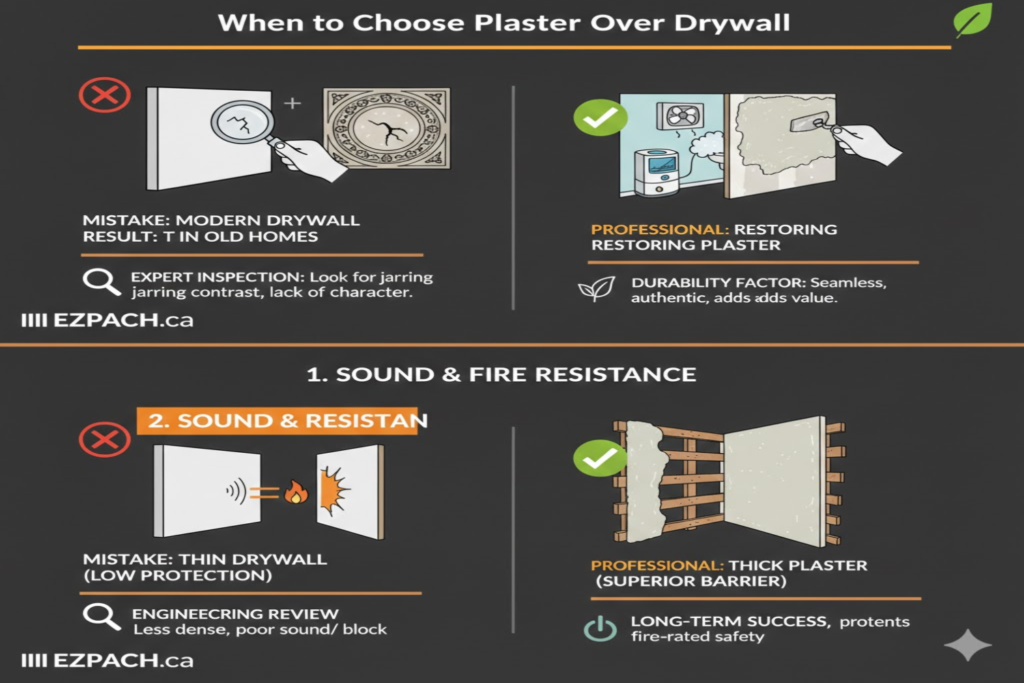
Plaster is denser than drywall and resists impact damage, making it ideal for high-traffic areas. Walls constructed with plaster are less likely to develop dents or superficial damage. Drywall, while adequate for many modern homes, can fail more easily under pressure or impact, requiring frequent patching.
Soundproofing and Thermal Benefits
The mass and multi-layer composition of plaster provide superior sound insulation. Plaster walls reduce noise transfer between rooms and floors, which is especially valuable in multi-story homes or apartment buildings. Additionally, plaster acts as a thermal mass, helping stabilize indoor temperatures and contributing to energy efficiency.
Scenarios Where Plaster Outperforms Drywall
Plaster is not just a luxury—it is sometimes the necessary choice to maintain structural integrity and aesthetic standards. Certain situations clearly favor plaster over drywall.
Historic Home Preservation
Older homes often feature original plaster walls, sometimes over wooden lath or masonry. Using plaster maintains historical authenticity and ensures that renovations respect the original craftsmanship. Replacing these walls with drywall can diminish both aesthetic and monetary value.
High-End Finishes
Plaster allows for seamless, smooth finishes and custom textures that drywall struggles to replicate. Decorative details such as ornate moldings, Venetian textures, or hand-troweled finishes are best achieved with plaster. Homes with plaster finishes tend to feel more refined and carry a premium perception.
Long-Term Durability
Plaster walls can last for decades or even centuries with proper care, whereas drywall may require replacement within 20–50 years, depending on use and maintenance. When longevity and minimal maintenance are priorities, plaster is often the better investment.
Functional Advantages of Plaster
Plaster offers several functional benefits that drywall simply cannot match. These include moisture resistance, crack reduction, and improved insulation.
- Moisture Resistance: Plaster is denser and less porous than drywall, which makes it more resistant to minor moisture exposure. Properly treated plaster can perform well even in humid climates.
- Crack Minimization: While all walls may develop some cracks over time, plaster resists minor settlement cracks better due to its multi-layer construction.
- Thermal Insulation: The density of plaster provides additional thermal mass, improving indoor temperature regulation.
- Sound Reduction: Multi-layer plaster walls dampen sound, making them ideal for bedrooms, living rooms, or apartments.
- Longevity: Once installed correctly, plaster walls often require less frequent maintenance than drywall.
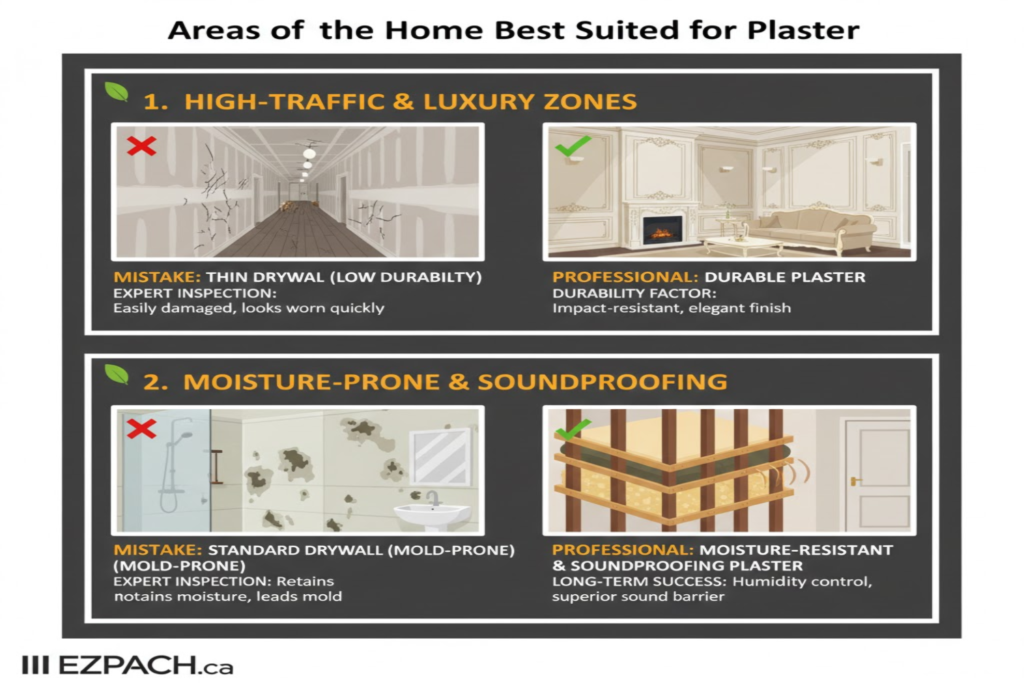
Areas of the Home Best Suited for Plaster
Not every space requires plaster, but certain rooms benefit greatly from its properties.
Living and Formal Areas
High-traffic areas such as living rooms and hallways benefit from plaster’s durability and aesthetic finish. Walls remain pristine despite frequent contact or accidental impact. Decorative plaster finishes can also elevate the perceived value of these spaces.
Historic Rooms and Ceilings
In period homes, plaster ceilings with moldings or medallions provide authenticity and charm. Replacing these ceilings with drywall can reduce visual appeal and historical value. Plaster allows for intricate ceiling work that drywall cannot accommodate.
Sound-Sensitive Rooms
Home offices, media rooms, and multi-family residences benefit from plaster’s sound-reducing properties. Its density and layered construction significantly reduce noise transfer between rooms. Drywall cannot provide the same level of acoustic insulation without additional layers or specialized materials.
When Drywall May Be a Better Choice
While plaster has clear advantages, drywall is not without its place. Certain situations call for drywall due to speed, cost, or practicality.
Budget and Speed Considerations
Drywall installation is faster and requires fewer skilled labor hours than plaster. This reduces both material and labor costs, which is beneficial for large-scale projects or when budgets are tight. Quick remodeling or emergency repairs often favor drywall.
Modern Construction
In new builds or modern homes where high-end finishes are less critical, drywall is typically sufficient. Lightweight drywall panels are easy to cut, install, and finish. Homeowners prioritizing efficiency over aesthetics often prefer drywall.
Temporary or Non-Decorative Spaces
Utility rooms, garages, and storage areas rarely require plaster’s durability or finish quality. Drywall is practical for these spaces, allowing resources to focus on high-value areas of the home.
Installation Considerations for Plaster
Plaster installation requires skill, patience, and a multi-step process. It is not simply “applied and painted”; it involves careful layering, drying, and finishing.
- Skilled Labor: Plastering requires experienced craftsmen who understand material behavior, layer thickness, and curing times.
- Time Investment: Multiple coats and proper drying time extend the installation process compared to drywall.
- Material Costs: Plaster materials are generally more expensive than drywall, but longevity offsets upfront costs.
- Preparation: Walls must be prepared carefully, often requiring lath replacement or cleaning, which adds to labor time.
- Maintenance Knowledge: Proper maintenance ensures longevity, including moisture management and periodic inspections.
Decorative Advantages of Plaster
Plaster provides unmatched versatility in wall finishes and decorative options. Its flexibility allows for smooth surfaces, textures, and moldings that elevate both aesthetic appeal and home value.
Textural Variety
Plaster allows custom finishes, from smooth Venetian-style walls to textured floats or troweled designs. Drywall finishes are limited and typically require additional treatments to achieve similar effects. Plaster can also accept multiple paint or glaze layers for a premium look.
Seamless Corners and Transitions
Plaster creates clean, seamless transitions at corners and edges without requiring tape or beads. This produces a higher-quality, polished appearance. Drywall, by contrast, often leaves joints visible if not meticulously finished.
Enhanced Paint Adhesion
Paint adheres more effectively to plaster due to its density and porosity. This reduces peeling, flaking, and frequent repainting. Homes with plaster walls maintain a premium finish longer, further increasing value.
Maintaining Plaster for Longevity
Proper maintenance ensures that plaster continues to perform at its best.
- Regular Inspections: Detect hairline cracks, moisture damage, or delamination early.
- Moisture Management: Address leaks or humidity issues promptly to prevent deterioration.
- Gentle Cleaning: Avoid harsh chemicals that can erode plaster surfaces.
- Timely Repairs: Address minor issues before they grow into major structural concerns.
- Professional Assessments: Periodic evaluation by plaster specialists ensures long-term stability.
Conclusion
When to choose plaster over drywall depends on durability, aesthetic preference, and long-term home value. Plaster offers superior strength, soundproofing, and decorative flexibility that drywall cannot replicate. While drywall is faster and less expensive, it often lacks the premium quality and historical authenticity that plaster provides.
Investing in plaster is an investment in your home’s longevity and value. Properly installed plaster walls can last for decades, resist impact and moisture better, and provide unmatched finishes. Understanding your project needs, hiring skilled professionals, and maintaining the walls properly ensures a lasting, high-quality finish that stands the test of time.
FAQs
1. Is plaster better than drywall for historic homes?
Yes, plaster maintains historical accuracy and craftsmanship in older homes, preserving both aesthetics and value.
2. How long does plaster last compared to drywall?
Plaster can last decades or centuries if installed correctly, while drywall typically lasts 20–50 years, depending on maintenance.
3. Does plaster reduce noise better than drywall?
Yes, plaster’s density and multi-layer structure significantly reduce sound transfer between rooms.
4. Can plaster be applied over drywall?
Yes, with proper preparation and bonding agents, plaster can be applied to drywall for a smooth finish.
5. Is plaster more expensive than drywall?
Plaster costs more in materials and labor but offers long-term durability and superior aesthetics.
6. Can plaster handle moisture better than drywall?
Properly treated plaster resists moisture better than standard drywall, though extreme exposure may require specialized plaster mixes.
7. Are decorative finishes easier with plaster than with drywall?
Yes, plaster allows seamless textures, moldings, and ornate details that drywall cannot replicate.
8. When should I avoid plaster?
Plaster may not be ideal for budget-limited projects, temporary spaces, or areas requiring rapid construction.
Drywall Repair Halifax
EZ Patch offers clean, professional drywall, ceiling, plaster, and water damage repair services in Halifax with minimal mess and long-lasting results.
EZ Patch – Drywall Repair Experts
Trusted drywall repair professionals serving Halifax and nearby areas.
Drywall Patch & Repair
Seamless drywall repairs for holes, cracks, dents, and damaged walls.
Ceiling Repairs
Professional ceiling repair services for stains, cracks, and water damage.
Drywall Installation
Complete drywall installation services for renovations and new builds.
Taping & Mudding
Smooth, paint-ready wall finishes by expert drywall finishers.
Plaster Repair Experts
Precision plaster repair services while maintaining original wall texture.
Water Damage Repair
Drywall and ceiling restoration for properties affected by water damage.
Texture Matching
Accurate texture blending so repaired areas match existing finishes.
Installation, Repair & Removal
End-to-end drywall installation, repair, and removal solutions.