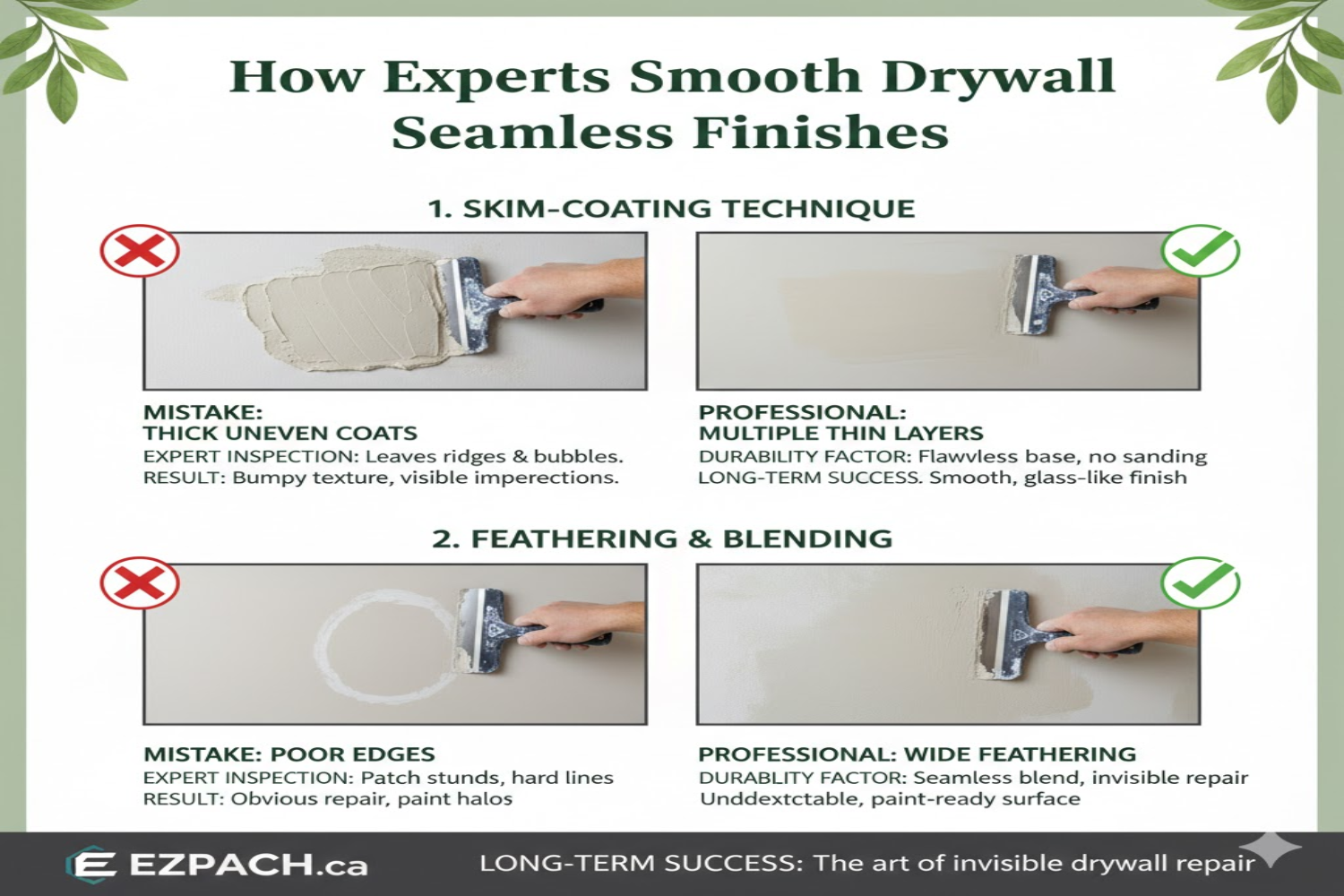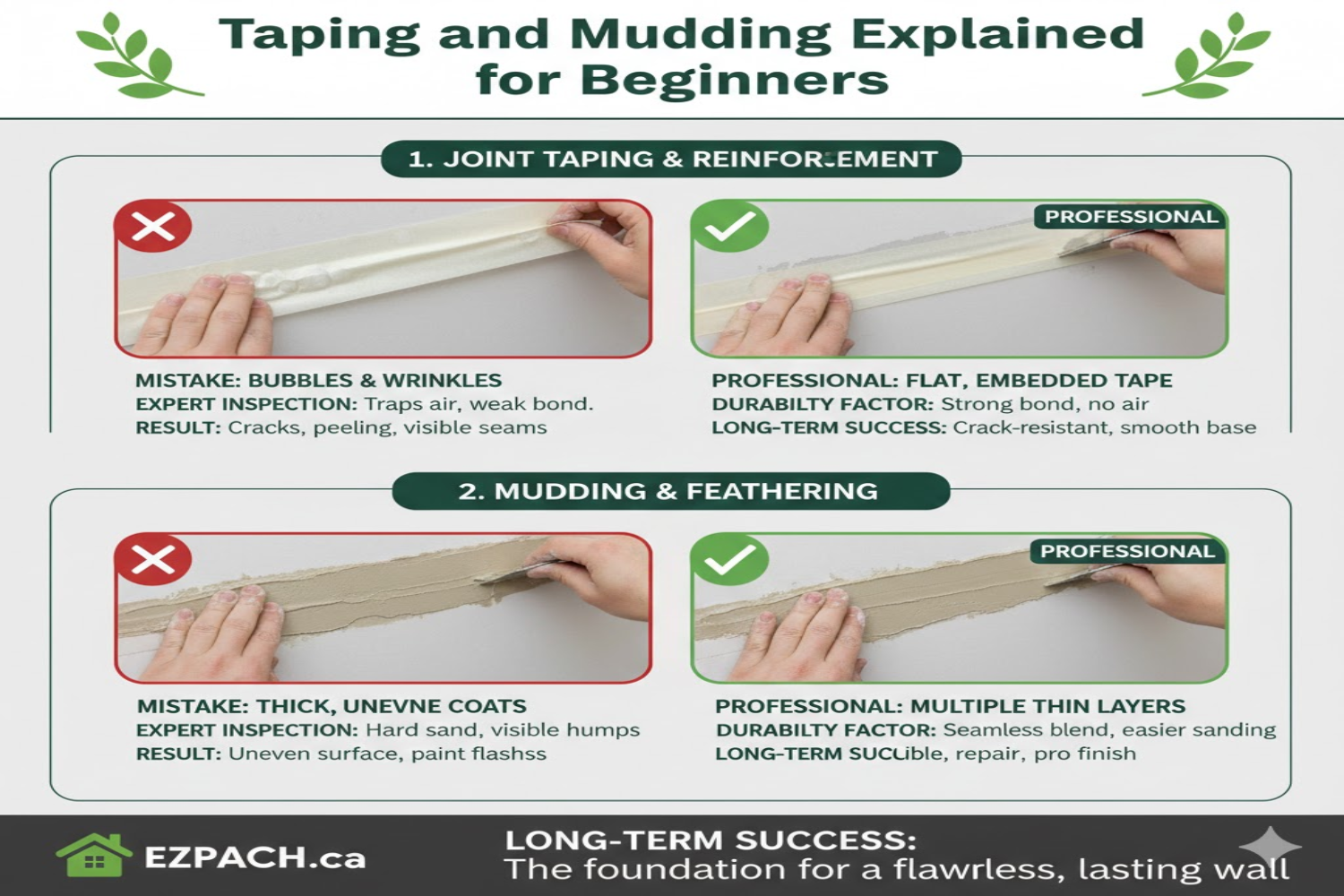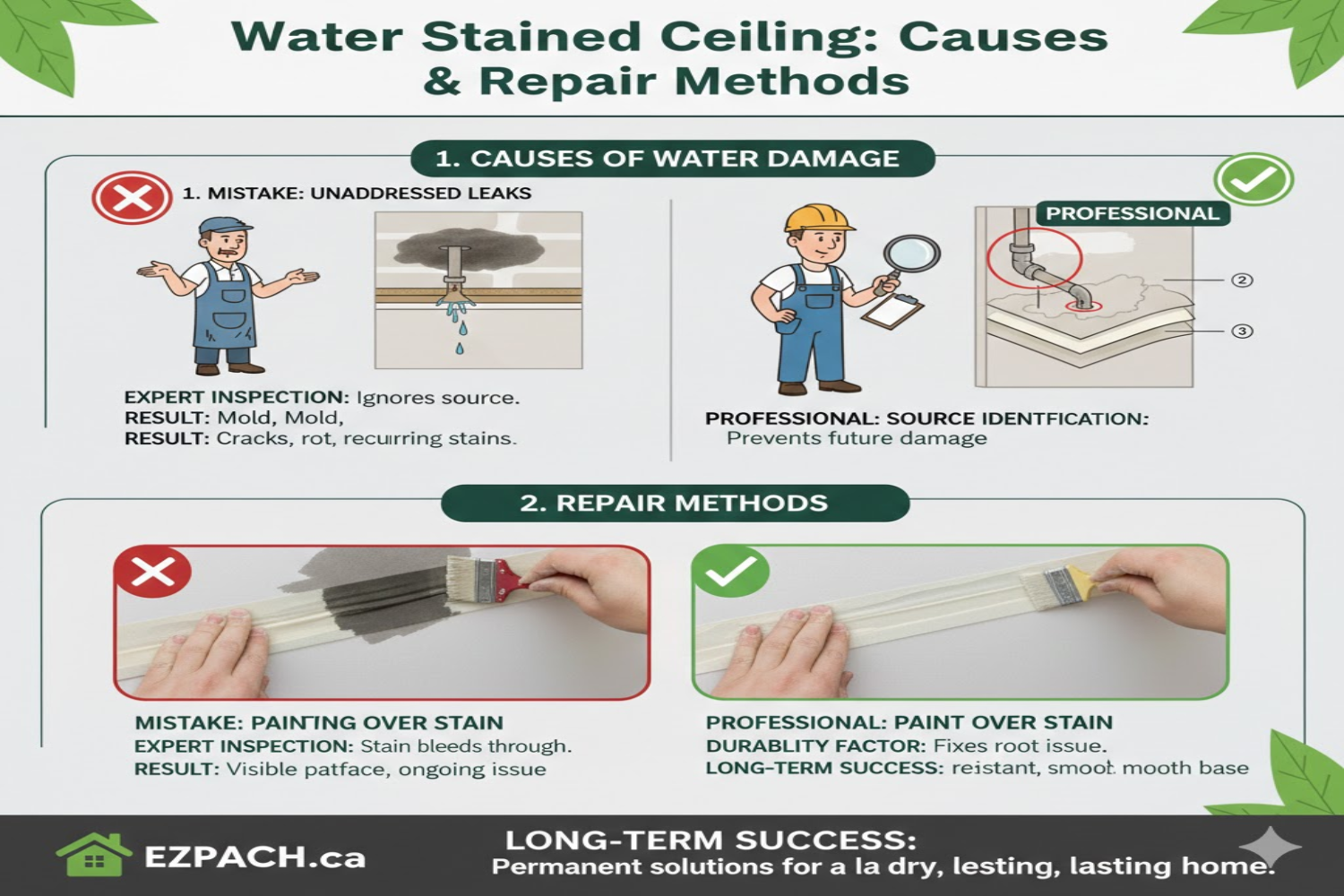
Many homeowners believe that quick fixes can solve their property issues instantly. These temporary solutions often appear cost-effective and convenient at first glance. However, relying solely on quick fixes can lead to bigger problems and higher expenses over time.
Understanding the limitations of quick fixes is crucial for maintaining both the appearance and structural integrity of a home. While they may address superficial issues, they often fail to resolve underlying causes. Without proper evaluation, a minor problem today can become a major repair tomorrow.
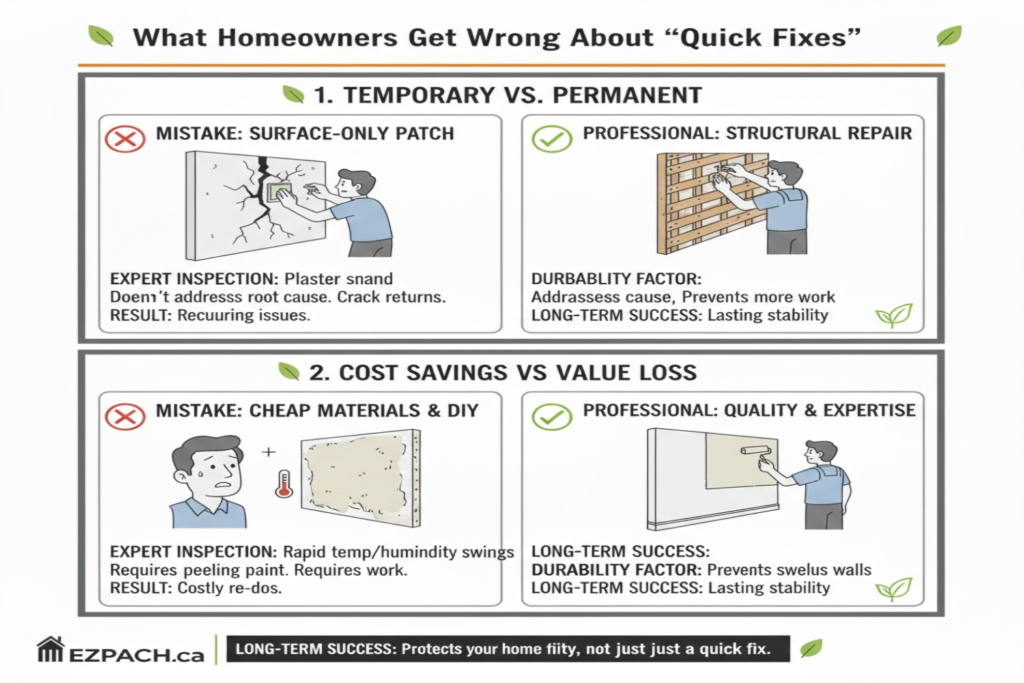
The Allure of Quick Fixes
Quick fixes are popular because they offer immediate results. Homeowners can patch a wall, seal a leak, or cover up cosmetic damage in a fraction of the time required for professional repairs. The promise of instant gratification makes these solutions appealing, particularly for those managing busy schedules.
However, the convenience of quick fixes often masks their shortcomings. Temporary repairs may not last long, and they can sometimes worsen the original problem. Homeowners frequently underestimate the long-term consequences, thinking that speed equals efficiency.
Common Quick Fix Examples
- Using tape to cover water leaks
- Filling cracks with superficial caulk
- Painting over mold or mildew without treatment
- Using adhesives instead of proper structural support
Why They Appeal
- Quick and easy to implement
- Low initial cost
- Provides immediate visual improvement
- Requires minimal technical knowledge
Quick Fixes vs. Permanent Solutions
Quick fixes only treat symptoms rather than causes. For example, filling a crack in a foundation without addressing moisture issues is merely cosmetic. Permanent solutions, on the other hand, involve a thorough assessment and professional intervention.
While quick fixes may temporarily improve aesthetics, permanent repairs enhance structural integrity and long-term durability. Homeowners often confuse short-term convenience with a real solution. Over time, repeated temporary fixes become more expensive than a one-time professional repair.
Short-Term Convenience
Temporary solutions save time in the moment but often lead to repeated maintenance. Homeowners may find themselves patching the same area multiple times within months.
Long-Term Consequences
Quick fixes can exacerbate underlying issues. For example, sealing a leaky roof temporarily without repairing damaged shingles can lead to interior water damage.
Financial Implications
Relying on temporary repairs increases long-term costs. Homeowners pay repeatedly for short-term solutions instead of investing once in a permanent repair.
Misjudging Severity
One of the most common mistakes homeowners make is misjudging the severity of a problem. Small cracks, minor leaks, or cosmetic damage can sometimes indicate deeper structural or systemic issues.
Failing to assess the root cause often results in inadequate repairs. Homeowners may assume a quick fix is sufficient when, in reality, professional evaluation is required. Ignoring early warning signs can turn minor repairs into major projects later.
Warning Signs Often Overlooked
- Repeated leaks in the same area
- Cracks that widen over time
- Doors and windows are sticking or misaligned.
- Persistent damp or mold
How to Evaluate
Homeowners should monitor changes over time and consult professionals when damage worsens. Simple DIY assessments, such as checking for uneven floors or sagging ceilings, can prevent larger issues.
Expert Intervention
Structural engineers or licensed contractors can accurately diagnose problems. Their guidance ensures that the solution addresses the cause, not just the symptoms.
When Quick Fixes Are Appropriate
Not all quick fixes are bad. They can be useful for minor, non-structural issues or aesthetic improvements. For example, touching up paint, replacing a door handle, or temporarily tightening a loose fixture is generally harmless.
The key is to distinguish between cosmetic issues and deeper structural or systemic problems. Quick fixes are effective only when homeowners understand their limitations and do not rely on them as permanent solutions.
Safe Quick Fixes
- Repainting a scratched wall
- Tightening loose cabinet handles
- Minor plaster touch-ups
- Temporary landscaping fixes
Avoid Quick Fixes When
- There are signs of water infiltration or mol.d
- Cracks are deep or growing.ng
- Roof or foundation damage is evident. ent
- Electrical or plumbing systems are involved.
Common Misconceptions About Quick Fixes
Homeowners often believe quick fixes are equivalent to professional repairs. They also assume that visible improvement means the problem is solved. These misconceptions can lead to repeated repairs, increased costs, and hidden damage.
- Quick fixes last as long as permanent repairs
- Minor cosmetic changes prevent structural damage
- DIY is always cost-effective
- Speed equals efficiency
The Reality
Temporary repairs are just that — temporary. Ignoring the underlying issue can result in larger, more expensive problems in the future.
Hidden Risks
Quick fixes can conceal damage such as mold, rot, or structural weakness. This makes it difficult to assess the true condition of a property.
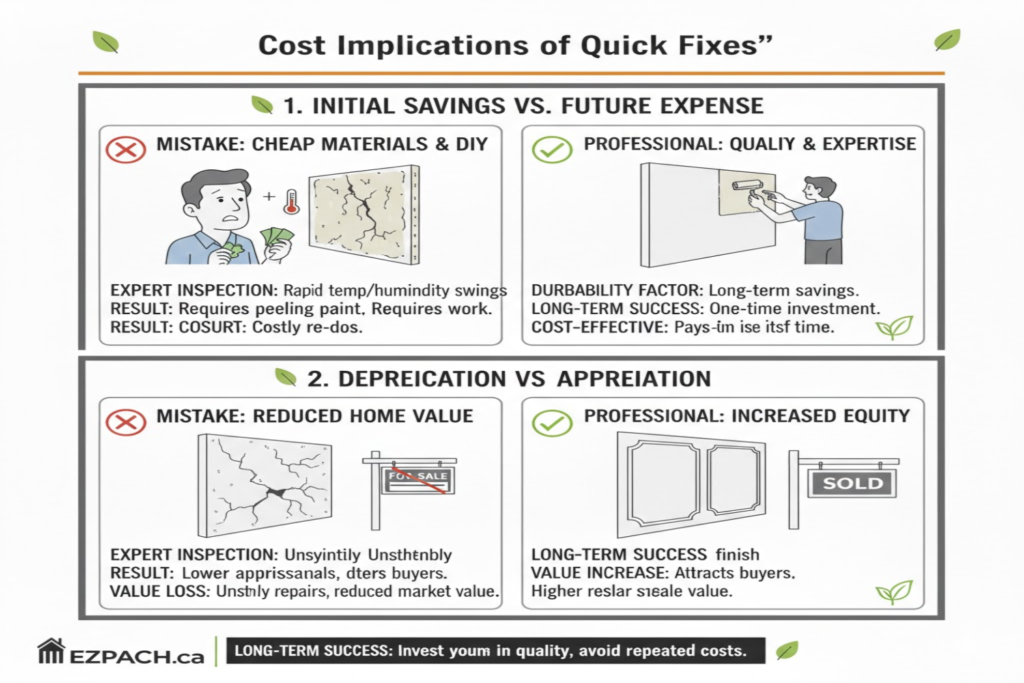
Cost Implications of Quick Fixes
Quick fixes may seem cheaper initially, but they often result in higher costs over time. Repeated patchwork, material wastage, and emergency professional intervention all contribute to this. Investing in proper repairs early saves money, time, and stress in the long run.
Financial Lessons
- Initial savings may be misleading.
- Repeated fixes increase total expenses.
- Emergency repairs are often costly.
- Professional assessment ensures value for money.
- Long-term solutions protect property investment.
Professional vs. DIY Quick Fixes
DIY quick fixes are tempting because they save labor costs. However, improper techniques or inadequate materials often worsen damage. Professional intervention ensures the repair addresses both visible damage and root causes.
DIY Advantages
- Cost savings for minor cosmetic issues
- Immediate action without scheduling a contractor
- Personal satisfaction from completing tasks
Professional Advantages
- Accurate diagnosis of underlying issues
Use of proper tools and materials - Long-lasting and safe results
- Prevents recurring problems
Long-Term Maintenance and Prevention
Understanding quick fixes helps homeowners plan long-term maintenance. Regular inspections and early detection prevent minor issues from escalating. Combining preventive measures with professional repairs ensures both durability and aesthetic appeal.
Preventive Measures
- Schedule seasonal inspections
- Maintain roofing and gutters.
- Monitor plumbing and drainage.e
- Keep up with paint and exterior maintenance.ce
Benefits of Preventive Maintenance
- Reduces emergency repairs
- Extends the lifespan of home components
- Protects property value
- Improves safety for occupants
Conclusion
Homeowners often overestimate the effectiveness of quick fixes, treating them as permanent solutions. While convenient and cost-effective in the short term, quick fixes rarely address underlying problems. Relying solely on temporary solutions can lead to repeated repairs, hidden damage, and higher costs.
Proper evaluation, preventive maintenance, and professional guidance ensure that repairs last and protect the property. By understanding the limitations of quick fixes, homeowners can make informed decisions, balance short-term convenience with long-term safety, and maintain both the value and integrity of their homes.
FAQs
1. Are all quick fixes harmful?
No, minor cosmetic touch-ups are usually safe. Problems arise when they mask underlying damage.
2. How long do quick fixes typically last?
They can last from a few weeks to a few months. Permanent solutions are needed for long-term durability.
3. Can I rely on DIY fixes for structural problems?
No, structural issues require professional intervention. DIY can worsen damage and create safety hazards.
4. What is the biggest risk of quick fixes?
They often conceal the true extent of the problem. This can lead to expensive repairs later.
5. Are quick fixes always cheaper than professional repairs?
Not in the long run. Temporary fixes can result in repeated expenses that exceed the cost of a professional repair.
6. How can I tell if a quick fix is safe?
If the problem is purely cosmetic and non-structural, a quick fix is usually fine. Otherwise, consult a professional.
7. Can quick fixes increase property value?
Only superficially. They do not add long-term value or address safety issues.
8. How do I know when to replace a quick fix with a permanent repair?
If the problem reappears or worsens, it’s time for a professional solution. Structural or systemic issues always need permanent intervention.
Drywall Repair Halifax
EZ Patch offers clean, professional drywall, ceiling, plaster, and water damage repair services in Halifax with minimal mess and long-lasting results.
EZ Patch – Drywall Repair Experts
Trusted drywall repair professionals serving Halifax and nearby areas.
Drywall Patch & Repair
Seamless drywall repairs for holes, cracks, dents, and damaged walls.
Ceiling Repairs
Professional ceiling repair services for stains, cracks, and water damage.
Drywall Installation
Complete drywall installation services for renovations and new builds.
Taping & Mudding
Smooth, paint-ready wall finishes by expert drywall finishers.
Plaster Repair Experts
Precision plaster repair services while maintaining original wall texture.
Water Damage Repair
Drywall and ceiling restoration for properties affected by water damage.
Texture Matching
Accurate texture blending so repaired areas match existing finishes.
Installation, Repair & Removal
End-to-end drywall installation, repair, and removal solutions.