Water stains on ceilings are a common problem in homes and commercial properties, often indicating a leak or moisture issue above. These stains not only affect aesthetics but may also signal underlying structural problems. Understanding the causes of water stains and the proper repair methods is essential to prevent further damage.
Ignoring a water-stained ceiling can lead to mold growth, weakened drywall, and costly repairs. Homeowners must assess the source of the water, address it, and then repair the ceiling correctly. This guide explains the causes & repair methods for water-stained ceilings, helping you restore your ceiling safely and effectively.
Common Causes of Water Stains on Ceilings
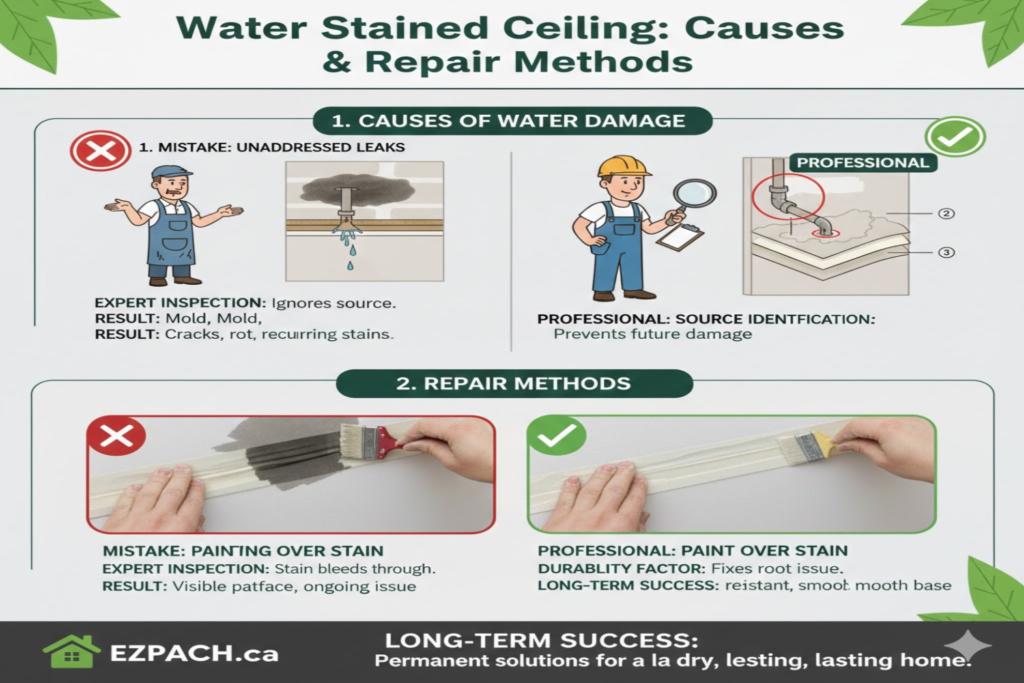
Water stains are usually a symptom rather than the problem itself. Identifying the root cause is critical before attempting any repair. Leaks can originate from plumbing, roofs, or condensation.
Roof Leaks
- Damaged shingles or tiles can allow rainwater to penetrate
- Poorly sealed roof joints increase the risk of leaks.
- Ice dams in winter can cause water to seep into ceilings.
Plumbing Issues
- Leaky pipes or fixtures in bathrooms above ceilings
- Faulty connections in water lines can create slow leaks.
- Hot water pipes may sweat, causing discoloration.
Condensation
- Poor insulation can lead to moisture accumulation.
- High-humidity areas often develop water stains over time.
- HVAC systems not functioning properly may contribute
Step-by-Step Guide for How to Fix Water Damage on Ceilings
Water damage on ceilings can be both unsightly and structurally damaging if left untreated. Following a methodical approach ensures you fix the problem effectively and prevent it from recurring. Here’s a step-by-step guide to handling water-damaged ceilings safely and efficiently.
Identify and Fix the Source
The first step in fixing water damage on ceilings is to locate the exact source of the leak. Water stains often appear far from the actual cause, so it’s important to inspect the roof, plumbing, and any overhead fixtures carefully. Roof leaks, pipe drips, or condensation from HVAC systems are the most common culprits. Once the source is identified, repairing it immediately prevents further damage to the ceiling and reduces the risk of mold growth.
Assess the Damage
After addressing the source, examine the extent of the ceiling damage to determine the proper repair method. Minor stains on a dry ceiling may only require cleaning and painting, while sagging or soft drywall indicates deeper water penetration. Check for mold, bubbling paint, or discolored patches that suggest prolonged moisture exposure. Accurate assessment ensures the repair is effective and prevents recurring water stains.
Repair or Replace the Ceiling
Depending on the severity, you can either repair or fully replace the water-damaged ceiling. For small stains, cleaning, applying a stain-blocking primer, and repainting are sufficient. Heavily damaged or sagging drywall requires cutting out the affected section and installing a new panel, followed by taping, mudding, sanding, and priming. Choosing the right repair method guarantees a smooth, long-lasting finish while restoring the ceiling’s structural integrity.
Prevent Future Water Damage
Preventing future water damage is essential to avoid repeated repairs and costly restoration. Regular roof inspections, gutter cleaning, and plumbing maintenance help reduce the risk of leaks. Proper attic ventilation, insulation, and controlling indoor humidity levels prevent condensation-related stains. Addressing minor leaks promptly and monitoring vulnerable areas ensures your ceiling remains damage-free and visually appealing for years.
Assessing the Extent of Damage
Before repairing, it’s important to understand how severe the damage is. Minor stains may only require cosmetic fixes, while larger, sagging areas often need replacement.
Inspect the ceiling by tapping gently on the drywall; soft spots suggest water saturation. Check insulation and attic spaces above the stain for leaks. Knowing the extent prevents improper repairs that fail to address the source.
Temporary Measures to Prevent Further Damage
While preparing for permanent repairs, temporary solutions help protect your ceiling. These methods reduce the risk of additional staining or sagging.
- Place a bucket under active drips.
- Cover the area with plastic sheeting to prevent the spread.
- Turn off water sources if plumbing leaks are suspected.
- Avoid using ceiling fans or high heat near the stairs.
Repair Methods for Water-Stained Ceilings
Repairing a water-stained ceiling depends on the type and severity of the damage. Small cosmetic stains can be addressed without replacing drywall, while severe water damage requires panel replacement.
Cleaning Minor Stains
- Mix water and mild detergent to clean the surface dirt.
- Apply a solution of bleach and water to kill mold spores.
- Rinse and allow the area to dry completely.
Sealing Stains
- Use a stain-blocking primer before painting.
- Oil-based primers are effective for persistent yellow marks.
- Follow with a topcoat matching your ceiling color.
Replacing Damaged Drywall
- Cut out the affected section with a utility knife.
- Install a new drywall patch, securing g to the ceiling joists.
- Tape, mud, sand, and prime the area before painting
How To Prevent Water Stains on the Ceiling
Preventing water stains on your ceiling is much easier than repairing them. Regular maintenance, proper ventilation, and timely leak detection are key to keeping your ceilings clean and damage-free.
- Inspect Your Roof Regularly – Check for damaged shingles, cracks, or missing tiles at least twice a year. Early detection prevents water from entering your home.
- Maintain Plumbing Systems – Ensure pipes, faucets, and water connections are leak-free. Fixing small leaks promptly avoids ceiling discoloration.
- Improve Attic Ventilation – Proper airflow in the attic reduces condensation buildup. Ventilation prevents moisture from accumulating on ceilings.
- Use a Dehumidifier – High indoor humidity can lead to water stains. A dehumidifier keeps moisture levels under control.
- Clean Gutters and Downspouts – Blocked gutters cause water overflow, which may seep into ceilings. Regular cleaning directs water away from your home.
Cost Considerations for Ceiling Repairs
The cost of repairing a water-stained ceiling can vary widely depending on the severity of the damage, the materials used, and whether the repair is done as a DIY project or by a professional. Minor cosmetic repairs, such as cleaning and applying a stain-blocking primer with a fresh coat of paint, are relatively inexpensive and often manageable by homeowners themselves.
However, more extensive repairs, such as replacing damaged drywall, addressing underlying leaks, or fixing structural issues, can quickly increase costs. Additional factors that affect pricing include ceiling type (popcorn, textured, or flat), the size of the affected area, labor rates in your region, and the cost of specialized tools or materials. Planning your repair budget helps prevent unexpected expenses and ensures a smooth, hassle-free restoration.
Estimated Ceiling Repair Costs Table
| Repair Type | Materials Needed | DIY Cost Estimate (CAD) | Professional Cost Estimate (CAD) | Notes |
| Minor Stain Cleaning & Painting | Cleaning solution, primer, paint | $50–$100 | $150–$250 | Quick cosmetic fix; does not address leaks. |
| Small Drywall Patch | Drywall sheet, joint compound, tape | $80–$150 | $200–$350 | Covers 1–2 square meters; requires sanding and painting. |
| Large Drywall Replacement | Drywall panels, compound, primer, paint | $200–$400 | $500–$900 | For ceilings with sagging or water-damaged sections. |
| Textured/Popcorn Ceiling Repair | Texturing material, paint, compound | $100–$250 | $400–$800 | Requires specialty tools; texture matching may be difficult for DIY. |
| Mold or Mildew Remediation | Bleach solution, protective gear, primer | $50–$150 | $300–$700 | Essentially, if water stains lead to mold growth, safety precautions are required. |
| Plumbing or Roof Leak Fix (Pre-Repair) | Pipes, sealants, and roofing materials | Varies | $300–$1,500+ | Repair costs vary by severity; they must be addressed before ceiling repair. |
Conclusion
Water-stained ceilings are a sign of underlying moisture problems that require immediate attention. Addressing the source of water before repairing the ceiling is essential for a lasting solution. Proper repair methods, including cleaning, priming, or replacing drywall, restore both aesthetics and structural integrity.
Preventing future water stains involves regular maintenance of roofing, plumbing, and insulation. By following proper steps and using appropriate materials, homeowners can ensure their ceilings remain damage-free and visually appealing.
Frequently Asked Questions (FAQs)
1. Can I paint over a water-stained ceiling?
Yes, but only after cleaning and applying a stain-blocking primer. Painting directly over stains may cause discoloration to resurface.
2. How do I know if the ceiling needs replacement?
If drywall is sagging, soft, or moldy, replacement is necessary. Cosmetic fixes won’t address underlying structural issues.
3. Can water stains cause mold growth?
Yes, persistent moisture promotes mold development. Proper cleaning and drying are essential to prevent mold.
4. How long does it take for a repaired ceiling to dry?
Drying times vary by material and humidity. Typically, primer and joint compound require 24 hours between coats.
5. Can I repair a ceiling myself?
Small stains can be repaired by DIY methods. Larger or structural damage may require professional help.
6. What is the best primer for water stains?
Oil-based or shellac primers work best for blocking yellow or brown stains. They seal the ceiling for proper paint adhesion.
7. Do water-stained ceilings indicate roof damage?
Often yes, but plumbing leaks or condensation can also cause stains. Inspecting the source is crucial.
8. Can preventative maintenance stop all ceiling stains?
Regular inspections reduce risk, but unforeseen leaks or storms may still cause staining. Prompt action is key.
Drywall Repair Halifax
EZ Patch offers clean, professional drywall, ceiling, plaster, and water damage repair services in Halifax with minimal mess and long-lasting results.
EZ Patch – Drywall Repair Experts
Trusted drywall repair professionals serving Halifax and nearby areas.
Drywall Patch & Repair
Seamless drywall repairs for holes, cracks, dents, and damaged walls.
Ceiling Repairs
Professional ceiling repair services for stains, cracks, and water damage.
Drywall Installation
Complete drywall installation services for renovations and new builds.
Taping & Mudding
Smooth, paint-ready wall finishes by expert drywall finishers.
Plaster Repair Experts
Precision plaster repair services while maintaining original wall texture.
Water Damage Repair
Drywall and ceiling restoration for properties affected by water damage.
Texture Matching
Accurate texture blending so repaired areas match existing finishes.
Installation, Repair & Removal
End-to-end drywall installation, repair, and removal solutions.