Drywall is a staple of modern construction, prized for its affordability, smooth finish, and ease of installation. However, it is far from indestructible. Over time, walls and ceilings can develop cracks, sagging panels, stains, or mold, which not only affect aesthetics but can also compromise structural integrity.
Understanding the top causes of drywall damage helps homeowners, contractors, and DIY enthusiasts prevent costly repairs. By recognizing the primary culprits behind deterioration, it becomes easier to implement protective measures and ensure long-lasting wall durability.
Moisture-Related Causes of Drywall Damage
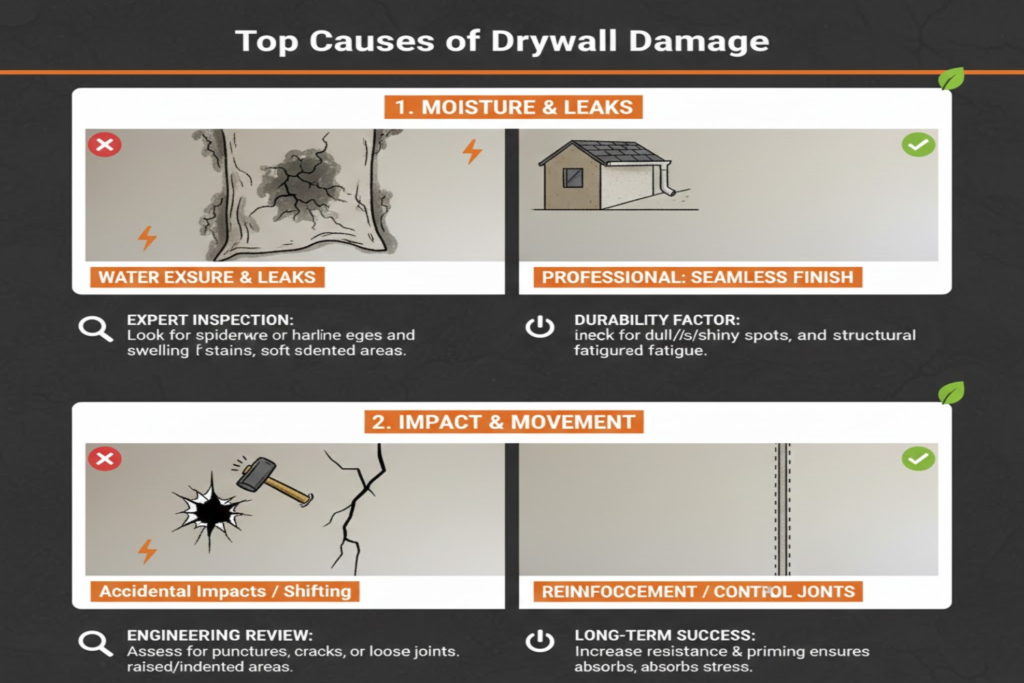
Moisture is one of the most frequent and destructive causes of drywall damage. Drywall absorbs water quickly, causing swelling, warping, and compromised joint integrity. Over time, even small leaks or high humidity can result in significant structural and cosmetic problems.
Water infiltration encourages mold and mildew growth, which affects both air quality and wall strength. In bathrooms, basements, and kitchens, moisture management is critical to prevent long-term damage and avoid expensive repairs.
Plumbing Leaks
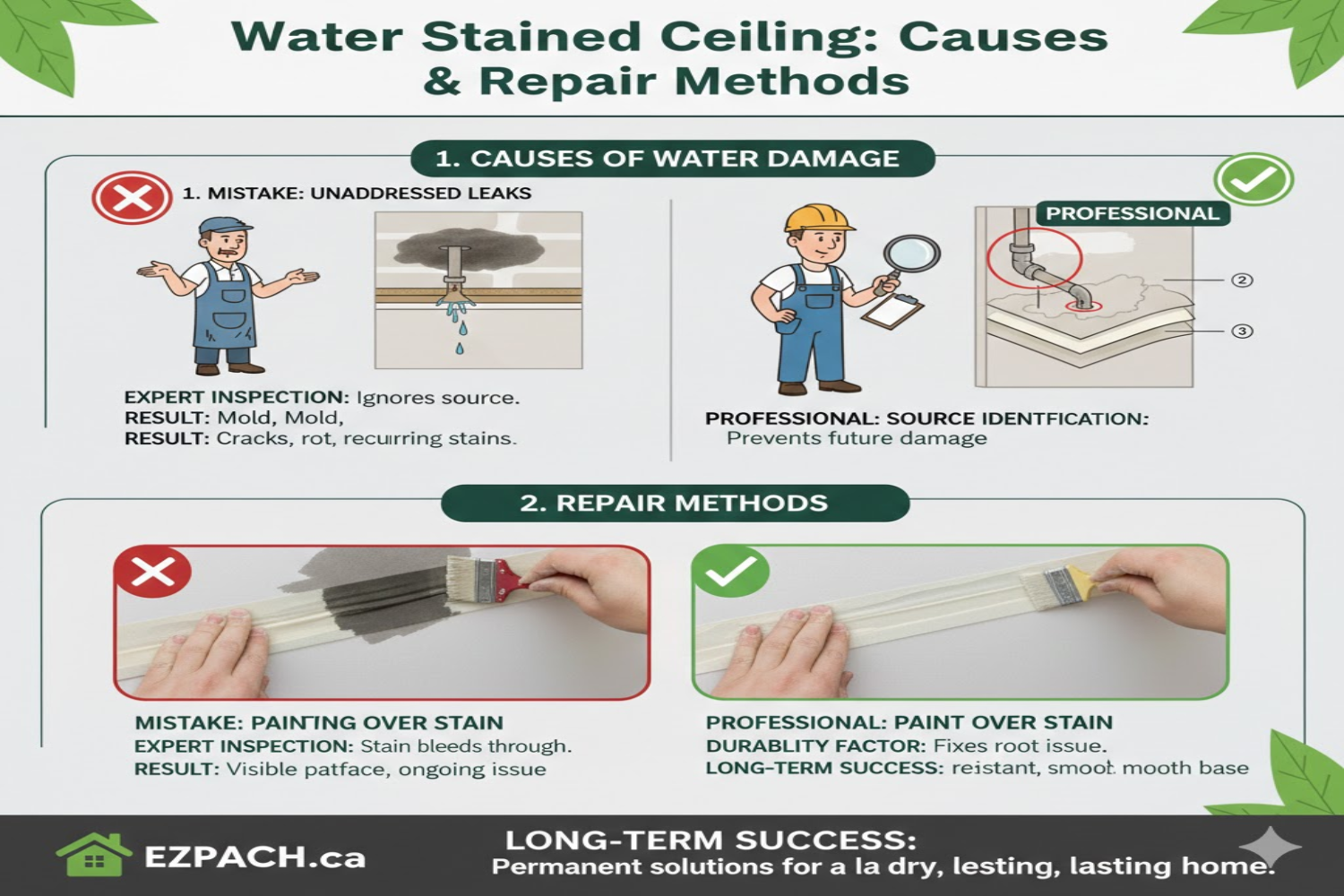
Leaking pipes behind walls are a hidden but common source of damage. Water softens the gypsum core and weakens joint compounds. Neglecting leaks can lead to sagging panels, mold, and discoloration.
Roof and Ceiling Leaks
Damaged roofs or poor insulation allow water to penetrate ceilings. Ceiling drywall absorbs moisture, causing sagging and peeling paint. Repeated exposure often results in joint separation or warping.
High Humidity Environments
Consistent high humidity in bathrooms or basements accelerates drywall deterioration. Even without direct water contact, panels can swell, seams crack, and mold grow. Proper ventilation and dehumidification help reduce this risk.
Physical Impact Causes of Drywall Damage
Physical impact is another leading factor behind drywall deterioration. Bumps, collisions, and accidental holes can leave dents or cracks. Repeated stress over time can weaken the wall’s surface and joints.
High-traffic areas, corners, and doorways are especially vulnerable to this type of damage. Protective measures, such as corner guards or careful handling during furniture moves, can prevent significant cosmetic and structural problems.
Furniture Collisions
Pushing heavy furniture against walls creates dents or holes. The damage may be minor initially, but it worsens with repeated impact. Repairing early prevents more extensive panel deterioration.
Door and Cabinet Impacts
Swinging doors or improperly installed cabinets can stress drywall edges. Over time, panels may crack or seams separate. Adding stoppers or padding minimizes repeated damage.
Accidental Holes
Holes from nails, screws, or toys are common in homes. Small holes left unrepaired can expand into larger issues. Patching with joint compound and reinforcement helps maintain integrity.
Structural and Foundation-Related Causes of Drywall Damage
Structural shifts in a building are a hidden but frequent cause of drywall problems. Settling foundations, framing movement, or shifting joists creates stress on panels. Hairline cracks often appear near windows, doors, and corners, highlighting areas of tension.
Even minor foundation movement over time can compromise joints, causing separation or bulging. Understanding these causes allows homeowners to anticipate where cracks may form and repair them proactively.
Foundation Settling
Uneven foundation settling creates stress on walls. Corners and high-tension areas develop cracks first. Monitoring foundation stability can prevent widespread damage.
Framing Shifts
Wood or metal framing expands and contracts due to temperature and humidity changes. This movement transfers stress to drywall panels. Proper installation with spacing allowances reduces the risk of joint failure.
Environmental Causes of Drywall Damage
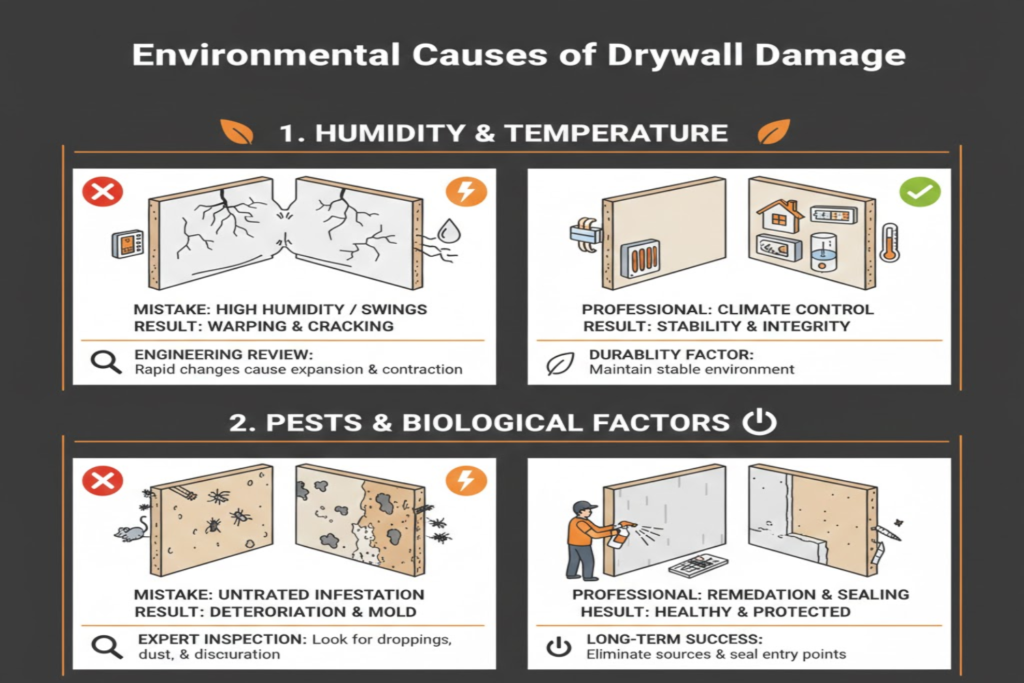
Environmental changes like temperature swings, seasonal humidity, and indoor microclimates accelerate drywall deterioration. Even minor fluctuations cause repeated expansion and contraction, weakening seams and panel edges.
Poor insulation, direct sunlight, or unventilated spaces exacerbate these effects, particularly in basements, attics, and bathrooms. Combined with moisture or physical impact, environmental factors significantly shorten the life of drywall.
Seasonal Humidity
Summer humidity or rainy season moisture causes drywall to swell. Dry winter air then shrinks panels, stressing joints. Repeated cycles eventually lead to cracks or seam separation.
Temperature Fluctuations
Rapid heating and cooling can dry out joint compounds or make gypsum brittle. Temperature changes near uninsulated areas often accelerate cracking. Controlling indoor temperature reduces this risk.
Household Activities
Cooking, showering, or indoor drying of clothes increases humidity. Moisture accumulates in corners and behind furniture, promoting warping. Ventilation systems or dehumidifiers mitigate long-term environmental damage.
Poor Installation-Related Causes of Drywall Damage
Incorrect installation is a subtle but significant contributor to drywall problems. Misplaced fasteners, uneven tape application, or insufficient joint compound create vulnerabilities. Over time, these flaws lead to cracks, seam failure, and sagging panels.
Proper installation practices are critical for ensuring long-term wall durability. Even premium materials will fail if not installed correctly, emphasizing the importance of professional guidance or careful DIY practices.
Fastening Errors
Screws or nails that are too tight or too loose cause stress points. Panels may crack or bow over time. Consistent, flush fastening spacing prevents premature damage.
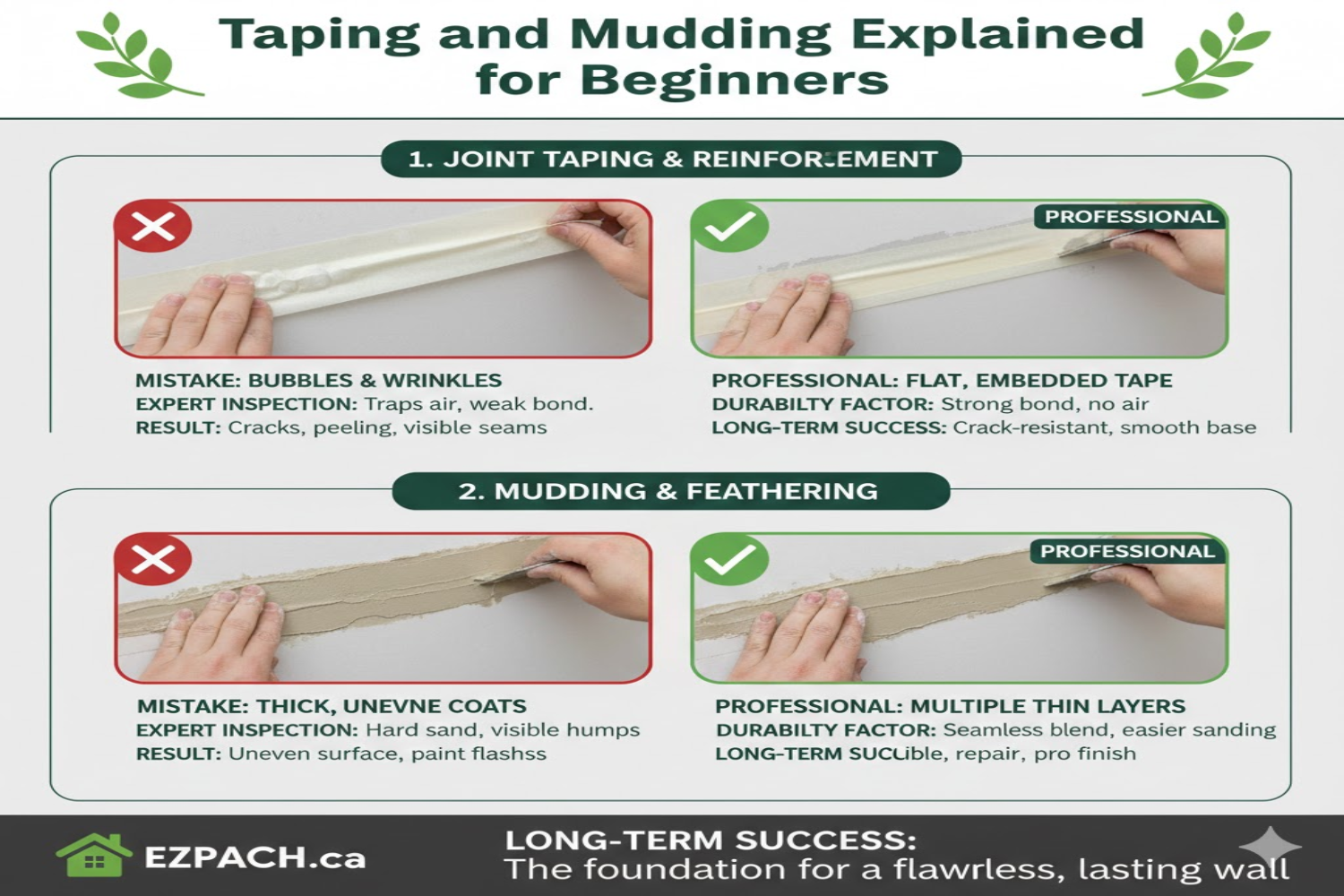
Taping and Joint Mistakes
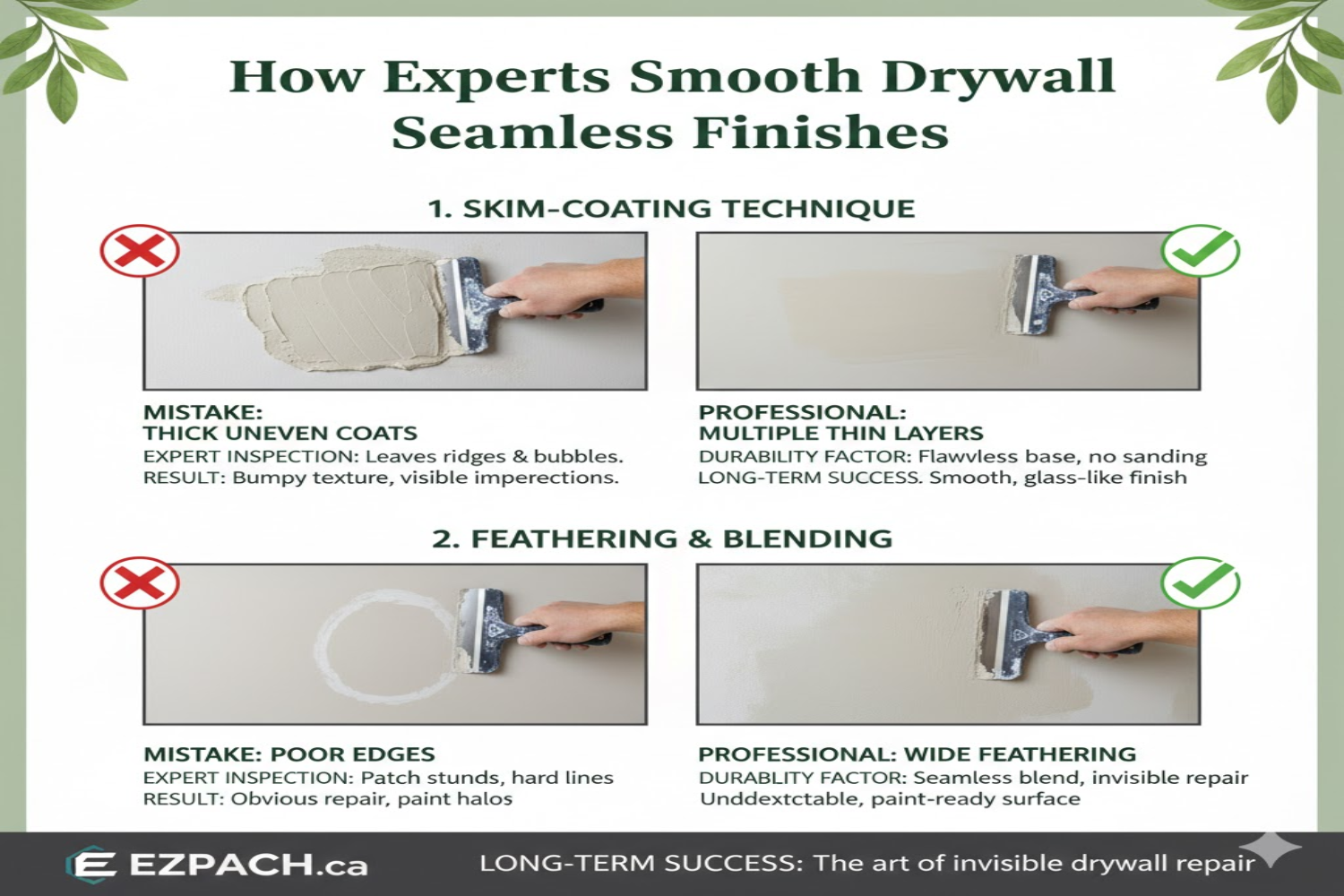
Poor seam taping or uneven compound application leads to cracks as walls settle. Joint failure weakens the overall wall structure. Skilled installation maintains long-term integrity.
Aging and Material Fatigue Causes of Drywall Damage
As drywall ages, it naturally becomes more susceptible to damage due to long-term stress, minor moisture exposure, and repeated environmental changes. Over time, this material fatigue can lead to cracks, sagging, and weakened structural integrity.
Key Aging and Material Fatigue Factors:
- Long-Term Moisture Exposure: Even small amounts of moisture absorbed over the years can weaken drywall and cause swelling.
- Repeated Temperature Fluctuations: Expansion and contraction from seasonal or indoor temperature changes stress seams and joints.
- Physical Wear Over Time: Regular impacts, bumps, or minor accidents accumulate, gradually compromising panel strength.
- Joint Compound Degradation: Older joint compounds can dry out or shrink, leading to cracks along seams.
- Surface Deterioration: Paint or paper facings may yellow, peel, or become brittle as the drywall ages.
Pest and Insect-Related Causes of Drywall Damage
Pests such as termites, rodents, and carpenter ants can indirectly damage drywall. They burrow into framing, chew paper facings, or create openings that allow moisture infiltration. Even small infestations can compromise wall strength over time.
Routine pest inspections and sealing entry points reduce the likelihood of significant drywall deterioration. Combined with humidity control, these measures protect both the structure and finish.
Cleaning and Chemical-Related Causes of Drywall Damage
Harsh cleaning products or abrasive scrubbing can erode paint and joint compounds. While primarily cosmetic, this damage increases the wall’s vulnerability to moisture and physical impact.
Proper cleaning involves gentle materials, minimal water, and protective coatings like semi-gloss paint to maintain surface durability. Consistent care prevents minor issues from escalating into structural problems.
Summary of Top Causes of Drywall Damage
- Moisture Exposure: Leaks, floods, or high humidity can cause swelling, warping, and mold growth.
- Physical Impacts: Furniture bumps, door swings, or accidental holes weaken panels.
- Structural Shifts: Settling foundations or framing movement stress seams and corners.
- Environmental Fluctuations: Seasonal humidity and temperature swings accelerate cracking.
- Poor Installation: Fastening errors, uneven taping, and insufficient joint compound create vulnerabilities.
- Aging Panels: Long-term exposure to minor stressors causes fatigue and brittleness.
- Pests and Insects: Termites, rodents, and ants damage facings or allow moisture infiltration.
- Chemical Damage: Harsh cleaners or abrasive scrubbing erode surfaces and joints.
FAQs
Q1: Can small dents cause major drywall problems?
A: Yes, minor dents weaken the wall over time. If left unrepaired, they can expand into cracks or holes.
Q2: How does humidity damage drywall seams?
A2: Moisture softens joint compounds, causing cracks or separation. Over time, this compromises wall integrity.
Q3: Are all drywall types equally susceptible to damage?
A3: No, moisture-resistant or fire-rated drywall lasts longer. Standard drywall is more vulnerable to water and impact.
Q4: Does foundation settling affect drywall?
A4: Yes, shifting foundations, stress seams, and corners. Hairline cracks are common indicators.
Q5: How fast does impact damage worsen?
A5: Repeated impacts accelerate cracking or holes. Timely repair prevents spreading damage.
Q6: Can aging drywall become brittle?
A6: Yes, older panels often sag or crack. Regular maintenance extends their lifespan.
Q7: Can pests compromise drywall structure?
A7: Indirectly, by damaging framing or creating entry points. Severe infestations may require panel replacement.
Q8: Are chemical cleaners dangerous for drywall?
A8: Harsh solvents or abrasives erode surfaces and joint compounds. Gentle cleaning minimizes long-term damage.
Conclusion
Drywall is vulnerable to multiple stressors, from moisture and environmental fluctuations to physical impacts and poor installation. Understanding the top causes of drywall damage empowers homeowners and professionals to implement preventive strategies and timely repairs. By addressing these causes proactively, walls and ceilings can remain structurally sound and visually appealing for decades.
Preventive measures like proper ventilation, careful installation, pest control, humidity management, and routine inspections significantly reduce the risk of deterioration. With proactive care and quality materials, drywall can maintain both its durability and aesthetics, saving homeowners time, money, and stress in the long term.
Drywall Repair Halifax
EZ Patch offers clean, professional drywall, ceiling, plaster, and water damage repair services in Halifax with minimal mess and long-lasting results.
EZ Patch – Drywall Repair Experts
Trusted drywall repair professionals serving Halifax and nearby areas.
Drywall Patch & Repair
Seamless drywall repairs for holes, cracks, dents, and damaged walls.
Ceiling Repairs
Professional ceiling repair services for stains, cracks, and water damage.
Drywall Installation
Complete drywall installation services for renovations and new builds.
Taping & Mudding
Smooth, paint-ready wall finishes by expert drywall finishers.
Plaster Repair Experts
Precision plaster repair services while maintaining original wall texture.
Water Damage Repair
Drywall and ceiling restoration for properties affected by water damage.
Texture Matching
Accurate texture blending so repaired areas match existing finishes.
Installation, Repair & Removal
End-to-end drywall installation, repair, and removal solutions.