Drywall is a cornerstone of modern interior construction, providing smooth surfaces, fire resistance, and structural support for walls and ceilings. While drywall sheets themselves are important, the fasteners used to secure them play an equally critical role. Understanding the role offasteners in drywall durability is essential for ensuring long-lasting, crack-free walls and ceilings.
Improper fastening can lead to nail pops, sagging panels, joint separation, and reduced overall system lifespan. Even high-quality drywall will fail prematurely if fasteners are incorrectly chosen or installed. This comprehensive guide explains the role of fasteners in drywall durability, covering fastener types, installation techniques, common mistakes, and best practices for long-term performance.
Types of Drywall Fasteners
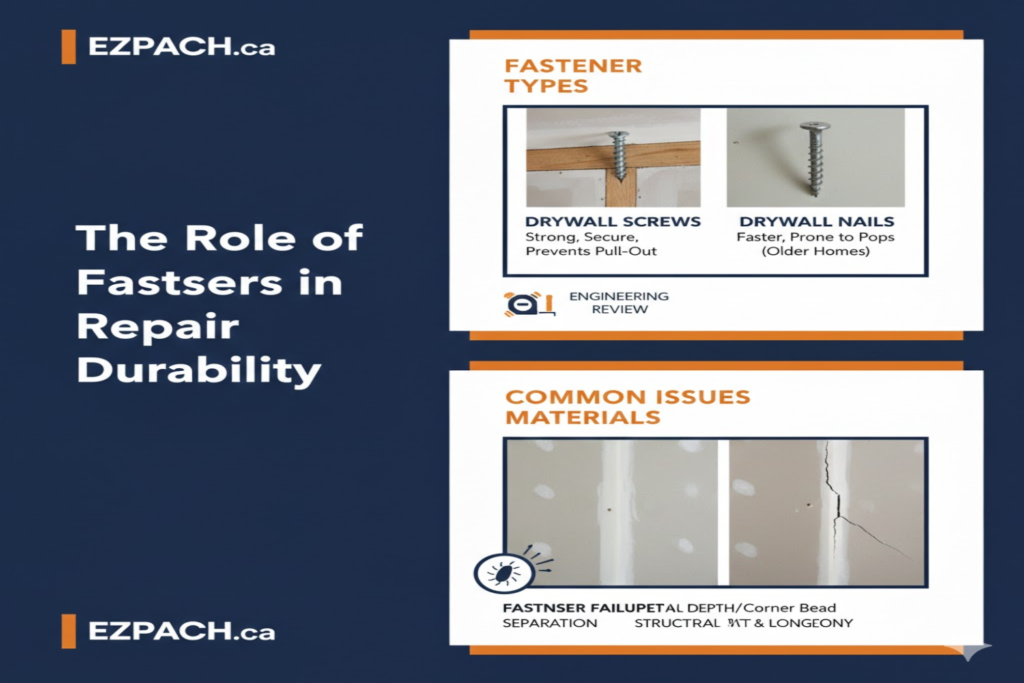
Drywall can be secured using a variety of fasteners, including nails, screws, and specialty anchors. Each fastener type offers unique benefits depending on the application. Selecting the right fastener is a critical aspect of understanding the role of fasteners in drywall durability.
Drywall Nails
Nails are traditional fasteners and are commonly used for ceilings or temporary applications. They allow some panel movement, reducing stress cracks in some cases. Over time, however, nail pops are a frequent issue if not installed properly.
Drywall Screws
Screws provide superior holding power and are less prone to popping than nails. They come in various lengths and coatings to suit different wall thicknesses and moisture conditions. Correct screw type and spacing are key to drywall longevity.
Specialty Anchors
Anchors such as toggle bolts or molly bolts are used for mounting heavy objects on drywall. While not structural fasteners, proper anchor selection prevents localized panel failure. These fasteners complement standard nails or screws to enhance wall durability.
Fastener Spacing and Placement
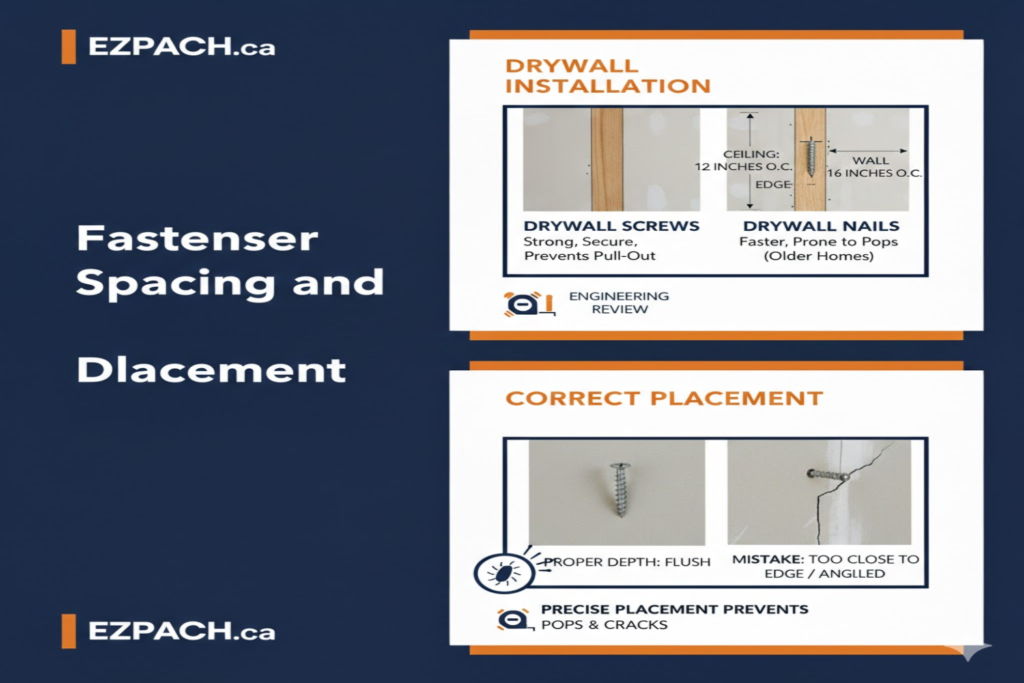
Fastener placement affects both structural integrity and surface appearance. Improper spacing is a common cause of sagging panels and joint cracking. Properly planned placement ensures stress is evenly distributed across the wall.
Panels that are fastened too sparsely create weak points prone to bending or separation. Conversely, overdriven or closely spaced fasteners can damage the drywall core. Understanding the role of fasteners in drywall durability includes learning correct spacing standards for walls and ceilings.
Key spacing guidelines:
- 12 inches on walls and 7 inches on ceilings for screws
- 8 inches on ceilings for nails
- 16-inch maximum spacing along panel edges
- Additional fasteners near corners and joints
Fastener Installation Depth
Fastener depth is critical to preventing surface damage. Screws or nails set too deeply weaken the drywall paper, creating stress points. Shallow fasteners fail to hold panels securely, leading to movement and sagging.
Proper depth ensures the fastener head is flush with the drywall surface without tearing. This balance maximizes holding power and reduces the risk of visible imperfections. Correct installation depth is a central factor in the role of fasteners in drywall durability.
Common Fastener Mistakes
Even experienced installers make mistakes that compromise drywall longevity. Overdriven screws, uneven spacing, and misaligned fasteners are frequent errors. These issues often remain hidden initially but manifest years later.
Fastener mistakes accelerate panel cracking, joint separation, and surface imperfections. They can increase long-term maintenance costs and reduce the lifespan of the drywall system. Avoiding these errors is vital for builders and DIY homeowners alike.
Overdriven Screws
Excessive depth breaks drywall paper, reducing holding power. Visible dimples also appear after finishing.
Underdriven Screws
Shallow screws do not secure panels, leading to loosened drywall over time.
Nail Pops
Improper nailing can cause nails to migrate out of the drywall surface. Nail pops are unsightly and weaken structural support.
Uneven Fastener Layout
Skipping proper spacing or misaligning fasteners concentrates stress in specific areas, leading to cracks.
Fasteners in High-Moisture Areas
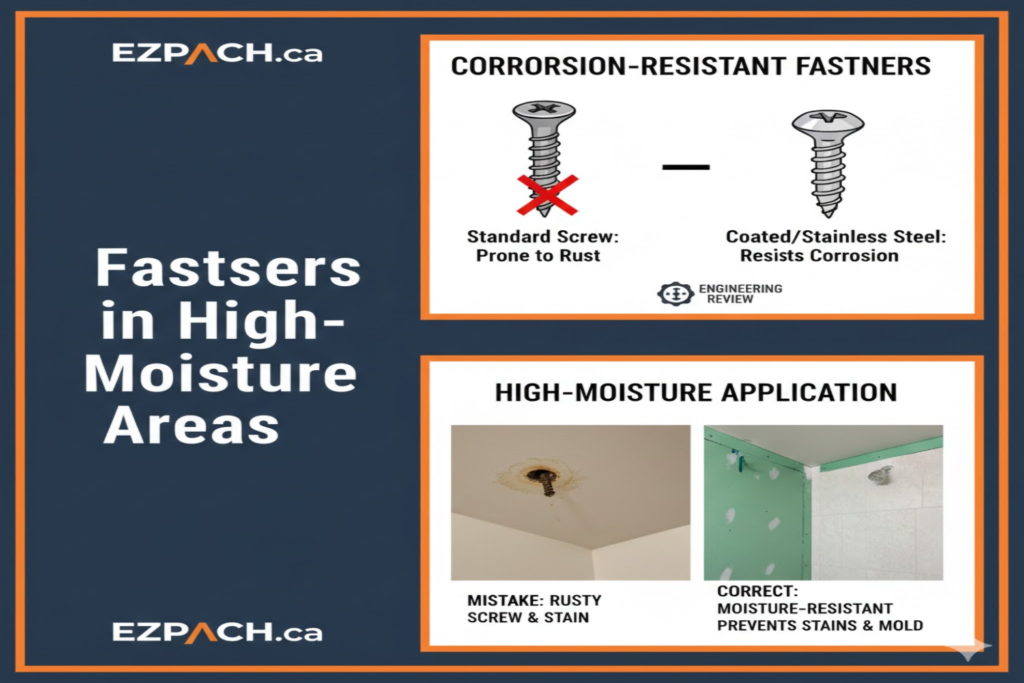
Moisture affects both drywall and fasteners. Standard screws or nails may rust or fail in bathrooms, kitchens, or basements. Moisture-resistant fasteners such as galvanized or coated screws are essential for long-term durability.
Incorrect fasteners in wet environments accelerate panel damage. Using the right materials and spacing ensures the wall system remains stable. This highlights the role of fasteners in drywall durability, especially in challenging conditions.
Recommended fasteners for moisture-prone areas:
- Galvanized screws for interior walls
- Stainless steel screws for ceilings and exterior walls
- Rust-resistant nails in secondary applications
- Anchors compatible with moisture-resistant drywall
Fasteners in Ceilings and Overhead Applications
Ceiling drywall experiences more stress than walls due to gravity. Proper fastener selection and spacing are critical to prevent sagging. Long screws or nails are often required for ceilings to hold panels securely.
Incorrect ceiling fastening is a primary source of long-term problems. Sagging panels, joint separation, and surface cracks are common issues. Understanding the role of fasteners in drywall durability is particularly important in ceilings, where gravity exacerbates small errors.
Edge Fastening
Edges must be secured to the framing to prevent bowing. Proper corner support is crucial.
Field Fastening
Panels must be fastened across the middle of the surface to prevent bending.
Extra Support in Large Panels
Panels over 8 feet require additional fasteners to maintain flatness.
Fastener Material and Corrosion Resistance
Material selection affects fastener longevity. Steel, stainless steel, and coated fasteners perform differently under various conditions. Corrosion weakens holding power, especially in humid or coastal environments.
Choosing the correct material ensures long-term panel integrity. Poor fastener material selection accelerates drywall deterioration and repair needs. This reinforces the role of fasteners in drywall durability in multiple climates and building types.
Fastener Techniques for Multi-Layer Drywall
Multi-layer drywall requires careful fastener planning. Outer layers need fasteners that do not damage inner sheets. Improper fastening can crush the core, reduce holding power, and cause joint failures.
Installing each layer correctly ensures overall wall strength. Layer-specific techniques optimize the role of fasteners in drywall durability while minimizing surface imperfections.
Best practices for multi-layer drywall:
- Stagger fasteners between layers
- Use longer screws to penetrate all layers.
- Avoid overdriving to prevent paper tearing.
- Place additional fasteners near joints and corners
Inspection and Maintenance of Fasteners
Regular inspections prevent fastener-related problems. Loose or corroded fasteners can be tightened or replaced before causing panel damage. This proactive approach extends drywall lifespan.
Maintenance ensures that drywall systems remain durable and visually appealing. Understanding the role of fasteners in drywall durability includes ongoing inspection as part of long-term care.
Summary of Fastener Impacts
- Proper type selection prevents corrosion and rust.
- Correct spacing distributes stress evenly.
- Accurate depth prevents surface damage.
- Ceiling and multi-layer panels require specialized techniques.
- Regular inspection prolongs the wall system’s lifespan.
Conclusion
Fasteners are fundamental to drywall performance. Poor selection, spacing, or installation directly reduces wall and ceiling durability. Recognizing the role of fasteners in drywall durability ensures both structural integrity and aesthetic longevity.
Investing in proper fasteners, installation techniques, and maintenance safeguards your drywall system for decades. Long-term planning and attention to detail prevent costly repairs and structural failures.
Frequently Asked Questions (FAQs)
1. Can fastener spacing affect drywall soundproofing?
Yes, improper spacing can create gaps and vibration points, reducing acoustic performance. Proper spacing maintains both structural and soundproofing integrity.
2. Do screws hold drywall better than nails?
Generally, screws provide superior holding power and are less prone to pops. Nails may be used for ceilings or temporary support, but can migrate over time.
3. How do fasteners affect drywall in humid areas?
Standard fasteners may rust, weakening the wall. Moisture-resistant screws or nails prevent corrosion and extend durability.
4. Can overdriven screws cause joint cracks?
Yes, overdriving can cause tears in drywall paper, creating stress points that lead to cracks. Proper depth is essential.
5. Are special fasteners needed for heavy wall-mounted items?
Yes, anchors, toggle bolts, or longer screws are required to safely support added weight.
6. Can drywall sag even with proper fasteners?
Sagging can still occur if panels are too thin or framing is uneven. Fasteners alone cannot fix all structural weaknesses.
7. How often should drywall fasteners be inspected?
Inspection every few years, or after significant structural changes, is recommended. Early detection prevents long-term damage.
8. Do multi-layer drywall installations require different fasteners?
Yes, longer screws and staggered fasteners prevent crushing and maintain structural integrity across layers.
Drywall Repair Halifax
EZ Patch offers clean, professional drywall, ceiling, plaster, and water damage repair services in Halifax with minimal mess and long-lasting results.
EZ Patch – Drywall Repair Experts
Trusted drywall repair professionals serving Halifax and nearby areas.
Drywall Patch & Repair
Seamless drywall repairs for holes, cracks, dents, and damaged walls.
Ceiling Repairs
Professional ceiling repair services for stains, cracks, and water damage.
Drywall Installation
Complete drywall installation services for renovations and new builds.
Taping & Mudding
Smooth, paint-ready wall finishes by expert drywall finishers.
Plaster Repair Experts
Precision plaster repair services while maintaining original wall texture.
Water Damage Repair
Drywall and ceiling restoration for properties affected by water damage.
Texture Matching
Accurate texture blending so repaired areas match existing finishes.
Installation, Repair & Removal
End-to-end drywall installation, repair, and removal solutions.