Poor wall repairs are often viewed as a minor cosmetic issue, but their impact goes far beyond visible cracks and uneven surfaces. Walls play a crucial role in shaping how people perceive and emotionally experience a space. When repairs are done poorly, they subtly but consistently affect mood, comfort, and mental well-being.
Many homeowners underestimate how much their surroundings influence stress levels and emotional stability. Uneven patches, recurring cracks, and visible repair marks create constant visual reminders of unfinished problems. Understanding the Psychological Cost of Poor Wall Repairs helps explain why these seemingly small issues can lead to long-term mental discomfort and dissatisfaction with living spaces.
What Is Meant by the Psychological Cost of Poor Wall Repairs
The psychological cost of poor wall repairs refers to the emotional, cognitive, and mental strain caused by living with visibly damaged or badly repaired walls. These imperfections act as continuous stress triggers, even when people are not consciously aware of them. Over time, the environment begins to feel chaotic, neglected, or uncomfortable.
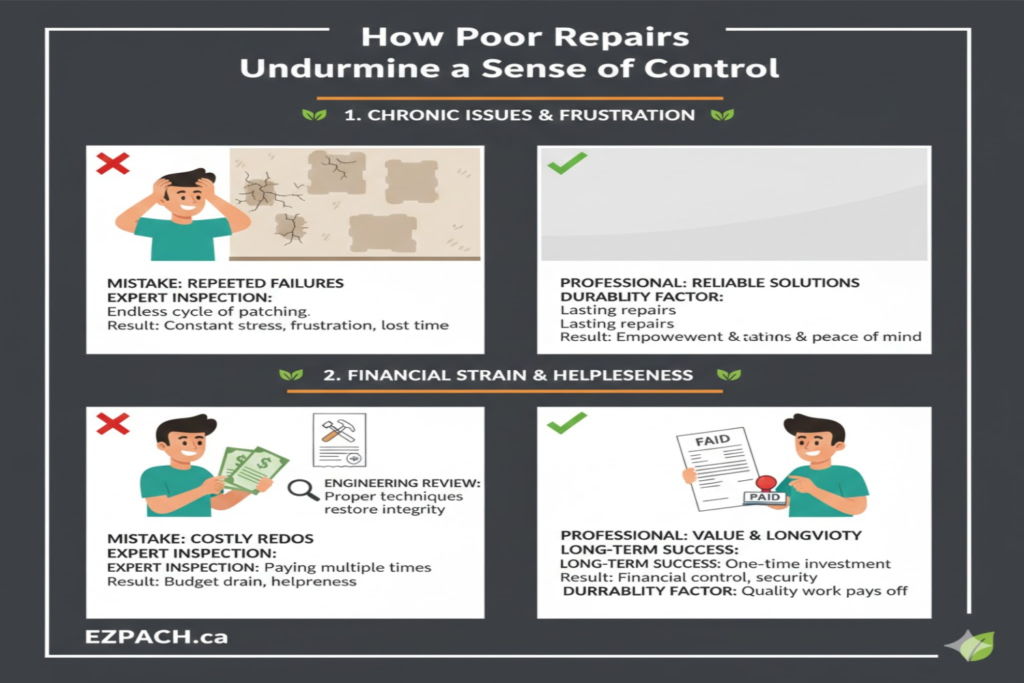
Poor wall repairs can undermine a person’s sense of control over their living space. When repairs repeatedly fail or remain visibly flawed, they create frustration, anxiety, and a lingering sense that something is “wrong.” This is why the psychological impact often grows stronger with time rather than fading away.
Why Visual Imperfections Create Mental Stress
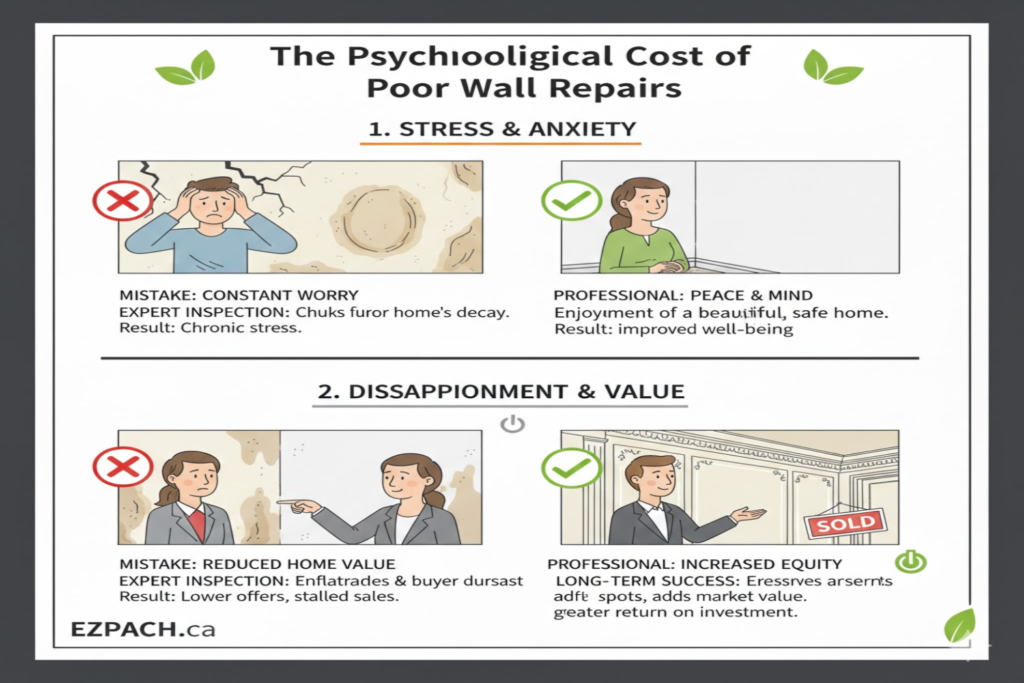
Human brains are wired to seek order and symmetry. When walls show cracks, uneven patches, or mismatched textures, the mind registers these as unresolved problems. This constant visual disruption increases cognitive load, making it harder to relax in the space.
Poor wall repairs keep the brain in a low-level state of alertness. Even if unnoticed consciously, the imperfections continue to signal disorder, which contributes to mental fatigue and irritability.
How the Brain Responds to Visual Disorder
Visual disorder competes for mental attention. The brain repeatedly scans irregular surfaces, even when trying to focus elsewhere. Over time, this creates mental exhaustion.
Inconsistent wall surfaces disrupt the sense of safety and calm. They subtly trigger discomfort and reduce emotional relaxation in the home.
Why Walls Matter More Than People Realize
Walls make up the largest visible surfaces in most interiors. Any defect is difficult to ignore because it remains constantly within the field of vision.
When walls feel neglected, the entire room feels unfinished. This negatively affects emotional comfort and personal satisfaction.
The Link Between Environment and Emotional Stability
Environmental psychology shows that cluttered or damaged spaces increase stress hormones. Poor wall repairs function as permanent visual clutter.
Living with these issues reinforces feelings of unease, even in otherwise comfortable homes.
How Poor Wall Repairs Affect Daily Mood and Focus
Living with visible wall defects affects daily emotional balance. People often report feeling irritated, distracted, or unsettled without knowing why. Over time, this emotional disruption becomes part of daily life.
Poor wall repairs can also impact concentration. Visual distractions reduce focus, making it harder to work, relax, or enjoy leisure activities within the space.
When Wall Damage Becomes a Source of Chronic Stress
Wall issues often start small, but when ignored or poorly repaired, they persist. Seeing the same cracks or uneven patches day after day reinforces a sense of unresolved problems. This creates chronic stress rather than temporary annoyance.
Chronic stress caused by the environment accumulates. The longer poor wall repairs remain visible, the more deeply they affect emotional well-being and mental comfort.
Key Emotional Reactions Triggered by Poor Wall Repairs
Poor wall repairs often trigger a predictable set of emotional responses:
- Frustration from repeated repair failures
- Anxiety caused by visible deterioration
- Embarrassment when guests notice flaws
- Helplessness about fixing recurring issues
- Mental fatigue from constant visual reminders
These emotional reactions contribute directly to the Psychological Cost of Poor Wall Repairs, especially when issues persist long-term.
How Poor Repairs Undermine a Sense of Control
A well-maintained home provides a sense of security and control. Poor wall repairs do the opposite. When walls appear damaged or unfinished, homeowners feel powerless over their environment.
This loss of control increases stress levels. People feel unsettled knowing that repairs were attempted but failed, reinforcing feelings of inadequacy or regret.
Why Poor Wall Repairs Affect Self-Perception
Home environments often reflect personal identity. Poor wall repairs can feel like a reflection of personal failure, even when circumstances were beyond control. This negatively affects self-esteem and confidence.
People may avoid inviting guests over due to embarrassment. Over time, this social withdrawal amplifies the psychological burden of living with visibly flawed walls.
Social Anxiety Linked to Home Appearance
Guests noticing cracks or patch marks can trigger embarrassment. This creates anxiety before social interactions even begin. The fear of judgment adds to emotional stress and reduces enjoyment of hosting or socializing at home.
Internalized Guilt and Regret
Many homeowners blame themselves for choosing cheap or rushed repairs. This guilt resurfaces every time the damage is noticed. Repeated reminders of “bad decisions” increase emotional discomfort and dissatisfaction.
Loss of Pride in Living Space
A home should provide comfort and pride. Poor wall repairs erode that pride over time. When walls look neglected, homeowners feel disconnected from their space.
How Poor Wall Repairs Impact Sleep Quality
Sleep quality is heavily influenced by environmental comfort. Visible wall damage creates subtle anxiety that interferes with relaxation before sleep.
Bedrooms with poor wall repairs often feel unfinished or chaotic. This disrupts the sense of calm required for restful sleep, contributing to fatigue and irritability.
When Repair Anxiety Becomes Anticipatory Stress
Poor repairs create anticipation of future problems. Homeowners worry about cracks returning, patches failing, or costs increasing. This constant anticipation fuels anxiety.
Even when repairs seem stable temporarily, the fear of deterioration remains. This ongoing worry adds significantly to the Psychological Cost of Poor Wall Repairs.
Key Factors That Intensify Psychological Impact
Several factors make poor wall repairs especially damaging psychologically:
- High-visibility locations like living rooms
- Repeated repair attempts that fail
- Financial stress linked to repair costs
- Negative past experiences with contractors
- Time pressure or lack of resolution
Each factor deepens emotional strain and prolongs mental discomfort.
How Poor Wall Repairs Affect Productivity at Home
With more people working from home, wall conditions matter more than ever. Visual distractions reduce focus and increase mental fatigue.
Poor wall repairs in home offices create a constant reminder of unresolved issues. This reduces productivity and increases stress during work hours.
Why Children Are Affected by Poor Wall Conditions
Children are highly sensitive to environmental cues. Visible wall damage can create feelings of insecurity or instability.
Homes with visible deterioration may feel unsafe or temporary to children. This subtly affects emotional development and comfort.
How Poor Repairs Influence Long-Term Satisfaction with a Home
Home satisfaction depends on comfort, pride, and peace of mind. Poor wall repairs undermine all three. Over time, homeowners associate their space with frustration rather than comfort. This dissatisfaction grows, making people feel trapped in an environment that never feels “complete.”
The Hidden Cost of Repeated Temporary Fixes
Temporary repairs often cost more emotionally than financially. Each failed fix renews frustration and disappointment. Repeated failures reinforce the belief that problems cannot be resolved. This emotional exhaustion is a major component of The Psychological Cost of Poor Wall Repairs.
Why Professional Repairs Reduce Psychological Stress
Professional wall repairs restore more than surfaces—they restore peace of mind. Knowing repairs are done correctly eliminates ongoing worry. Professionally repaired walls provide visual calm, emotional relief, and renewed confidence in the home environment.
Emotional Benefits of Proper Wall Repairs
- Reduced stress and anxiety
- Improved sense of control
- Greater pride in living space
- Better focus and relaxation
- Enhanced emotional comfort
Conclusion
The impact of poor wall repairs goes far beyond aesthetics. Visible imperfections create ongoing emotional strain, disrupt mental calm, and reduce overall satisfaction with living spaces. Over time, these issues contribute to stress, anxiety, and emotional fatigue, making the environment feel uncomfortable and unresolved.
Understanding the Psychological Cost of Poor Wall Repairs highlights the importance of quality workmanship. Investing in proper repairs restores not only walls but emotional balance, confidence, and long-term comfort within the home.
FAQs
1. Can poor wall repairs really affect mental health?
Yes, constant visual disorder increases stress and reduces emotional comfort over time.
2. Why do wall imperfections feel so irritating?
The brain is sensitive to visual inconsistency and interprets it as unresolved disorder.
3. Can poor repairs cause anxiety even if I ignore them?
Yes, the brain processes visual stress subconsciously, even when ignored.
4. Do professional repairs improve emotional comfort?
Absolutely, they eliminate visual stress and restore peace of mind.
5. Can wall damage affect sleep quality?
Yes, visible imperfections disrupt relaxation and contribute to poor sleep.
6. Why do repeated repairs feel exhausting?
Repeated failures reinforce frustration and a sense of helplessness.
7. Are children affected by poor wall conditions?
Yes, children are sensitive to environmental stability and disorder.
8. Is fixing wall repairs worth the cost emotionally?
Yes, proper repairs reduce stress, anxiety, and long-term dissatisfaction.
Drywall Repair Halifax
EZ Patch offers clean, professional drywall, ceiling, plaster, and water damage repair services in Halifax with minimal mess and long-lasting results.
EZ Patch – Drywall Repair Experts
Trusted drywall repair professionals serving Halifax and nearby areas.
Drywall Patch & Repair
Seamless drywall repairs for holes, cracks, dents, and damaged walls.
Ceiling Repairs
Professional ceiling repair services for stains, cracks, and water damage.
Drywall Installation
Complete drywall installation services for renovations and new builds.
Taping & Mudding
Smooth, paint-ready wall finishes by expert drywall finishers.
Plaster Repair Experts
Precision plaster repair services while maintaining original wall texture.
Water Damage Repair
Drywall and ceiling restoration for properties affected by water damage.
Texture Matching
Accurate texture blending so repaired areas match existing finishes.
Installation, Repair & Removal
End-to-end drywall installation, repair, and removal solutions.