Proper screw spacing is a foundational element in drywall installation that directly influences wall strength, durability, and finish quality. Incorrect spacing can lead to sagging panels, cracks in joints, or uneven surfaces that reduce both structural and visual performance. Understanding screw placement principles is essential for homeowners, contractors, and builders seeking professional results.
Additionally, screw spacing affects long-term maintenance and repair costs. Panels with improper spacing often require repeated touch-ups, additional joint compound application, or even reinstallation. Contractors and DIYers alike must balance structural requirements with finishing aesthetics to ensure lasting performance.
How Screw Spacing Influences Drywall Strength
Correct screw placement is critical formaintaining the structural integrity of drywall panels. Each screw acts as a point of support, distributing weight and pressure evenly across the panel. Incorrect spacing can create weak zones that compromise both walls and ceilings.
Panels installed with screws too far apart may sag or flex, especially on longer walls or ceilings. Over-tightened screws, on the other hand, can damage the drywall paper and create stress points. Maintaining manufacturer-recommended spacing is essential for balancing strength and surface integrity.
What Happens When Screws Are Too Far Apart
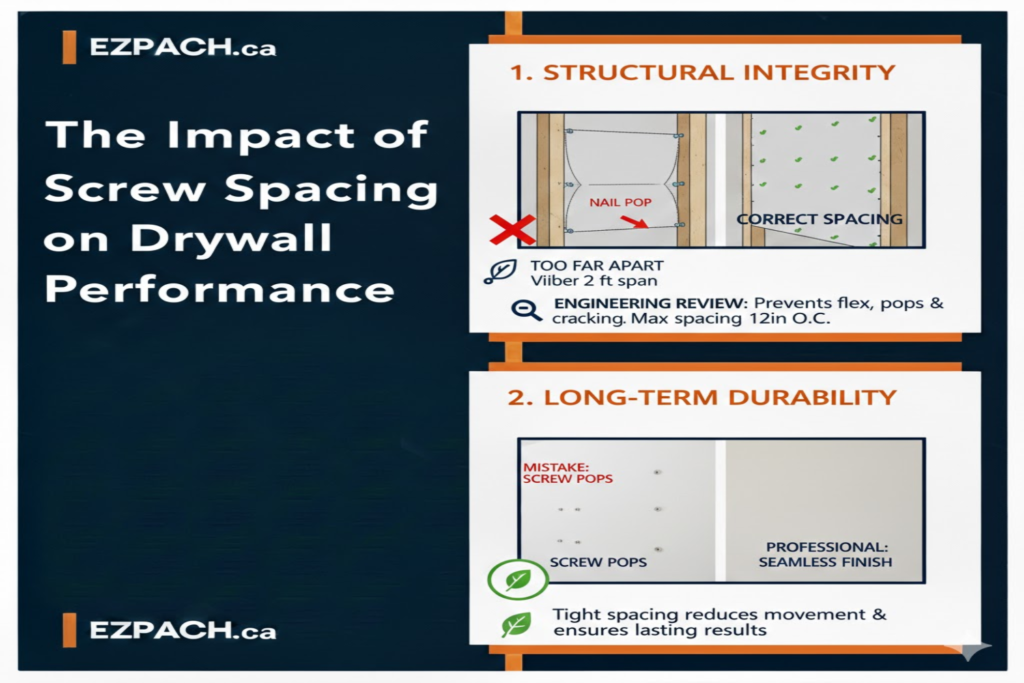
Panels without adequate support can bow or flex, leading to cracking along joints or screw lines. On ceilings, sagging may occur more rapidly due to gravity, resulting in noticeable uneven surfaces. Over time, improperly spaced screws may fail to hold wall-mounted fixtures or shelves securely, creating safety concerns.
Long-term consequences include increased maintenance and the potential for cosmetic flaws. Repeated patching or repainting becomes necessary to address stress-induced cracking. Additionally, misaligned panels may complicate subsequent repairs or renovations, increasing labor and material costs.
What Happens When Screws Are Too Close Together
Overly dense screw placement may seem like a safe approach, but it can negatively affect drywall performance.
Screws driven too close together can indent the surface, requiring additional joint compound and sanding to achieve a smooth finish. Excessive fasteners create stress concentrations in the panel, which may lead to small cracks around screws, particularly near edges.
Furthermore, using more screws than necessary increases installation time and material costs. Panels become over-constrained, reducing their ability to flex slightly under environmental changes. Proper balance is critical for structural stability without creating unnecessary surface issues.
Key Factors in Determining Proper Screw Spacing
Screw spacing is not a one-size-fits-all metric; it depends on multiple variables, including panel thickness, wall type, ceiling height, and drywall variant.
Manufacturers provide specific guidelines for both walls and ceilings, which must be followed for optimal performance. Panels with higher density or specialty properties, such as soundproofing or fire resistance, often require closer spacing.
Panel Thickness
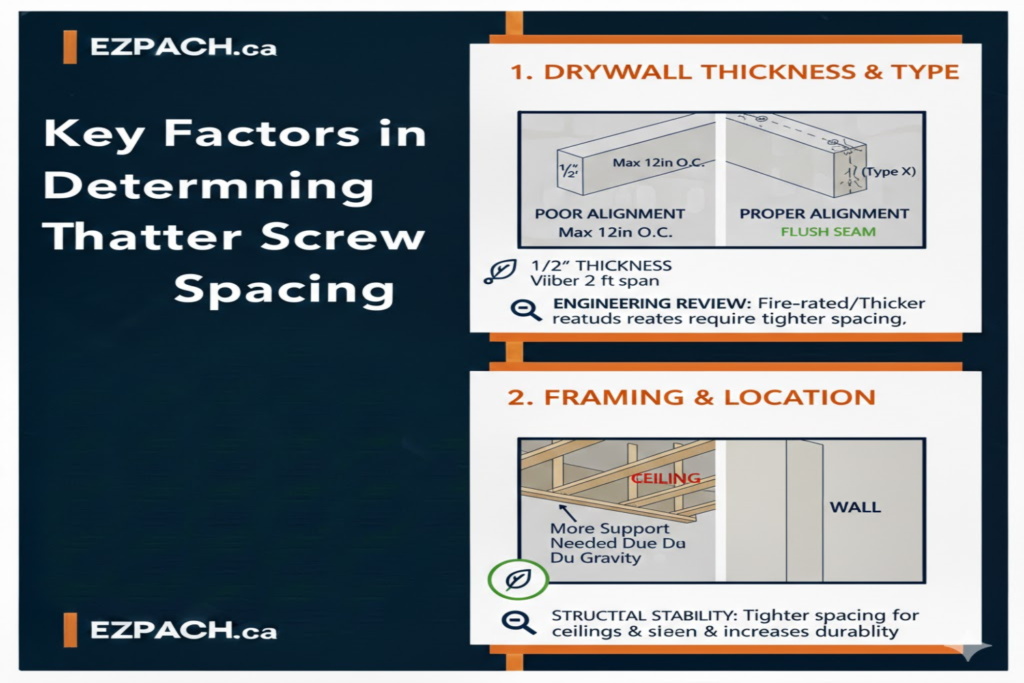
Drywall panels come in different thicknesses, with 1/2-inch and 5/8-inch being the most common. Thicker panels have greater weight and rigidity, requiring different screw spacing to maintain support.
Panels that are too thick for standard spacing may sag if screws are placed too far apart. Properly spaced screws distribute weight evenly and prevent structural failure over time.
Ceiling vs Wall Installation
Ceilings are more prone to sag due to gravity, so screw spacing is generally closer than for walls. Proper placement near joists ensures panels remain supported without drooping.
Walls typically experience less stress, but edge spacing near corners and joints still requires attention to prevent cracking. Improper screw distance can result in uneven surfaces and visible imperfections.
Wall Height and Width
Taller or wider walls may require additional fasteners along edges to maintain rigidity. Standard spacing may not suffice for long spans, especially in commercial applications. Ceilings that exceed typical joist spans often need supplemental screws to avoid sagging panels. Installing screws in strategic locations distributes weight more evenly.
Drywall Type
Specialty drywall, including fire-rated or soundproof panels, has unique weight and rigidity characteristics. Screw spacing must adhere to manufacturer guidance to maintain performance. Using standard spacing on non-standard panels can compromise both structural integrity and acoustic properties. Incorrect installation may reduce STC or fire resistance ratings.
When Screw Spacing Impacts Joint Integrity
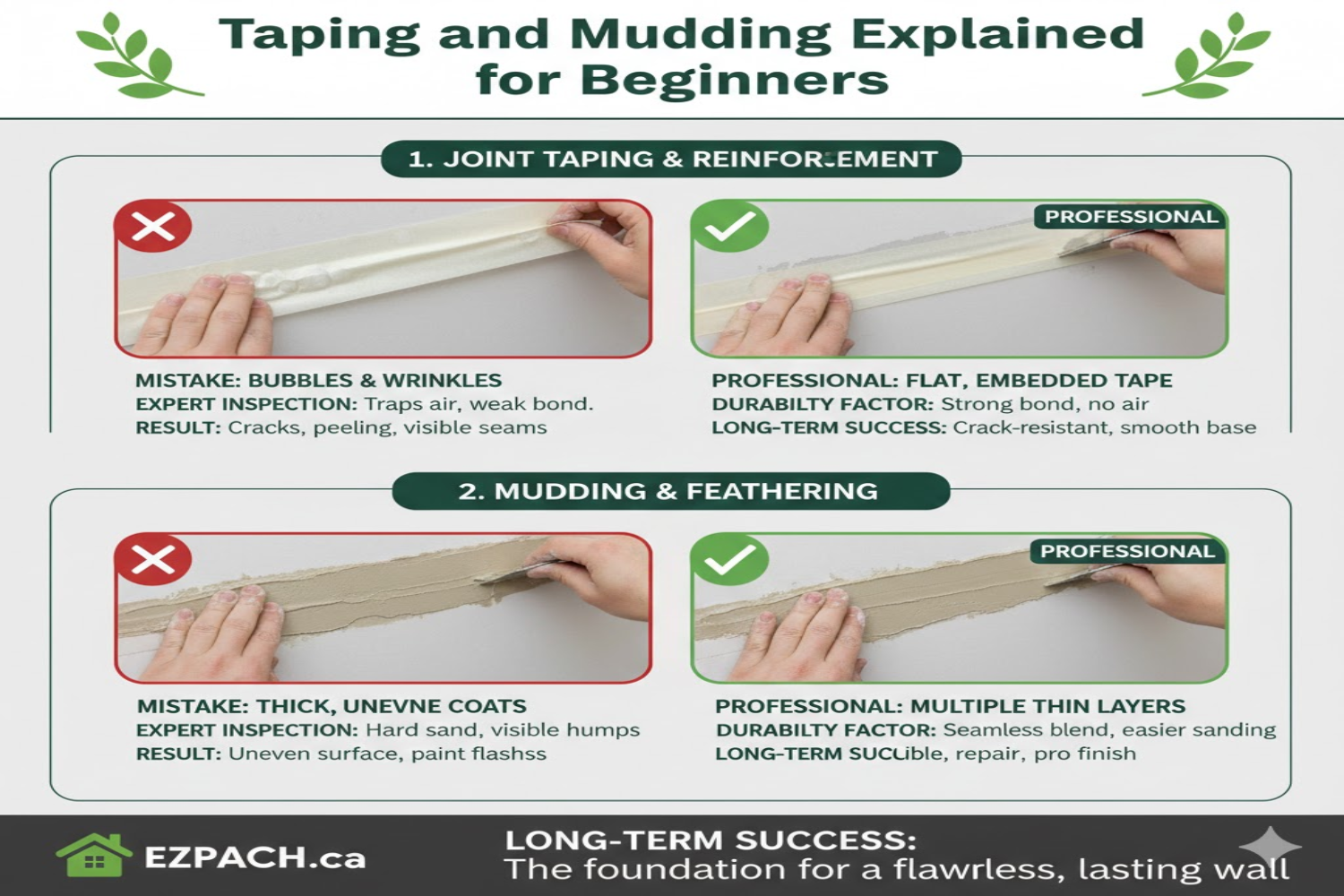
Uneven or incorrectly spaced screws increase the likelihood of joint compound cracking or tape separation. Proper spacing keeps panels aligned and flush, simplifying finishing. Professionals carefully follow recommended intervals to prevent joint failure.
Screw spacing also affects settlement behavior after installation. Panels that are not adequately secured along joints may warp or develop hairline cracks, even with minimal environmental changes. Proper installation ensures consistent performance over time.
How Screw Spacing Influences Fastener Performance
Fasteners perform best when properly spaced, distributing both weight and stress evenly.
Load Distribution
Proper spacing ensures that weight is transferred across multiple screws, reducing stress on any single point. This is critical for ceiling panels and high-traffic wall areas. Uneven distribution can cause localized failure or fastener pop-outs, compromising panel stability.
Prevention of Screw Pops
Incorrect spacing increases the risk of screws loosening over time. This results in “screw pops,” where fasteners protrude and create visible defects. Regular checks during installation ensure that each fastener is correctly positioned to prevent future protrusions.
Durability Against Impacts
Drywall panels with correctly spaced screws better withstand everyday impacts from furniture or accidental bumps. Adequate fastener placement enhances both structural integrity and long-term durability.
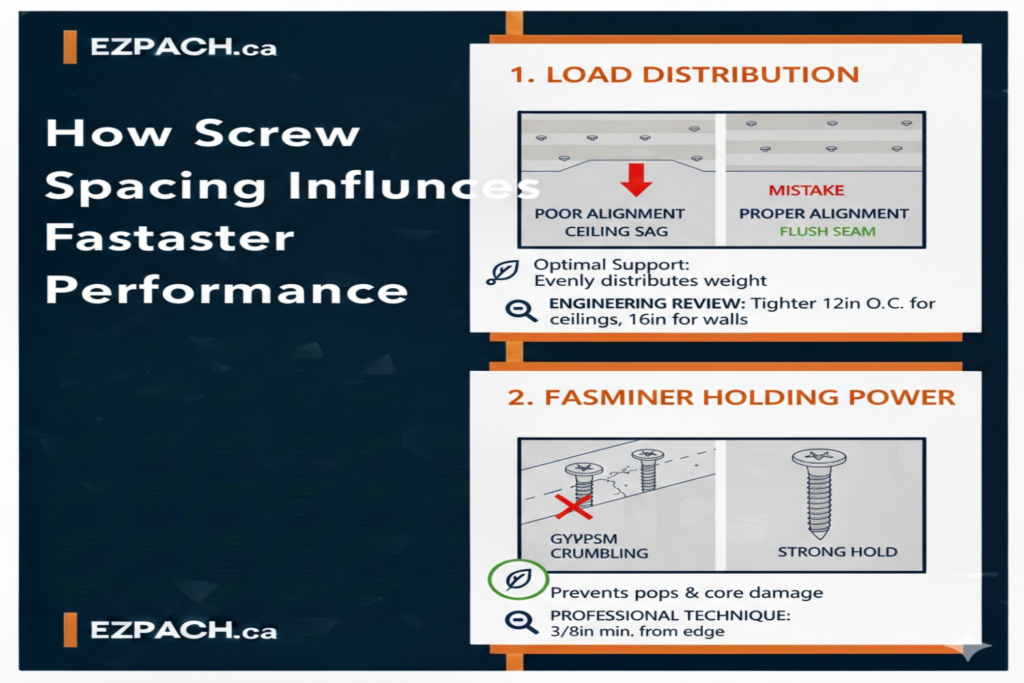
Common Screw Spacing Mistakes
- Ignoring manufacturer-recommended spacing
Over-tightening screws causes surface dimples - Under-driving screws, leading to weak attachment
- Placing screws too close to panel edges, causing cracking
- Uneven distribution along ceilings or walls
How Professional Contractors Handle Screw Spacing
Professional installers maintain consistent spacing using pre-marking, screw guns, and periodic quality checks.
Short paragraph for H2 with H3: Professionals mark panel edges and stud locations to ensure precise screw placement. They also verify spacing mid-installation to avoid deviations that affect finish and structural stability.
Use of Screw Guns and Guides
Electric screw guns allow precise depth control, preventing over- or under-driven screws. Depth-setting features ensure screws are flush without damaging the drywall surface. Consistent screw placement reduces touch-ups and ensures a professional finish.
Pre-Marking Panels
Marking studs and edges before installation guarantees accurate screw alignment. Pre-marking minimizes errors and speeds up the installation process. This approach is especially valuable for ceilings or long wall panels where consistency is critical.
Quality Control Checks
Inspecting screw placement mid-installation prevents long-term joint and surface problems. Professionals adjust spacing or re-secure screws immediately if deviations occur. Regular checks ensure a durable installation and reduce the need for post-installation corrections.
FAQs
1. How far apart should drywall screws be?
Typical spacing is 16 inches along studs for walls, with 12 inches for ceilings or heavier panels. Manufacturer guidelines should always be followed.
2. Can improper spacing cause cracks?
Yes, screws that are too far apart increase panel flexing, leading to joint or surface cracks.
3. Does screw placement affect ceiling sag?
Yes, inadequate spacing can allow ceiling panels to droop over time.
4. Are there risks with too many screws?
Yes, over-tightening or excess screws can damage the surface and increase labor costs.
5. Is screw spacing different for soundproof drywall?
Yes, soundproof panels often require closer spacing to maintain STC performance.
6. Can screw spacing impact paint finish?
Yes, uneven screws create dimples or uneven surfaces that require more joint compound.
7. Should I remove fixtures before installation?
Yes, removing or temporarily relocating ceiling fixtures prevents accidental damage and ensures proper screw placement.
8. Are longer panels more sensitive to screw spacing?
Yes, longer panels require consistent, closer spacing to prevent bowing and maintain alignment.
Conclusion
Screw spacing is a crucial element in drywall installation that directly affects structural strength, surface quality, and long-term durability. Properly spaced screws prevent sagging, cracking, and cosmetic flaws while ensuring panels remain securely attached. Ignoring spacing guidelines increases repair and maintenance costs over time.
For professionals and DIY installers, understanding the impact of screw spacing allows for more efficient, reliable, and visually appealing drywall work. Using the right tools, pre-marking panels, and following manufacturer recommendations ensures both performance and aesthetic quality. Proper screw placement improves panel longevity, reduces post-installation repairs, and enhances overall satisfaction with the finished space.
Drywall Repair Halifax
EZ Patch offers clean, professional drywall, ceiling, plaster, and water damage repair services in Halifax with minimal mess and long-lasting results.
EZ Patch – Drywall Repair Experts
Trusted drywall repair professionals serving Halifax and nearby areas.
Drywall Patch & Repair
Seamless drywall repairs for holes, cracks, dents, and damaged walls.
Ceiling Repairs
Professional ceiling repair services for stains, cracks, and water damage.
Drywall Installation
Complete drywall installation services for renovations and new builds.
Taping & Mudding
Smooth, paint-ready wall finishes by expert drywall finishers.
Plaster Repair Experts
Precision plaster repair services while maintaining original wall texture.
Water Damage Repair
Drywall and ceiling restoration for properties affected by water damage.
Texture Matching
Accurate texture blending so repaired areas match existing finishes.
Installation, Repair & Removal
End-to-end drywall installation, repair, and removal solutions.