Texture matching for old popcorn ceilings is one of the most challenging ceiling repair tasks homeowners and contractors face. Over time, popcorn ceilings age, discolor, and settle, making it difficult to blend new repairs seamlessly with existing texture. Without proper techniques, patched areas often stand out and reduce the overall appearance of the ceiling.
Understanding texture matching for old popcorn ceilings helps ensure repairs look natural and consistent. Whether fixing water damage, cracks, or removing fixtures, accurate texture replication preserves the ceiling’s original character. With the right tools, materials, and methods, it is possible to achieve nearly invisible repairs.
Understanding Texture Matching for Old Popcorn Ceilings
Texture matching for old popcorn ceilings involves recreating the size, density, and pattern of the existing texture. Popcorn ceilings were applied using various methods, resulting in unique finishes that change over time. Matching these textures requires observation and careful technique.
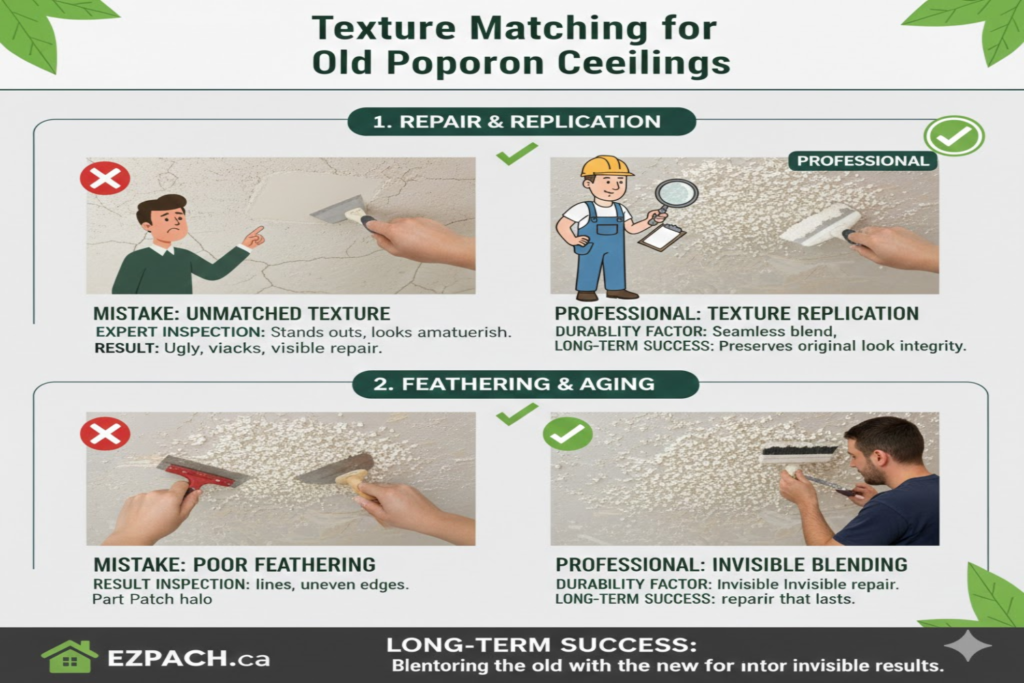
Age, paint layers, and environmental exposure alter the popcorn texture appearance. Successful texture matching for old popcorn ceilings depends on identifying these changes. Proper preparation improves the final result.
Why Old Popcorn Ceiling Texture Is Difficult to Match
Old popcorn ceilings rarely look the same as when they were first installed. Over the decades, gravity, dust, and repainting flatten or harden the texture. This makes new applications appear brighter or more pronounced.
Texture matching for old popcorn ceilings requires adjusting material consistency and application method. Understanding these challenges prevents noticeable patches. Patience and testing are essential.
Identifying Existing Popcorn Ceiling Texture Type
Before attempting repairs, identifying the original texture style is crucial. Texture matching for old popcorn ceilings depends on recognizing material composition and application technique. Different eras used different mixtures.
Visual inspection helps determine particle size and spacing. This step guides material selection and application.
Fine Popcorn Texture
Fine popcorn texture has smaller particles and a softer appearance. It was commonly used in later installations. Matching it requires a thinner material and a lighter application.
Medium Popcorn Texture
Medium textures have noticeable granules without heavy clumping. This is the most common popcorn ceiling style. Balanced spraying achieves better results.
Heavy Popcorn Texture
Heavy textures feature large clusters and thick buildup. Matching requires a thicker mixture and controlled spray pressure. Overapplication is a common mistake.
Tools Required for Texture Matching for Old Popcorn Ceilings
Using the correct tools improves texture consistency. Texture matching for old popcorn ceilings relies heavily on application equipment. The wrong tools produce uneven results.
Proper tool selection reduces trial and error. Clean, adjustable tools allow better control.
Texture Spray Guns
Texture guns provide an even distribution of popcorn material. Adjustable nozzles control particle size. Consistent pressure improves blending.
Hopper Sprayers
Hopper sprayers are ideal for larger repair areas. They hold more material and offer better pattern control. Proper cleaning prevents clogging.
Hand Application Tools
Hand tools like brushes or sponges work for small patches. They allow detailed control in tight areas. Best for minor repairs.
Materials Used in Texture Matching for Old Popcorn Ceilings
Selecting the right materials is essential for realistic texture replication. Texture matching for old popcorn ceilings requires materials that mimic original compositions. Modern products often differ slightly.
Testing materials before application helps achieve better results. Adjustments may be needed.
Pre-Mixed Popcorn Texture
Pre-mixed products are convenient and consistent. They simplify preparation and reduce errors. Ideal for small to medium repairs.
Dry Popcorn Texture Mix
Dry mixes allow customization of thickness. Water ratio controls texture size. This option offers flexibility for older ceilings.
Paint and Binding Agents
Paint affects texture visibility and color. Binding agents help with adhesion. Matching paint sheen improves blending.
Surface Preparation for Texture Matching for Old Popcorn Ceilings
Proper surface preparation ensures the texture adheres evenly. Texture matching for old popcorn ceilings begins with cleaning and priming. Skipping preparation leads to patch failure.
Prepared surfaces allow consistent application. Preparation reduces visible transitions.
Cleaning the Repair Area
Dust and debris interfere with adhesion. Light vacuuming removes loose texture. Clean surfaces improve bonding.
Priming Before Texture Application
Primer seals the surface and evens absorption. It prevents moisture issues. Proper priming improves texture consistency.
Masking Surrounding Areas
Masking protects walls and fixtures. Clean edges enhance appearance. Preparation saves cleanup time.
Application Techniques for Texture Matching for Old Popcorn Ceilings
Application technique determines how well the new texture blends. Texture matching for old popcorn ceilings requires controlled, layered application. Rushing creates uneven patches.
Testing techniques before the final application improves results. Multiple light passes are better than one heavy coat.
Spray Distance Control
Spraying too close causes clumping. Too far creates a sparse texture. Maintaining a consistent distance improves blending.
Layering for Natural Blending
Applying texture in thin layers builds realism. Layers allow adjustments between passes. Gradual buildup matches aged texture.
Feathering Edges
Feathering softens transitions between old and new textures. It prevents hard lines. Smooth blending improves invisibility.
Common Mistakes in Texture Matching for Old Popcorn Ceilings
Mistakes are common without proper planning. Texture matching for old popcorn ceilings requires patience and testing. Small errors become obvious after painting.
Learning common mistakes helps avoid rework. Attention to detail is essential.
Overapplication of Texture
Applying too much material creates visible patches. Thick texture hardens unevenly. Controlled application is key.
Ignoring Texture Aging
New texture often looks brighter. Aging effects must be simulated. Color matching helps reduce contrast.
Skipping Test Applications
Testing on scrap surfaces is critical. It allows adjustments. Skipping tests increases failure risk.
Safety Considerations for Texture Matching for Old Popcorn Ceilings
Safety is important during ceiling texture work. Texture matching for old popcorn ceilings may involve dust and overhead application. Protective equipment reduces risks.
Working safely prevents injuries. Preparation ensures a safer process.
- Wear respiratory protection to avoid inhaling particles.
- Use eye protection during spraying.
- Ensure ladders are stable and secure.
- Ventilate the room properly.
- Turn off HVAC systems during application.
Cost Factors in Texture Matching for Old Popcorn Ceilings
The cost of texture matching for old popcorn ceilings varies based on repair size and materials. Small patches are affordable, while large areas increase labor costs. Tool rental may add to expenses.
Below is a unique cost table for reference.
| Repair Scope | Estimated Cost Range |
| Small Patch Repair | $50 – $150 |
| Medium Area Matching | $150 – $400 |
| Full Ceiling Blending | $400 – $900 |
| Tool Rental | $30 – $80 |
| Materials | $20 – $60 |
When to Hire a Professional for Texture Matching for Old Popcorn Ceilings
When to hire a professional for texture matching for old popcorn ceilings depends largely on the size, visibility, and complexity of the repair. If the damaged area is large, centrally located, or affected by water stains, a professional can ensure the new texture blends seamlessly with the aged ceiling. Experts also have access to specialized tools and materials that make texture matching for old popcorn ceilings far more precise and natural-looking.
You should also consider hiring a professional for texture matching for old popcorn ceilings when safety or material concerns are involved. Older popcorn ceilings may contain asbestos, and trained professionals know how to test and handle these situations safely. Hiring an expert saves time, reduces costly mistakes, and delivers long-lasting results that protect both appearance and property value.
Maintenance Tips After Texture Matching for Old Popcorn Ceilings
Maintaining repaired ceilings preserves appearance. Texture matching for old popcorn ceilings lasts longer with proper care. Gentle cleaning prevents damage.
Regular inspection helps detect issues early.
- Avoid heavy scrubbing
- Use soft dusting tools
- Repaint with matching paint only
- Monitor for moisture issues
- Repair small damage promptly
Conclusion
Texture matching for old popcorn ceilings requires careful preparation, proper materials, and skilled application techniques. Matching aged texture is challenging but achievable with patience and testing. Attention to detail makes the difference between visible patches and seamless repairs.
By understanding texture matching for old popcorn ceilings, homeowners can preserve the ceiling’s appearance and value. Proper methods reduce repair visibility and extend ceiling lifespan. Well-executed texture matching delivers professional-quality results.
FAQs
1. Can popcorn ceiling texture be matched exactly?
Exact matching is difficult due to aging. Skilled techniques can make repairs nearly invisible.
2. Does paint affect popcorn texture appearance?
Yes, paint color and sheen change how the texture looks. Matching paint improves blending.
3. How long should popcorn texture dry before painting?
Drying typically takes 24 hours. Always confirm dryness before painting.
4. Can texture be matched without spraying tools?
Small areas can be hand-applied. Larger areas require spraying tools.
5. Is repainting necessary after texture repair?
Repainting is recommended for a uniform appearance. It hides minor variations.
6. Can old popcorn ceilings be repaired multiple times?
Yes, but repeated repairs may thicken the texture. Consistent methods reduce buildup.
7. Does humidity affect texture application?
High humidity slows drying. Controlled environments improve results.
8. Should ceilings be sealed after texture matching?
Sealing with paint protects the texture. It improves durability and appearance.
Drywall Repair Halifax
EZ Patch offers clean, professional drywall, ceiling, plaster, and water damage repair services in Halifax with minimal mess and long-lasting results.
EZ Patch – Drywall Repair Experts
Trusted drywall repair professionals serving Halifax and nearby areas.
Drywall Patch & Repair
Seamless drywall repairs for holes, cracks, dents, and damaged walls.
Ceiling Repairs
Professional ceiling repair services for stains, cracks, and water damage.
Drywall Installation
Complete drywall installation services for renovations and new builds.
Taping & Mudding
Smooth, paint-ready wall finishes by expert drywall finishers.
Plaster Repair Experts
Precision plaster repair services while maintaining original wall texture.
Water Damage Repair
Drywall and ceiling restoration for properties affected by water damage.
Texture Matching
Accurate texture blending so repaired areas match existing finishes.
Installation, Repair & Removal
End-to-end drywall installation, repair, and removal solutions.