Ceilings are more than just decorative surfaces—they are integral parts of a building’s structure and safety. Damage to ceilings can range from minor cosmetic issues to serious structural concerns that compromise a home’s integrity. Understanding the difference between structural and non-structural damage is essential for effective repair and maintenance. Many homeowners often mistake surface cracks or stains for serious issues, while in some cases, hidden structural problems go unnoticed until they escalate. Learning structural vs non-structural ceiling damage allows homeowners to make informed decisions regarding inspection, repair, and prevention.
Structural and non-structural damages not only differ in severity but also in how they should be addressed. Structural damage often involves beams, joists, and other load-bearing elements, posing safety risks if ignored. Non-structural damage, however, typically affects only the surface or cosmetic appearance of the ceiling. By identifying the type of damage early, homeowners can save money, avoid unnecessary work, and ensure that repairs are both safe and lasting.
What Structural Ceiling Damage Means
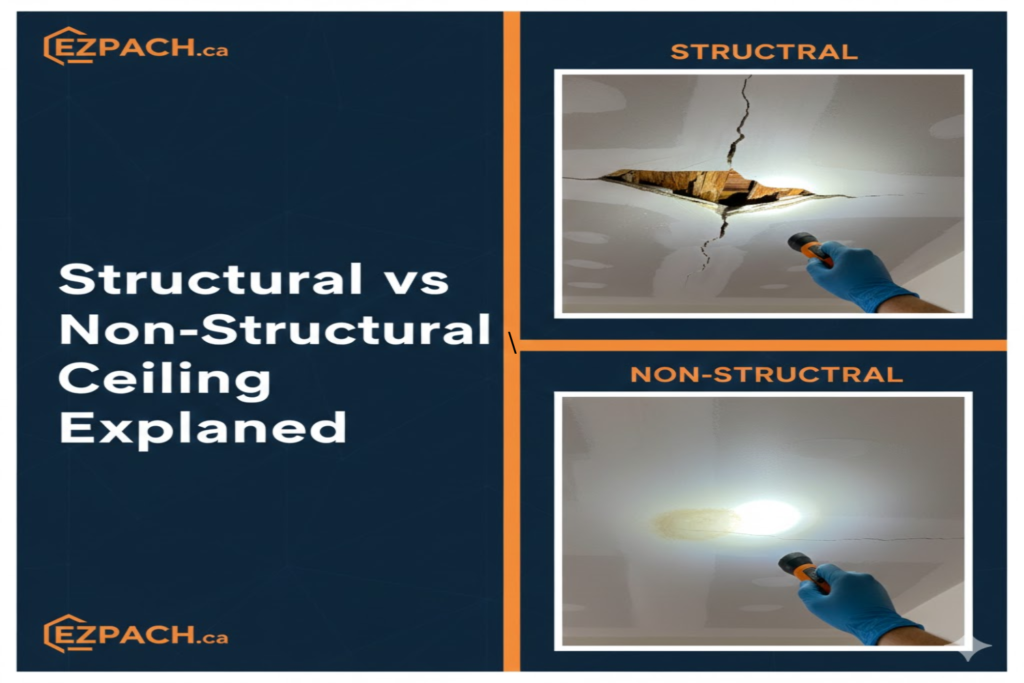
Structural ceiling damage refers to problems that compromise the integrity of the ceiling’s supporting framework. These damages affect load-bearing components such as beams, joists, and trusses. If left unaddressed, structural issues can lead to sagging, partial collapse, or even severe safety hazards.
Deep cracks, visible sagging, water infiltration affecting support beams, and unusual noises are typical signs of structural damage. It is critical to address these problems promptly, as delayed repairs can escalate into more costly and dangerous situations.
How Non-Structural Ceiling Damage Differs
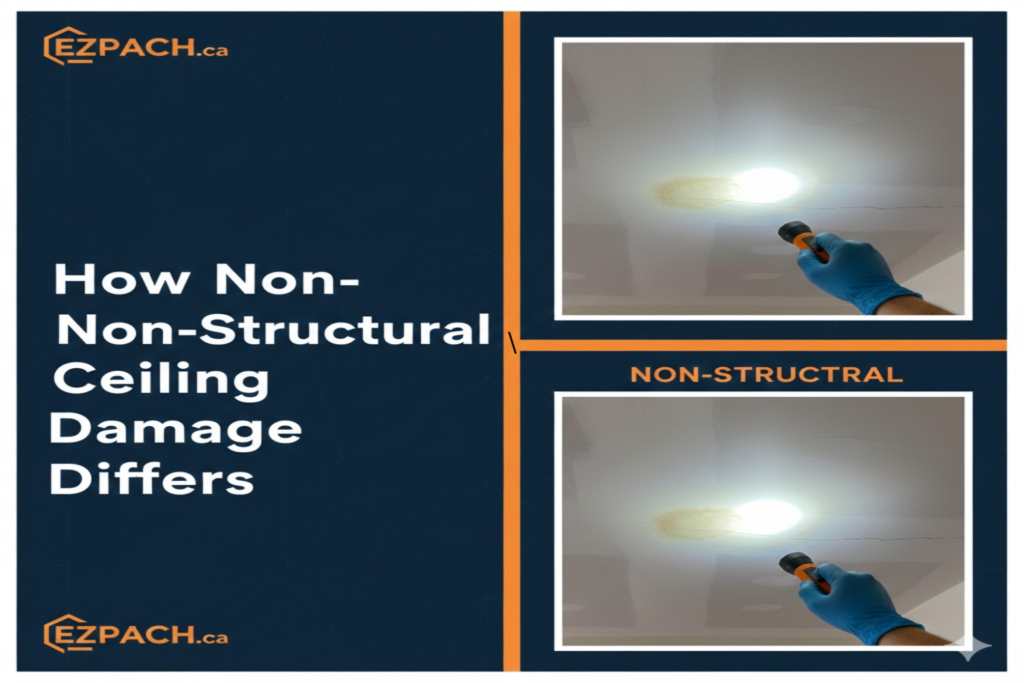
Non-structural ceiling damage affects only the surface of the ceiling and does not compromise the building’s structural integrity. Typical examples include hairline cracks, water stains, peeling paint, or minor dents. These issues are generally cosmetic and primarily impact aesthetics and room comfort.
Non-structural damage is often easier and less expensive to repair. Patchwork, sanding, repainting, or replacing a small drywall section is usually sufficient. Proper assessment ensures that homeowners do not overreact to minor problems while still addressing underlying issues that could worsen over time.
Common Non-Structural Issues
- Small cracks around joints or corners
- Stains from minor roof leaks or condensation
- Paint peeling or bubbling.
- Minor dents from accidental impacts
Benefits of Timely Non-Structural Repairs
Prompt repair prevents the damage from escalating. Cosmetic fixes also maintain the overall appearance of the room and protect underlying materials from mold and mildew. Even small repairs contribute to long-term ceiling durability.
What Causes Structural vs Non-Structural Damage
Structural and non-structural damages have distinct causes that influence repair methods. Structural damage often arises from load-related stress, moisture intrusion, or compromised materials. Non-structural damage is typically the result of environmental or superficial factors.
Structural damage causes:
- Foundation settling leading to sagging or uneven ceilings
- Overloaded ceiling joists or beams
- Roof damage or water infiltration affecting the support.
- Termite or insect activity is weakening structural components.
Non-structural damage causes:
- High humidity or condensation leading to paint bubbling
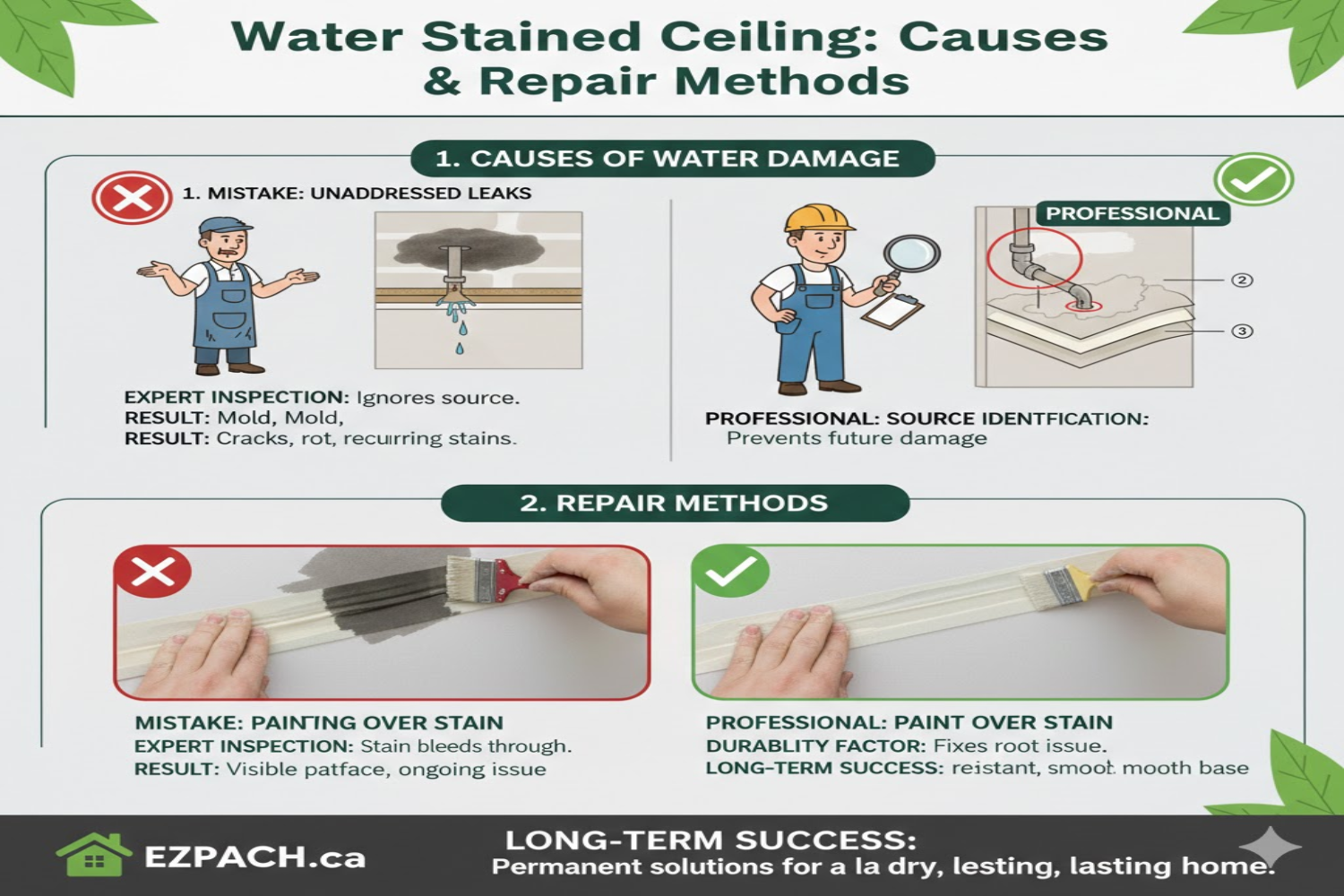
- Minor water leaks that stain but do not compromise beams
- Surface impacts causing dents or scratches
- Aging paint or plaster leading to peeling.
Understanding the root cause is essential to determine whether a repair is urgent, professional, or cosmetic.
How to Inspect for Ceiling Damage
Proper inspection is critical to distinguish between structural and non-structural damage. Begin with visual inspection for cracks, stains, sagging areas, or bowing. For structural issues, look closely at beams, joists, and load-bearing supports for bending, splitting, or water damage. Non-structural damage is usually superficial and can be confirmed by gently probing the surface.
Tools for Inspection
- Flashlight: Reveals cracks and uneven surfaces in corners and dark areas.
- Level: Detects sagging or uneven ceilings.
- Moisture meter: Identifies hidden water damage behind surface layers.
- Ladder: Provides close access for detailed examination.
Regular inspection helps homeowners identify minor problems early and prevent serious structural failures.
When to Call a Professional
Structural ceiling damage requires immediate attention from certified contractors or structural engineers. Non-structural damage may be addressed by DIY methods if minor, but persistent or recurring issues should also receive professional evaluation. Correctly identifying structural vs non-structural ceiling damage helps determine whether immediate professional intervention is necessary.
Indicators for Professional Help
- Sagging or bowing areas of the ceiling
- Cracks wider than 1/4 inch or spider-web cracks
- Persistent leaks affecting support beams
- Creaking, popping, or unusual noises from the ceiling
Early intervention by professionals ensures safety and prevents costly emergency repairs.
What Repair Standards Apply
Professional repair standards differ depending on the type of ceiling damage. Structural repairs require precise reinforcement, correct material selection, and compliance with building codes. Non-structural repairs focus on surface smoothness, joint treatment, and aesthetics.
Structural Repair Requirements
- Replacement or reinforcement of beams and joists
- Load redistribution to prevent sagging
- Moisture-proofing and pest-proofing structural components
- Compliance with local building codes
Non-Structural Repair Requirements
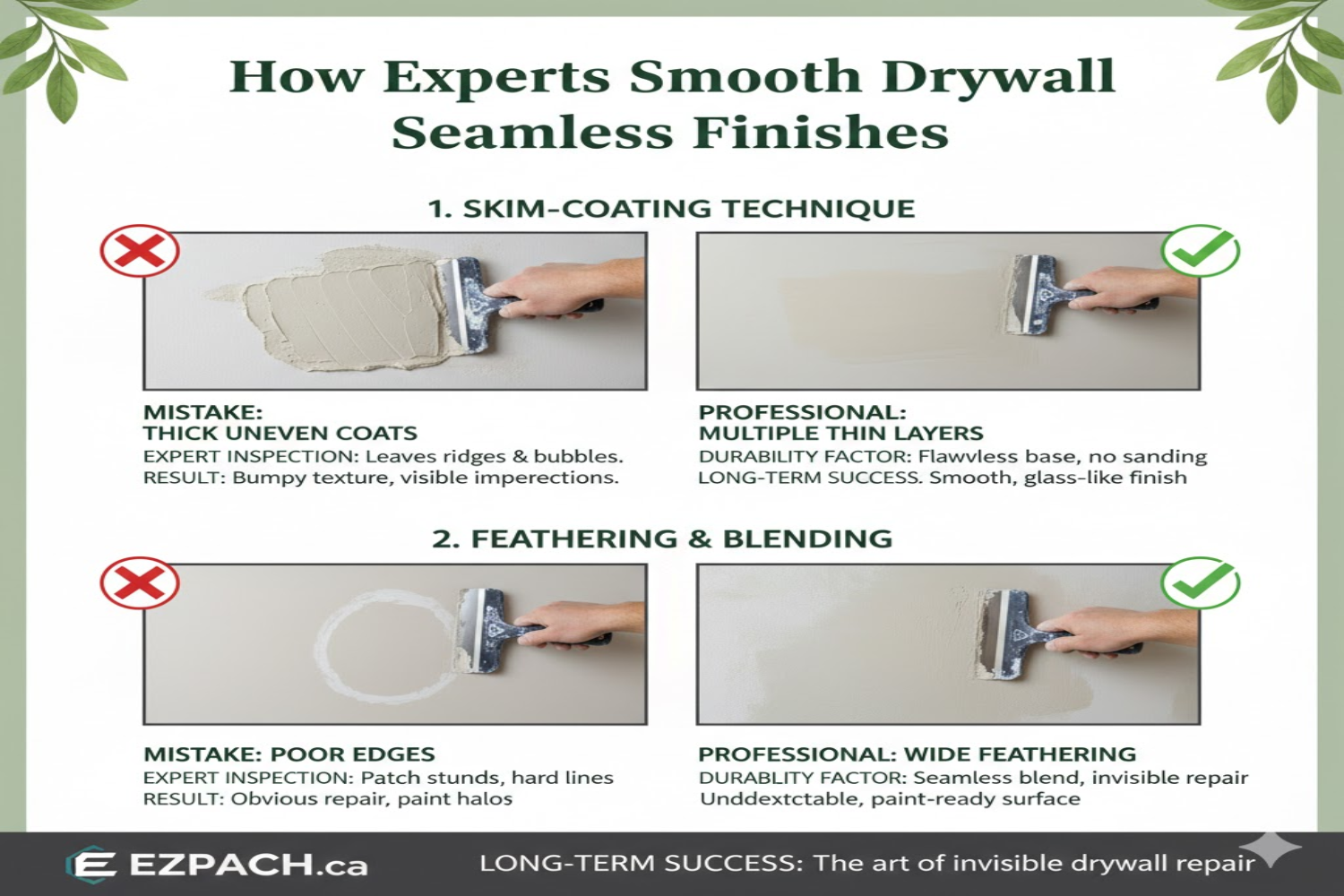
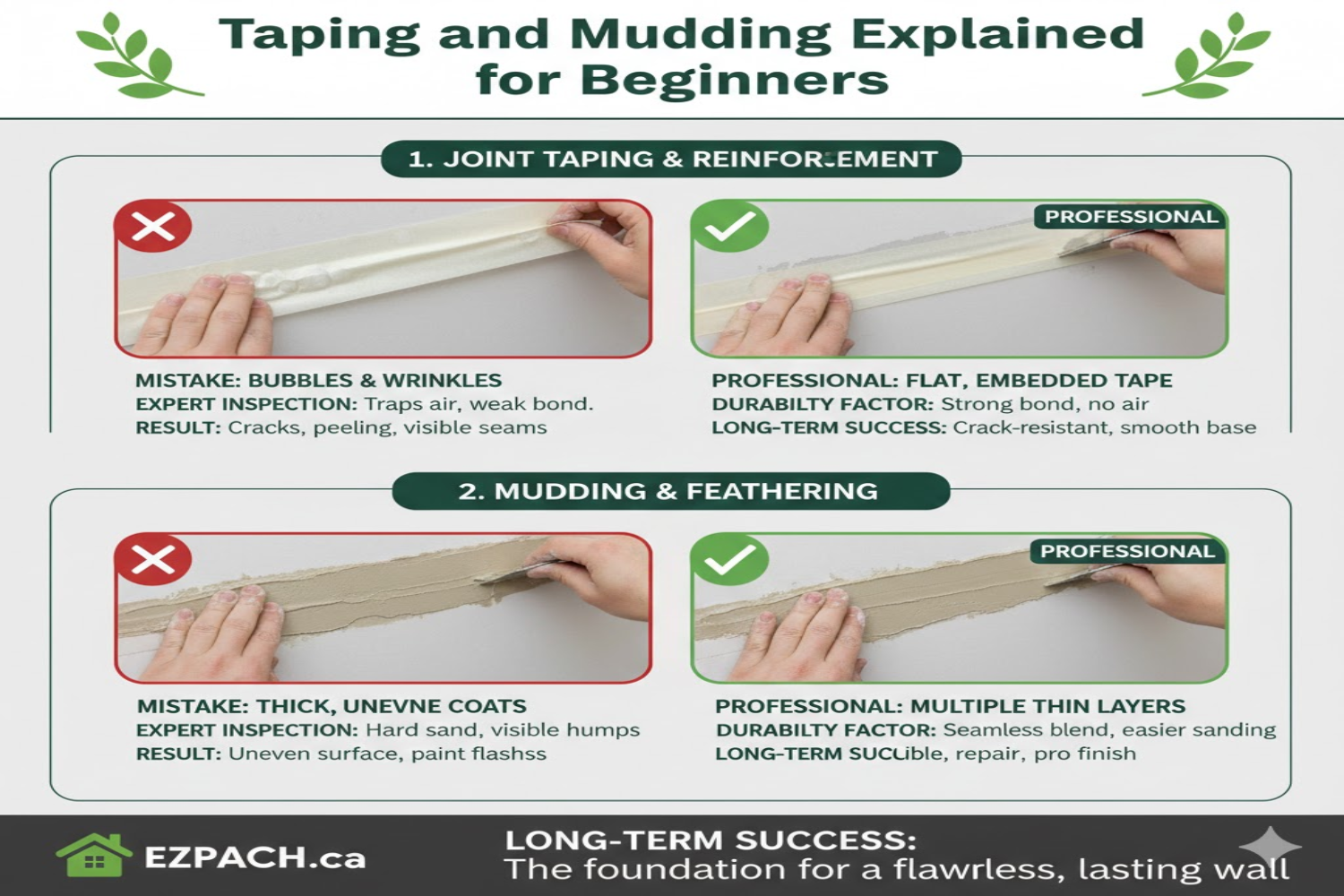
- Filling cracks or dents with joint compound
- Sanding and smoothing repaired areas
- Repainting or applying ceiling texture for a uniform appearance
- Quick-dry solutions for minor water stains
Following professional standards ensures durability and high-quality finishes.
How to Prevent Future Damage
Preventive maintenance helps avoid both structural and non-structural damage. Regular inspections, proper load management, and controlling moisture are key strategies.
- Regular roof and attic inspections for leaks
- Installing dehumidifiers in high-humidity areas
- Avoiding heavy fixtures without proper reinforcement
- Promptly repairing minor cracks or surface damage.
- Reinforcing older ceilings where necessary
Proactive maintenance extends the lifespan of ceilings and prevents costly repairs.
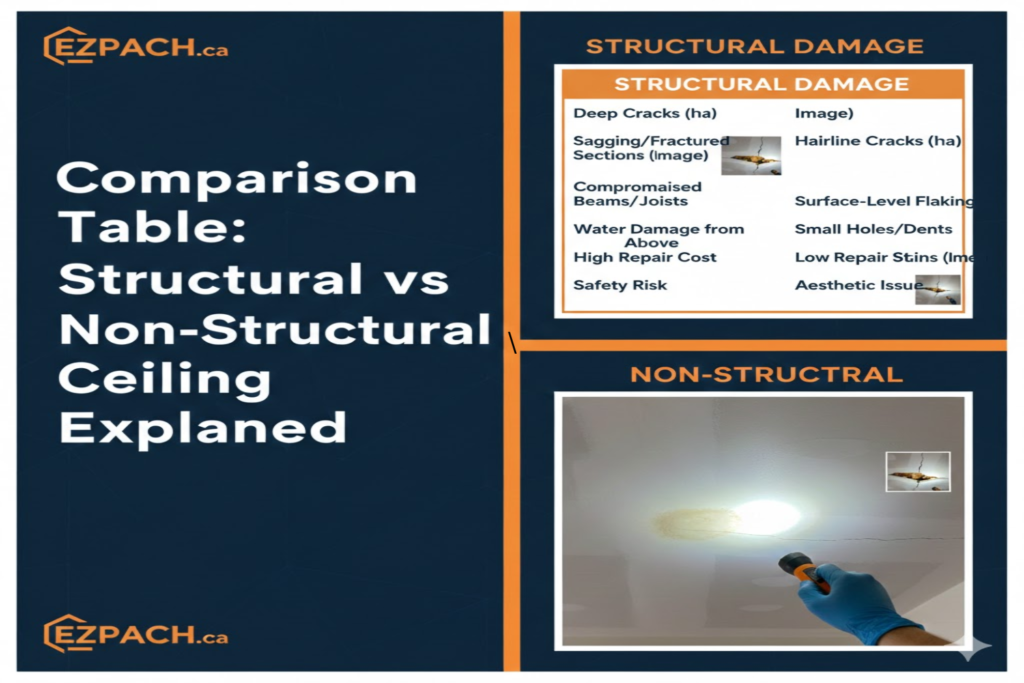
Comparison Table: Structural vs Non-Structural Ceiling Damage
| Feature | Structural Damage | Non-Structural Damage |
| Affects Load-Bearing | Yes | No |
| Urgency | High | Medium/Low |
| Common Causes | Roof sagging, foundation settling | Minor leaks, surface impacts |
| Typical Repairs | Beam reinforcement, joist replacement | Patching, sanding, and repainting |
| Safety Risk | High | Low |
| Cost | Higher | Lower |
| Longevity | Long-term with proper repair | Cosmetic unless underlying issues occur |
| Inspection Method | Detailed structural inspection | Visual and touch inspection |
Conclusion
Understanding structural vs non-structural ceiling damage is essential for proper maintenance, safety, and long-lasting repair results. Structural damage impacts the integrity of the building and requires immediate professional intervention. Non-structural damage affects aesthetics and minor functionality, but addressing it promptly prevents escalation and keeps ceilings visually appealing.
By conducting accurate inspections, identifying damage types, and following professional repair standards, homeowners can prevent costly mistakes. Timely maintenance, proper load management, and addressing moisture or pest issues ensure ceilings remain safe, durable, and aesthetically pleasing for years.
FAQs
1. Can small cracks indicate structural damage?
Hairline cracks are usually cosmetic, but wider cracks or sagging areas may indicate structural issues. Professional assessment is recommended.
2. Is water damage always structural?
Minor water stains are typically non-structural. Severe leaks affecting beams or joists indicate structural damage.
3. How long can I wait to repair non-structural damage?
Minor cosmetic damage can be addressed at your convenience, but prompt repair prevents worsening and protects underlying materials.
4. Can I DIY structural repairs?
Structural repairs should only be performed by licensed professionals to ensure safety and compliance with building codes.
5. What tools help identify structural ceiling issues?
A level, moisture meter, flashlight, and close visual inspection are commonly used to identify structural damage.
6. Are ceilings more prone to structural or non-structural damage?
Most ceilings experience non-structural damage first, but structural damage is less common and more serious.
7. Can non-structural damage become structural over time?
Yes, if moisture, pests, or hidden weaknesses compromise supporting materials, minor issues can escalate into structural problems.
8. How much does professional repair cost?
Non-structural repairs are usually low-cost, while structural repairs are more expensive due to reinforcement and labor requirements.
Drywall Repair Halifax
EZ Patch offers clean, professional drywall, ceiling, plaster, and water damage repair services in Halifax with minimal mess and long-lasting results.
EZ Patch – Drywall Repair Experts
Trusted drywall repair professionals serving Halifax and nearby areas.
Drywall Patch & Repair
Seamless drywall repairs for holes, cracks, dents, and damaged walls.
Ceiling Repairs
Professional ceiling repair services for stains, cracks, and water damage.
Drywall Installation
Complete drywall installation services for renovations and new builds.
Taping & Mudding
Smooth, paint-ready wall finishes by expert drywall finishers.
Plaster Repair Experts
Precision plaster repair services while maintaining original wall texture.
Water Damage Repair
Drywall and ceiling restoration for properties affected by water damage.
Texture Matching
Accurate texture blending so repaired areas match existing finishes.
Installation, Repair & Removal
End-to-end drywall installation, repair, and removal solutions.