The debate between plaster and modern drywall has been ongoing in construction and renovation circles for decades. While both materials serve as the backbone of interior walls and ceilings, their composition, durability, and application techniques differ significantly. Understanding these structural differences is crucial for homeowners, contractors, and architects who aim to achieve both functional and aesthetic results in their projects.
Plaster is often associated with traditional construction and offers a solid, dense finish, whereas modern drywall provides a faster, more standardized solution suitable for contemporary building practices. These differences impact not only the wall’s structural integrity but also long-term maintenance and repair requirements. This article explores these distinctions in depth, helping readers make informed choices for their homes and commercial spaces.
What Is Plaster?
Plaster is a traditional wall finishing material composed of lime, cement, gypsum, or a mixture of these, often applied over a lath framework. Its strength comes from the chemical reaction during curing, which allows it to harden into a dense and rigid surface.
Unlike modern drywall, plaster can be applied in multiple layers, each contributing to the wall’s thickness and durability. These layers provide a high level of sound insulation and fire resistance, making plaster a preferred choice in heritage buildings and high-end renovations.
Historical Use of Plaster
Plaster has been used for centuries, dating back to ancient civilizations, where it was valued for both aesthetic and functional qualities.
- Ancient Egyptians used gypsum plaster for decorative wall finishes.
- In Europe, lime plaster became a standard material for centuries.
- Its adaptability made it a key component in ornate architectural details.
- Even today, plaster remains popular in restoration projects.
Composition and Application
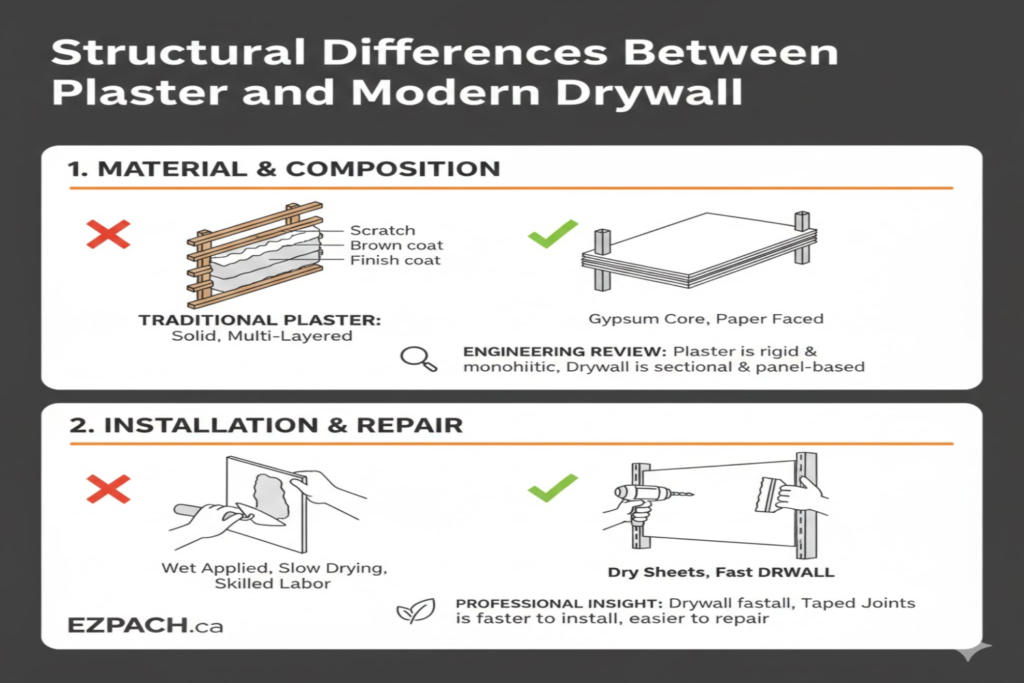
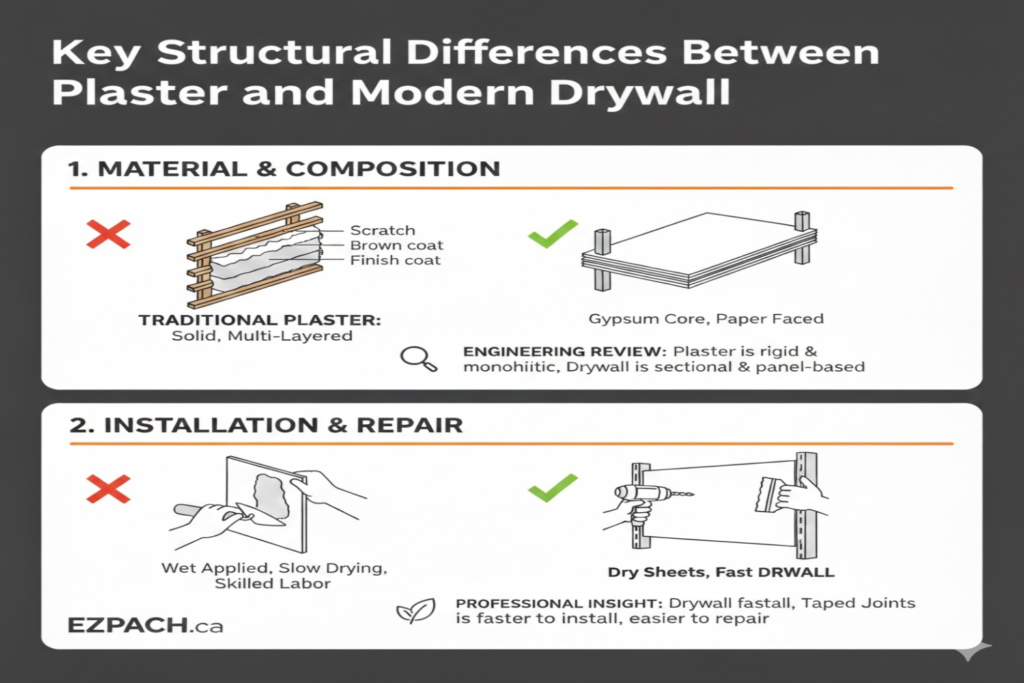
Plaster typically involves a three-coat application: scratch coat, brown coat, and finish coat.
- Scratch coat ensures adhesion to the lath or substrate.
- Brown coat provides structural thickness and smooths surface irregularities.
- Finish coat delivers the final smooth or textured appearance.
The application process is labor-intensive and requires skilled artisans to ensure consistency, which increases time and cost compared to drywall.
What Is Modern Drywall?
Modern drywall, also known as gypsum board or sheetrock, consists of a gypsum core sandwiched between two layers of heavy paper. It is manufactured in standardized sheets, typically 4×8 feet, for rapid installation in residential and commercial buildings.
Drywall is prized for its ease of installation, uniform thickness, and cost efficiency. Unlike plaster, drywall does not require multiple layers or curing time, allowing for immediate painting or wallpaper application after finishing the joints and sanding.
Drywall Composition
Drywall’s core primarily contains gypsum, which is a naturally occurring mineral.
- Gypsum is lightweight, fire-resistant, and relatively easy to cut.
- Paper facings add structural integrity and facilitate joint treatment.
- Additives improve moisture resistance and reduce cracking.
Installation and Finishing
Drywall installation is generally quicker than plastering, often achievable by a small team in a single day for standard rooms.
- Panels are screwed or nailed to studs.
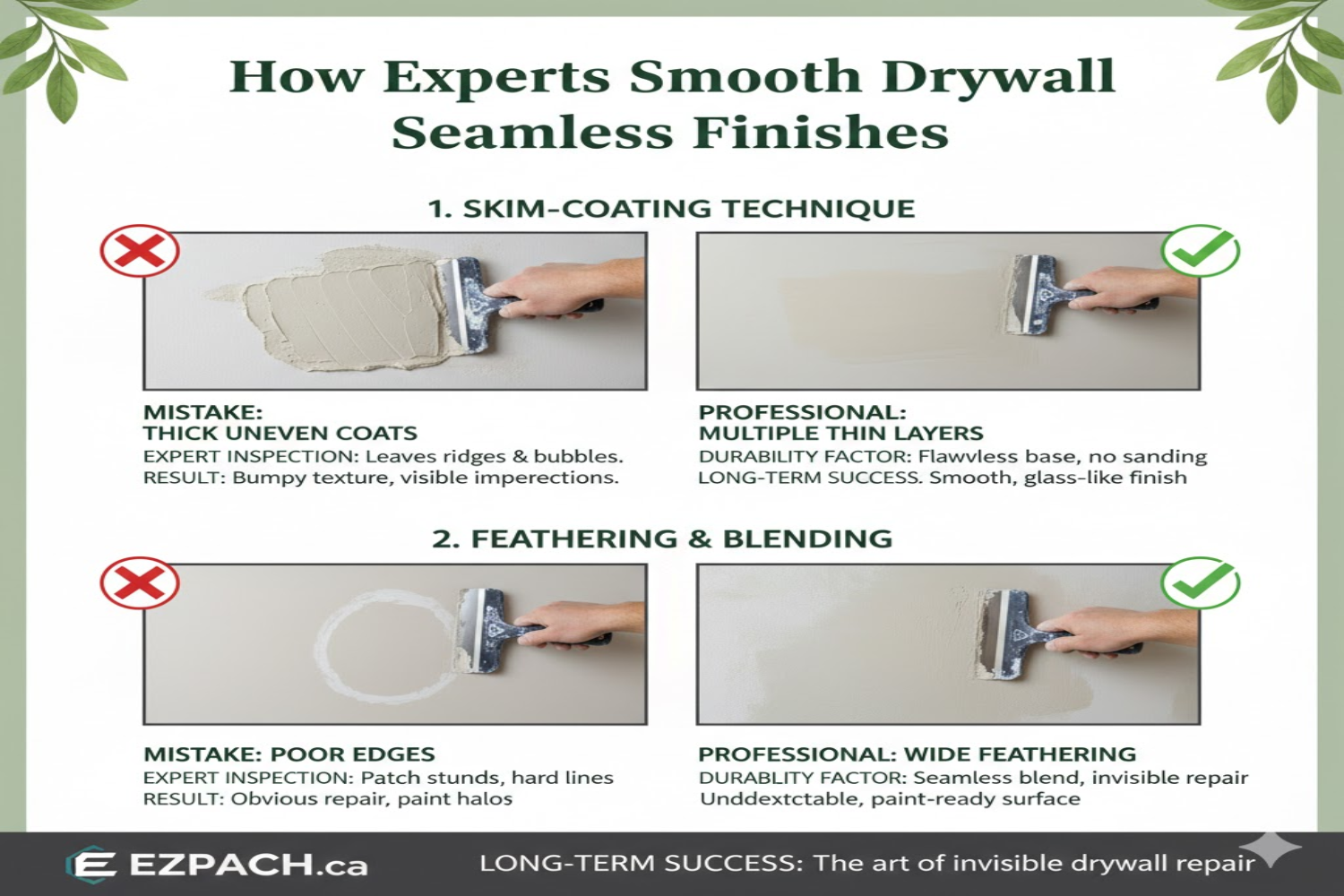
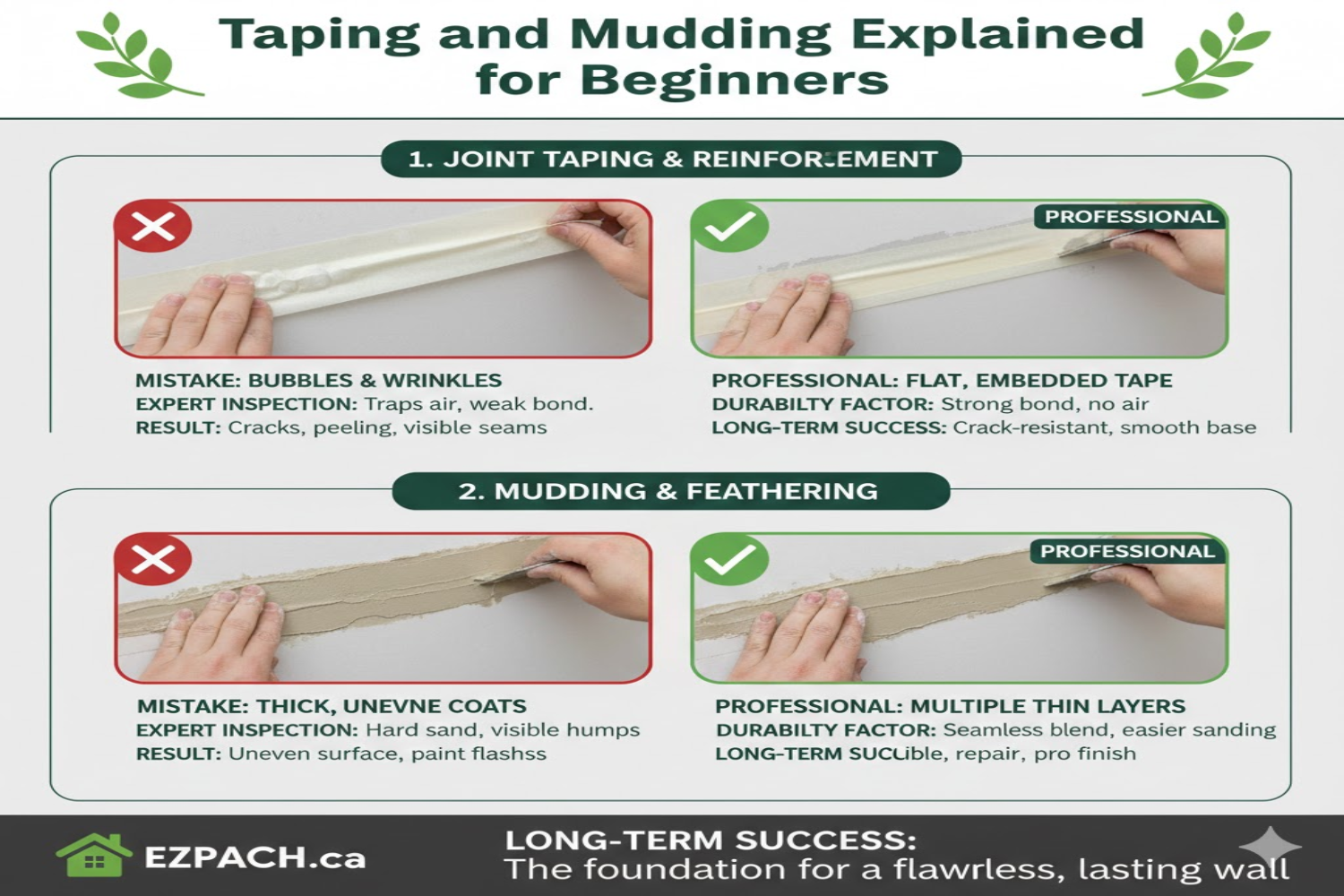
- Joints are taped and covered with joint compound.
- Sanding creates a smooth surface ready for paint.
Despite its convenience, drywall is less dense and may be prone to denting or sagging in humid environments compared to plaster.
Key Structural Differences Between Plaster and Drywall
The structural differences between plaster and modern drywall extend beyond mere material composition. They influence wall strength, sound insulation, fire resistance, and longevity.
Thickness and Density
Plaster walls are generally thicker and denser than drywall.
- A typical plaster wall ranges from 7/8 inch to 1 1/2 inches thick.
- Drywall thickness usually ranges from 1/4 inch to 5/8 inch.
- Thicker walls provide better soundproofing and durability.
- Plaster’s density allows it to resist minor impact and abrasion.
Drywall, being lighter and thinner, may require additional structural support in high-traffic areas or ceilings.
Flexibility and Durability
Plaster has a low tolerance for impact cracking but excels in long-term durability.
- It hardens chemically and resists minor moisture infiltration.
- Drywall is more flexible and can tolerate slight structural movement.
- However, drywall can sag, dent, or crack under stress over time.
Surface Finish and Aesthetic Options
Plaster allows for intricate textures and decorative finishes that are difficult to replicate with drywall.
- Venetian plaster, polished plaster, and ornamental cornices are possible with traditional plaster.
- Drywall provides a uniform, flat surface suitable for paint or wallpaper.
The choice depends on the desired aesthetic and architectural requirements.
How Plaster Provides Superior Sound and Fire Resistance
Plaster’s density and layered application make it superior in terms of sound insulation and fire resistance compared to standard drywall.
Sound Insulation
Plaster walls absorb and block sound more effectively than drywall.
- A layered application reduces sound transmission between rooms.
- Solid core minimizes vibration and echo.
- Ideal for theaters, recording studios, or multi-story buildings.
Fire Resistance
Plaster’s mineral content naturally resists fire.
- It slows down heat penetration and protects the underlying structure.
- Drywall with added fire-resistant gypsum cores can provide similar protection, but is generally less effective than thick plaster layers.
When to Choose Plaster Over Drywall
Selecting plaster over drywall depends on project goals, budget, and long-term maintenance expectations.
- Heritage Restoration: Original plaster helps maintain historical integrity.
- Aesthetic Value: Plaster allows more creative finishes.
- Acoustic Needs: Superior soundproofing in multi-family housing or offices.
- Fire Safety Requirements: Dense plaster walls improve fire resistance.
For many modern renovations, drywall remains the preferred choice due to speed, cost-effectiveness, and ease of repair.
Key Factors Affecting Wall Longevity
Several factors determine whether plaster or drywall will last longer under specific conditions.
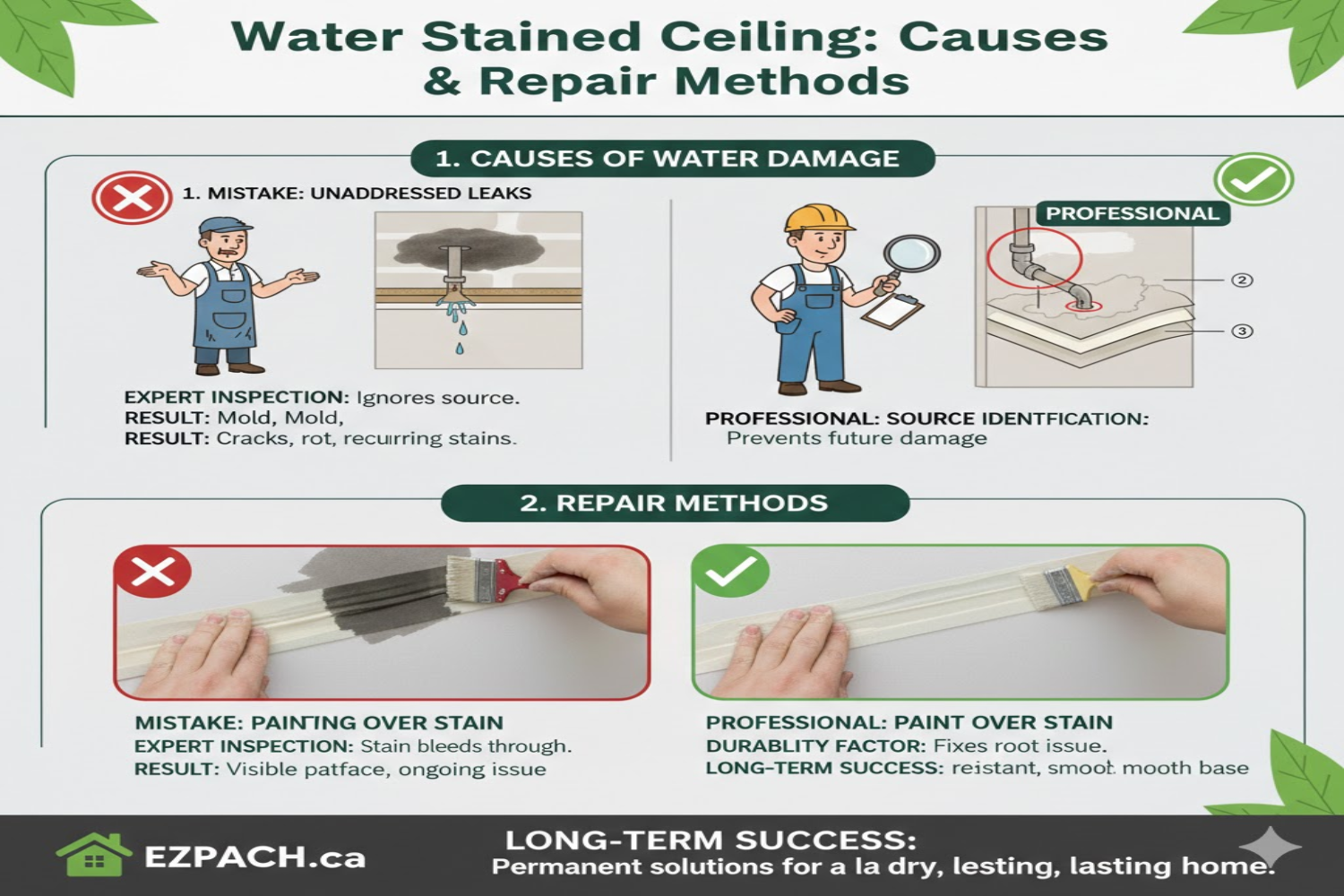
- Moisture Exposure: Plaster is more resistant to humidity but can crack if improperly cured. Drywall is prone to water damage and mold.
- Structural Movement: Buildings with significant settling may crack plaster walls, whereas drywall is more forgiving.
- Maintenance Practices: Plaster requires skilled repairs; drywall can be patched with less expertise.
- Impact Resistance: Plaster resists minor impacts better, making it suitable for high-traffic areas.
How Installation Methods Impact Structural Performance
The method of installation directly affects the strength and longevity of plaster or drywall.
Plaster Installation
- Scratch and brown coats ensure proper adhesion and structural integrity.
- Skilled application reduces future cracking and sagging.
- Multi-layer curing strengthens the wall over time.
Drywall Installation
- Proper stud spacing and fastener placement are critical.
- Joint treatment with tape and compound prevents visible seams.
- Moisture-resistant drywall should be used in damp environments.
Advantages of Drywall in Modern Construction
While plaster has historical and aesthetic appeal, drywall dominates contemporary construction due to several advantages.
- Faster installation reduces labor costs.
- Lightweight panels reduce overall structural load.
- Easy to modify or replace sections.
- Standardized sizing simplifies project planning.
- Suitable for retrofitting in modern renovations.
Plaster vs Drywall: Cost Considerations
Cost is a major factor in choosing between plaster and drywall.
Plaster Costs
- A labor-intensive application increases upfront costs.
- Skilled artisans command higher rates.
- Repairs are more complex and expensive.
- A long lifespan may offset the initial investment.
Drywall Costs
- Materials are cheaper and widely available.
- Quick installation reduces labor costs.
- Repairs are straightforward and inexpensive.
Common Misconceptions About Plaster and Drywall
Many homeowners and even some contractors misunderstand the real differences between plaster and modern drywall. These misconceptions can lead to poor material choices, unnecessary repairs, or increased renovation costs. Clarifying these myths helps in making informed decisions that balance durability, aesthetics, and budget.
- Plaster is outdated: Modern plaster techniques offer high durability, fire resistance, and decorative options that rival drywall.
- Drywall is fragile: With proper installation, drywall is strong, stable, and suitable for most residential and commercial projects.
- Plaster requires constant maintenance: Once applied correctly, plaster walls can last decades with minimal upkeep.
- Drywall cannot be decorative: Textured finishes, specialty coatings, and layered designs make drywall versatile for creative interior designs.
- Plaster is too expensive: While initially costlier, plaster’s longevity and low long-term maintenance often offset upfront costs.
Summary of Structural Differences
- Density: Plaster is denser, drywall is lighter.
- Thickness: Plaster walls are thicker, offering better insulation.
- Soundproofing: Plaster provides superior acoustic performance.
- Fire Resistance: Plaster inherently resists fire better.
- Flexibility: Drywall tolerates minor structural movement more effectively.
- Aesthetic Options: Plaster allows more decorative finishes.
- Installation Speed: Drywall is faster and less labor-intensive.
- Repair Complexity: Plaster requires skilled artisans; drywall can be patched easily.
FAQs
1. Can drywall be painted over immediately after installation?
Yes, drywall can be painted once the joint compound is dry and sanded smooth. It requires less curing time than plaster.
2. Is plaster more energy-efficient than drywall?
Plaster’s density offers slightly better thermal insulation, helping maintain indoor temperatures.
3. Which material is better for humid areas?
Moisture-resistant drywall or cement plaster is recommended, as standard drywall may absorb water and swell.
4. Can plaster crack over time?
Yes, plaster may develop hairline cracks due to settling or temperature changes, but it is generally more durable than drywall.
5. How long does drywall last?
Properly installed drywall can last 50 years or more, but may require occasional patching.
6. Is drywall cheaper than plaster?
Yes, drywall is typically less expensive due to material cost and faster installation.
7. Can I install drywall over plaster?
Yes, drywall can be mounted over plaster walls, often using furring strips or adhesive.
8. Does plaster improve soundproofing?
Yes, plaster’s density and layered application reduce sound transmission more effectively than standard drywall.
Conclusion
Understanding the structural differences between plaster and modern drywall is essential for making informed decisions in construction and renovation projects. While plaster offers superior density, soundproofing, and fire resistance, drywall provides cost-effective, rapid installation with adequate durability for most modern applications.
Choosing between plaster and drywall ultimately depends on project goals, budget constraints, and long-term maintenance considerations. By carefully evaluating these factors, homeowners and contractors can ensure that walls are both structurally sound and aesthetically pleasing, meeting contemporary and traditional building standards alike.
Drywall Repair Halifax
EZ Patch offers clean, professional drywall, ceiling, plaster, and water damage repair services in Halifax with minimal mess and long-lasting results.
EZ Patch – Drywall Repair Experts
Trusted drywall repair professionals serving Halifax and nearby areas.
Drywall Patch & Repair
Seamless drywall repairs for holes, cracks, dents, and damaged walls.
Ceiling Repairs
Professional ceiling repair services for stains, cracks, and water damage.
Drywall Installation
Complete drywall installation services for renovations and new builds.
Taping & Mudding
Smooth, paint-ready wall finishes by expert drywall finishers.
Plaster Repair Experts
Precision plaster repair services while maintaining original wall texture.
Water Damage Repair
Drywall and ceiling restoration for properties affected by water damage.
Texture Matching
Accurate texture blending so repaired areas match existing finishes.
Installation, Repair & Removal
End-to-end drywall installation, repair, and removal solutions.