Proper maintenance of a home’s walls is critical to preserving both structural integrity and aesthetic appeal. Walls face constant exposure to environmental changes, seasonal moisture, and temperature fluctuations, which can accelerate wear and lead to costly repairs. Understanding and implementing seasonal home maintenance to protect walls helps homeowners prevent damage, maintain energy efficiency, and extend the life of wall surfaces.
Walls, whether plaster, drywall, or a combination, can develop cracks, bulges, or moisture damage over time. Seasonal checks allow early detection of minor issues before they become major structural concerns. By following a structured maintenance plan tailored to each season, homeowners can protect their walls, preserve home value, and maintain a comfortable living environment.
Why Seasonal Wall Maintenance Matters
Walls are not static; they are affected by a variety of seasonal stressors. Temperature changes, humidity variations, and precipitation all contribute to wear and tear. Ignoring seasonal maintenance often results in more extensive repairs, including plaster delamination, drywall bowing, or mold growth.
Seasonal wall maintenance ensures problems are caught early, minimizing repair costs and preventing long-term structural damage. It also improves the home’s energy efficiency and indoor comfort by keeping walls insulated, dry, and free from drafts. Regular maintenance routines foster healthier, more resilient living spaces.
Environmental Stressors
- Temperature Fluctuations: Expansion and contraction of wall materials can create cracks or gaps.
- Humidity Changes: Moisture absorbed by walls can weaken plaster, warp drywall, or promote mold growth.
- Precipitation and Snow: Water infiltration from rain, snow, or ice dams can lead to water damage.
Benefits of Maintenance
- Prevents structural damage before it becomes severe.
- Enhances wall aesthetics and paint longevity.
- Reduces energy loss due to drafts or insulation gaps.
Spring Maintenance Tasks
Spring is a critical season for addressing winter-related stress on walls. As temperatures rise and snow melts, water may have penetrated walls or ceilings. Spring maintenance focuses on repairing winter damage and preparing walls for warmer months.
Inspect for Water Damage
- Check ceilings and walls for stains or discoloration caused by snowmelt or leaks.
- Examine baseboards and lower walls for signs of rising damp.
- Address any moisture issues immediately to prevent mold or structural decay.
Repair Minor Cracks and Surface Damage
- Winter contraction often causes small hairline cracks.
- Use appropriate plaster or drywall filler to seal cracks.
- Timely patching prevents cracks from expanding during summer heat.
Exterior Wall Checks
- Inspect siding, stucco, or brick for gaps or cracks.
- Ensure caulking around windows and doors is intact.
- Clear debris from gutters and downspouts to prevent water from seeping into walls.
Summer Maintenance Tasks
Summer heat introduces its own challenges, including thermal expansion and high indoor humidity. Proper seasonal care ensures walls remain stable and free from damage during warmer months.
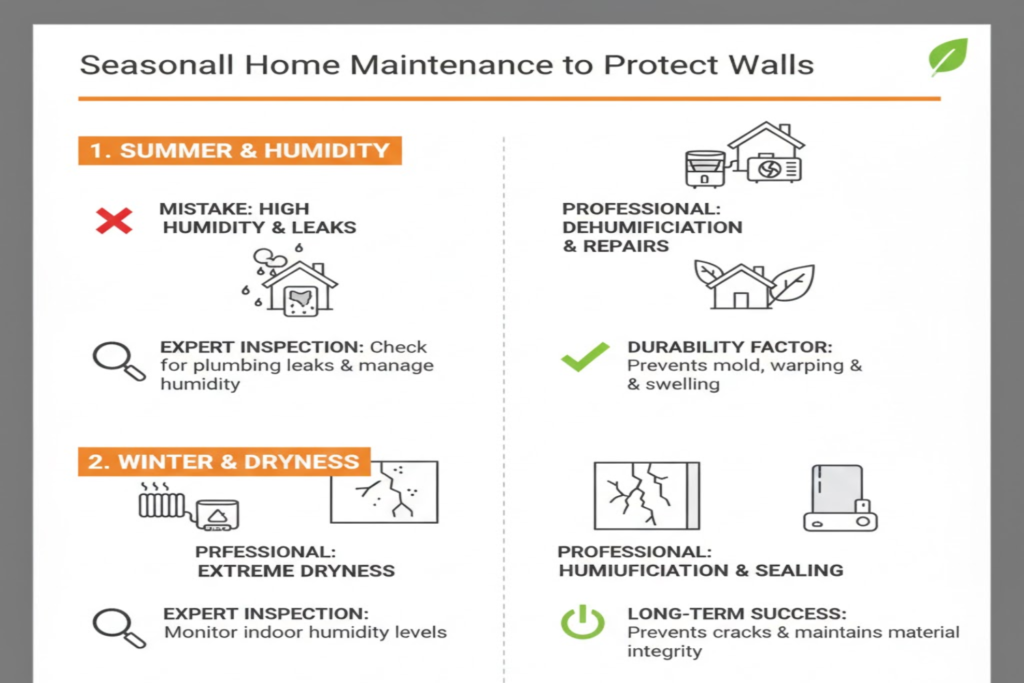
Control Indoor Humidity
- Use dehumidifiers in humid areas like basements to prevent plaster softening or paint peeling.
- Ensure ventilation in bathrooms and kitchens to reduce condensation buildup.
Inspect for Thermal Stress Cracks
- Heat can cause walls to expand, revealing stress cracks.
- Fill minor cracks promptly to avoid larger repairs later.
Painting and Protective Coatings
- Summer is ideal for repainting or sealing walls.
- Low humidity ensures paint cures evenly and adheres well to plaster or drywall.
Fall Maintenance Tasks
Fall is the transition from warm to cooler weather and is crucial for preparing walls for winter. Contraction of wall materials and seasonal precipitation can lead to cracks, water infiltration, and mold risk.
Exterior Inspections
- Check the roof, gutters, and downspouts for leaks or clogs.
- Inspect window and door seals to prevent drafts from affecting wall interiors.
Interior Wall Checks
- Examine walls for cracks, bulges, or loose plaster caused by summer expansion.
- Address any minor issues promptly before cold weather accelerates damage.
Seal Gaps and Drafts
- Ensure all exterior gaps around windows, doors, and vents are sealed.
- Proper sealing maintains energy efficiency and prevents moisture intrusion.
Winter Maintenance Tasks
Winter is the most challenging season for walls due to freezing temperatures, condensation, and ice dams. Walls face contraction stress and potential moisture penetration from roof and foundation leaks.
Monitor Roof and Ice Dams
- Ice dams can lead to water leaks that damage ceilings and walls.
- Clear ice and snow safely and inspect for any penetration points.
Maintain Indoor Humidity
- Use humidifiers to maintain consistent indoor moisture levels.
- Proper humidity prevents plaster cracking and reduces condensation on drywall.
Basement and Foundation Walls
- Inspect the basement and foundation walls for water seepage.
- Early intervention prevents water migration into the main walls, reducing the risk of mold or structural damage.
General Tips for Year-Round Wall Protection
- Regular Cleaning: Remove dust, dirt, and minor mold spores to prevent surface damage.
- Professional Inspections: Schedule annual inspections for both plaster and drywall.
- Pest Control: Keep insects and rodents away from wall cavities to prevent structural compromise.
- Maintain HVAC Systems: Proper airflow prevents condensation and maintains temperature stability.
- Prompt Repairs: Address any cracks, bulges, or stains immediately to avoid larger repairs.
Benefits of Seasonal Maintenance
- Prolonged Wall Lifespan: Regular checks prevent deterioration and costly repairs.
- Energy Efficiency: Well-maintained walls improve insulation and reduce energy bills.
- Aesthetic Preservation: Prevent peeling paint, stains, or discoloration.
- Healthier Living Environment: Reduces mold and mildew growth from moisture intrusion.
- Home Value Protection: Proper maintenance ensures the property retains its market value.
Conclusion
Implementing seasonal home maintenance to protect walls is essential for durability, aesthetics, and energy efficiency. Each season presents unique challenges, and proactive inspections help identify issues before they escalate into major repairs.
By following a structured maintenance schedule, homeowners can prevent moisture damage, cracks, and structural problems. Seasonal care ensures walls remain safe, visually appealing, and long-lasting, ultimately preserving home value and enhancing living comfort.
FAQs
1. How often should I inspect my walls for damage?
Walls should be inspected at least once per season to identify cracks, moisture, or bulges early. Regular inspections prevent minor issues from becoming costly repairs.
2. Can seasonal maintenance prevent mold growth?
Yes, monitoring humidity and addressing leaks seasonally reduces conditions that encourage mold. Prompt cleaning of affected areas further prevents mold development.
3. Are plaster walls more vulnerable to seasonal changes than drywall?
Plaster is denser and more rigid, making it resistant to minor damage but sensitive to moisture intrusion. Drywall is more flexible but can warp or sag under prolonged humidity.
4. What is the best way to seal gaps around windows and doors?
Use high-quality caulking or weatherstripping to seal gaps. Proper sealing prevents drafts and protects interior walls from moisture damage.
5. Should I use a dehumidifier year-round?
In areas with high humidity, yes, especially in basements or poorly ventilated rooms. Maintaining consistent indoor humidity prevents plaster softening and drywall sagging.
6. How do I prevent cracks from forming during winter?
Keep indoor temperatures and humidity levels stable. Avoid rapid heating or cooling and repair any hairline cracks before freezing weather arrives.
7. Can seasonal maintenance extend the lifespan of paint?
Yes, regular cleaning, moisture control, and timely touch-ups prevent peeling, flaking, and fading. Proper seasonal care ensures paint remains vibrant for longer.
8. When should I call a professional for wall maintenance?
If you notice recurring cracks, moisture infiltration, or structural concerns, a professional should evaluate the walls. Early professional intervention prevents costly long-term damage.
Drywall Repair Halifax
EZ Patch offers clean, professional drywall, ceiling, plaster, and water damage repair services in Halifax with minimal mess and long-lasting results.
EZ Patch – Drywall Repair Experts
Trusted drywall repair professionals serving Halifax and nearby areas.
Drywall Patch & Repair
Seamless drywall repairs for holes, cracks, dents, and damaged walls.
Ceiling Repairs
Professional ceiling repair services for stains, cracks, and water damage.
Drywall Installation
Complete drywall installation services for renovations and new builds.
Taping & Mudding
Smooth, paint-ready wall finishes by expert drywall finishers.
Plaster Repair Experts
Precision plaster repair services while maintaining original wall texture.
Water Damage Repair
Drywall and ceiling restoration for properties affected by water damage.
Texture Matching
Accurate texture blending so repaired areas match existing finishes.
Installation, Repair & Removal
End-to-end drywall installation, repair, and removal solutions.