Maintaining plaster walls is about more than just aesthetics; it directly impacts a home’s value and structural integrity. Homeowners often overlook the long-term consequences of poor plaster repair techniques, which can lead to recurring damage and costly restoration. Understanding how to properly address plaster issues ensures walls remain both functional and visually appealing.
Proper plaster wall repairs that preserve home value require knowledge of materials, historical construction methods, and accurate diagnosis of underlying problems. Cosmetic fixes alone are rarely sufficient, as they often mask more serious issues hidden beneath the surface. Investing in thoughtful, quality repairs protects the home’s worth while preventing repeated damage.
Understanding the Importance of Quality Plaster Repairs
Plaster is a durable and long-lasting wall finish when installed and maintained correctly. It is often found in older homes and historic properties, making proper care essential for preserving architectural integrity. Failing to repair plaster correctly can compromise both the structure and the resale value of the home.
Many homeowners attempt DIY solutions or apply modern drywall techniques to plaster surfaces. These shortcuts often result in cracking, delamination, or uneven finishes. To preserve home value, it is crucial to recognize the differences between plaster and contemporary wall materials.
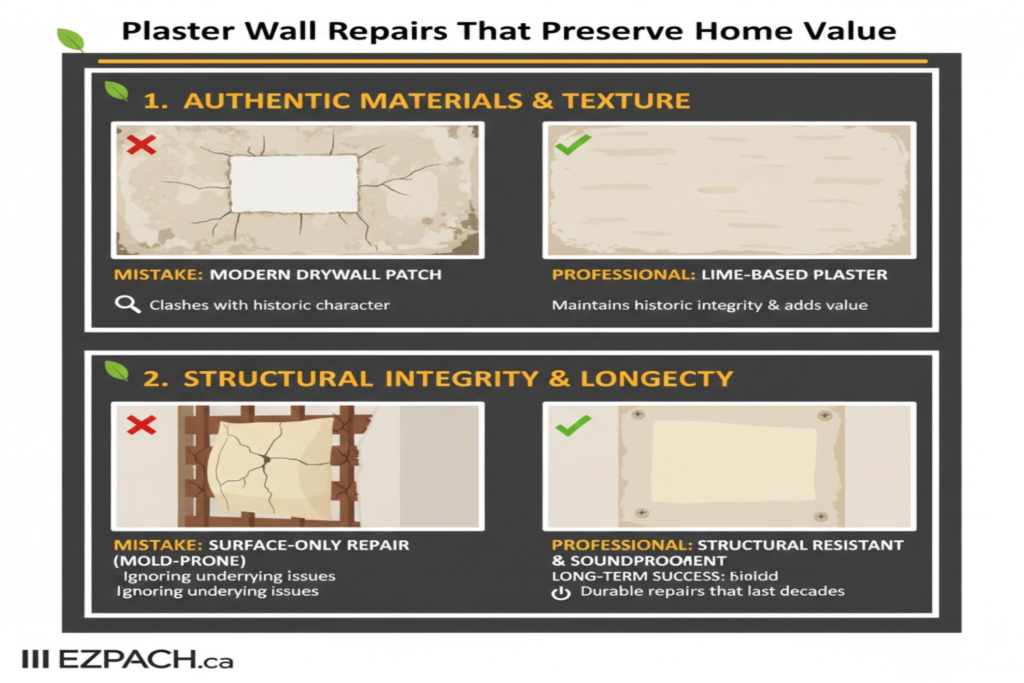
Why Plaster Requires Specialized Care
Plaster walls consist of multiple layers, including lath, base coats, and finish layers. Each layer reacts differently to moisture, temperature changes, and building movement. Understanding this composition is key to applying repairs that last and maintain the home’s market appeal.
The Cost of Ignoring Proper Techniques
Using improper repair methods may temporarily hide damage but accelerate long-term deterioration. Structural weakening, recurring cracks, and cosmetic flaws reduce both functionality and aesthetic value. Investing in correct repair methods saves homeowners money and preserves property value.
Common Mistakes That Reduce Home Value
Incorrect plaster repairs can significantly affect a property’s appraisal and buyer perception. Many homeowners unknowingly lower their home’s value by using inappropriate materials or failing to address underlying issues.
Applying Drywall Methods to Plaster
Many attempt to patch plaster with drywall compounds, which are incompatible with traditional plaster materials. Drywall compounds shrink differently and lack the flexibility needed for older walls, leading to cracks and peeling. This common mistake is a major factor in recurring damage and decreased property value.
Ignoring Moisture Problems
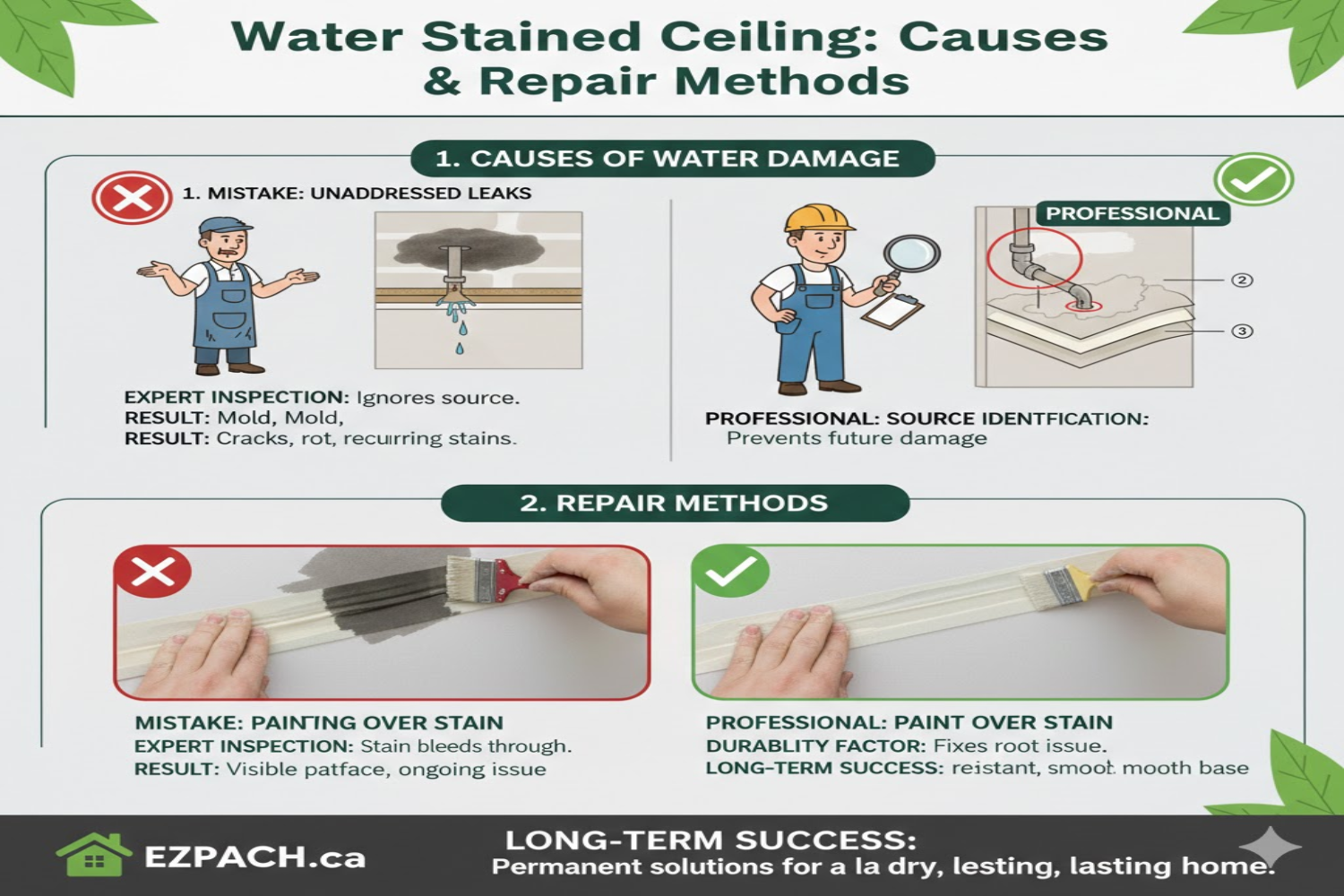
Moisture intrusion often causes plaster to weaken or crumble over time. Painting or patching without addressing leaks or humidity issues only hides the problem temporarily. Proper repairs must include moisture management to maintain both wall integrity and home value.
Techniques That Preserve Home Value
Using the right materials and repair strategies ensures walls remain durable and visually consistent. High-quality repairs also reflect positively during inspections and appraisals.
Matching Original Materials
Authentic plaster repair involves selecting materials that mimic the original composition. Lime-based plasters should be matched with compatible compounds. Using similar materials preserves historical authenticity and supports long-lasting adhesion.
Professional Craftsmanship
Expertise in plaster repair techniques is critical for optimal results. Skilled professionals understand how to prepare the surface, apply layers, and finish textures seamlessly. Quality workmanship reduces future repair needs and enhances resale potential.
Long-Term Benefits of Proper Plaster Repairs
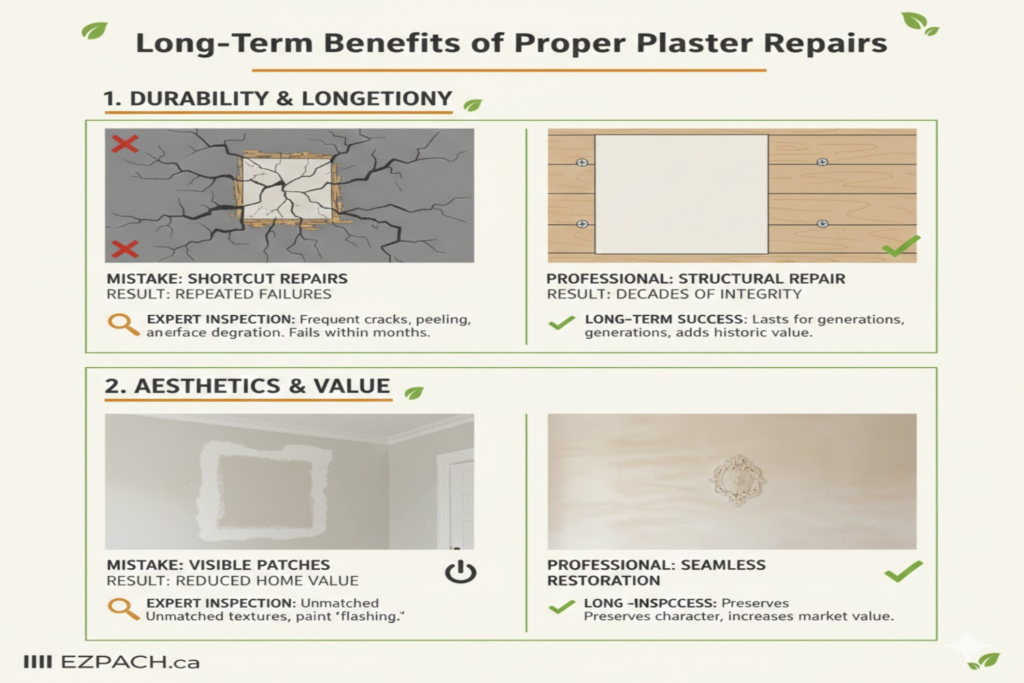
Investing in proper plaster wall repairs protects both the home’s structure and its market value. Long-term benefits include:
- Durable Repairs: Correct materials and methods create repairs that withstand environmental stress and aging.
- Visual Consistency: Matching textures and finishes maintains the aesthetic appeal of the home.
- Reduced Recurring Costs: Addressing root causes prevents frequent repairs and maintenance expenses.
- Increased Property Value: Well-maintained plaster walls reflect attention to detail, boosting appraisal scores.
- Preserved Historical Integrity: Original construction techniques are respected, which is important for older homes.
Identifying Problems Early
Early detection of plaster damage allows for targeted, cost-effective repairs. Ignoring minor cracks, bulges, or moisture stains can result in larger, more expensive issues over time.
Signs That Require Professional Attention
- Reappearing cracks after previous repairs
- Soft, powdery, or crumbling plaster surfaces
- Hollow sounds when tapping walls
- Visible water stains or efflorescence
- Bulging or warped sections of plaster
Tools for Accurate Diagnosis
- Moisture meters to detect hidden leaks
- Tapping and sounding for delamination
- Laser levels for detecting uneven surfaces
- Visual inspections for cracks and bulges
Preventing Future Damage
Plaster wall longevity depends on regular maintenance and environmental management. Simple steps can prevent recurring issues.
Environmental Control
Maintaining consistent humidity levels reduces expansion and contraction. Proper ventilation and leak prevention prevent moisture-related damage. Temperature control also minimizes stress on plaster surfaces.
Routine Maintenance
Periodic inspections allow for minor repairs before they become major problems. Cleaning with gentle methods prevents surface erosion, and timely reapplication of protective coatings enhances durability.
Professional Assessments
Engaging specialists for periodic assessments ensures early detection of structural or material issues. Professionals can recommend preventive measures tailored to the specific home type and plaster composition.
Common Repair Methods That Work
Choosing the right method is essential for repairs that preserve home value.
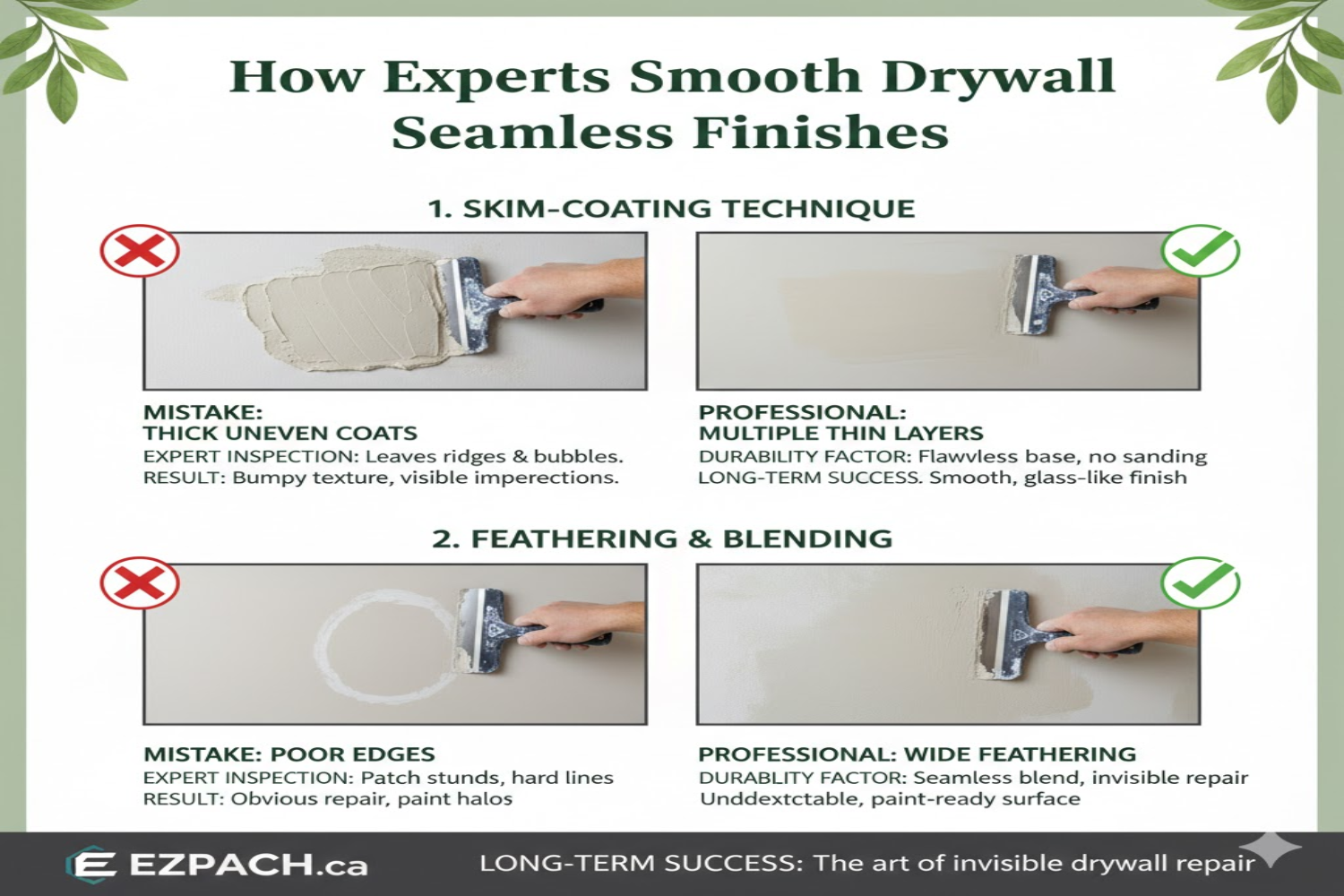
- Skim Coating: A thin layer applied over minor cracks restores surface smoothness without altering the wall structure.
- Patching with Compatible Plaster: Using lime-based or gypsum plasters ensures proper adhesion and flexibility.
- Reinforcing Lath: Strengthening or replacing damaged lath supports the plaster layers and prevents future cracks.
- Localized Replacement: Removing only the damaged plaster section maintains the wall’s original appearance while addressing the issue.
- Sealing Moisture Sources: Addressing leaks or condensation before repair guarantees long-lasting results.
Conclusion
Proper plaster wall repairs that preserve home value are a vital investment in both aesthetics and structural integrity. Quick fixes or improper techniques may save time initially, but lead to recurring issues and decreased property value. Understanding material compatibility, applying correct repair methods, and addressing underlying causes ensures walls remain durable and visually appealing.
Investing in skilled craftsmanship and authentic repair materials reflects positively on home value. Regular inspections and maintenance prevent costly future repairs while protecting the home’s long-term market potential. Homes with well-preserved plaster walls demonstrate care, quality, and lasting appeal to buyers.
FAQs
1. How often should plaster walls be inspected?
Plaster walls should be inspected at least once a year for cracks, moisture, and delamination. Early detection prevents extensive repairs.
2. Can plaster repairs be done as a DIY project?
Minor cosmetic repairs can be DIY, but significant cracks or structural issues require professional expertise.
3. Does using modern plaster materials affect home value?
Using materials incompatible with the original plaster can reduce longevity and aesthetics, potentially lowering property value.
4. How do I know if a crack is structural or cosmetic?
Structural cracks are often diagonal or wider at one end and may reappear after repair. Cosmetic cracks are usually hairline and stable.
5. Are lime-based plasters better than gypsum for historic homes?
Yes, lime-based plasters are more flexible and breathable, making them suitable for older construction methods.
6. Can moisture damage be repaired without replacing plaster?
In some cases, moisture issues can be addressed with sealing and targeted patching. However, severely damaged areas may require replacement.
7. Does regular maintenance really impact resale value?
Yes, well-maintained plaster walls reflect care and increase buyer confidence, positively affecting appraisals.
8. How long do properly executed plaster repairs last?
With correct materials and techniques, plaster repairs can last decades without major issues, preserving both aesthetics and structural integrity.
Drywall Repair Halifax
EZ Patch offers clean, professional drywall, ceiling, plaster, and water damage repair services in Halifax with minimal mess and long-lasting results.
EZ Patch – Drywall Repair Experts
Trusted drywall repair professionals serving Halifax and nearby areas.
Drywall Patch & Repair
Seamless drywall repairs for holes, cracks, dents, and damaged walls.
Ceiling Repairs
Professional ceiling repair services for stains, cracks, and water damage.
Drywall Installation
Complete drywall installation services for renovations and new builds.
Taping & Mudding
Smooth, paint-ready wall finishes by expert drywall finishers.
Plaster Repair Experts
Precision plaster repair services while maintaining original wall texture.
Water Damage Repair
Drywall and ceiling restoration for properties affected by water damage.
Texture Matching
Accurate texture blending so repaired areas match existing finishes.
Installation, Repair & Removal
End-to-end drywall installation, repair, and removal solutions.