Choosing the right wall finishing material significantly affects the durability, appearance, and cost of any construction or renovation project. Plaster and drywall each provide unique advantages and challenges, making the decision highly dependent on project requirements. Understanding the differences ensures walls and ceilings perform well while complementing the home’s style.
Homes built decades ago often feature plaster, whereas modern construction predominantly uses drywall. An informed comparison helps determine the best material for longevity, aesthetics, and budget. Proper material selection avoids future repairs and preserves both structural and visual integrity.
What is Plaster?
Plaster is a building material made from lime, cement, or gypsum that is applied wet and hardens into a solid surface. It has been used for centuries to create smooth or textured walls and ceilings. Plaster provides excellent durability, sound insulation, and aesthetic versatility.
Historically, plaster was applied over wooden laths or metal mesh, allowing skilled craftsmen to create intricate textures and moldings. Its labor-intensive application makes it more expensive but highly customizable. Modern plaster systems, like veneer plaster, reduce labor time while preserving the finish quality of traditional plaster.
Types of Plaster
- Traditional Lime Plaster: Flexible, breathable, and ideal for historic homes.
- Gypsum Plaster: Quick-setting and widely used in contemporary homes.
- Veneer Plaster: Thin coat over drywall, offering smooth finishes efficiently.
What is Drywall?
Drywall, also called gypsum board or sheetrock, is a prefabricated panel made of gypsum sandwiched between two paper layers. It became popular in the mid-20th century due to faster installation and lower costs compared to plaster. Drywall is standard in modern residential and commercial construction.
Drywall is easier to repair and install than traditional plaster, making it ideal for large-scale projects. It also allows for uniform wall surfaces and can be finished with various textures or paints. Despite being less durable than plaster, drywall is more forgiving during installation and requires fewer skilled labor hours.
Types of Drywall
- Standard 1/2-inch: Most common choice for walls.
- 5/8-inch Fire-Rated: Required for ceilings or commercial applications.
- Moisture-Resistant (Green Board): Used in bathrooms and kitchens.
- Soundproof or Impact-Resistant Boards: Designed for enhanced performance in specialized areas.
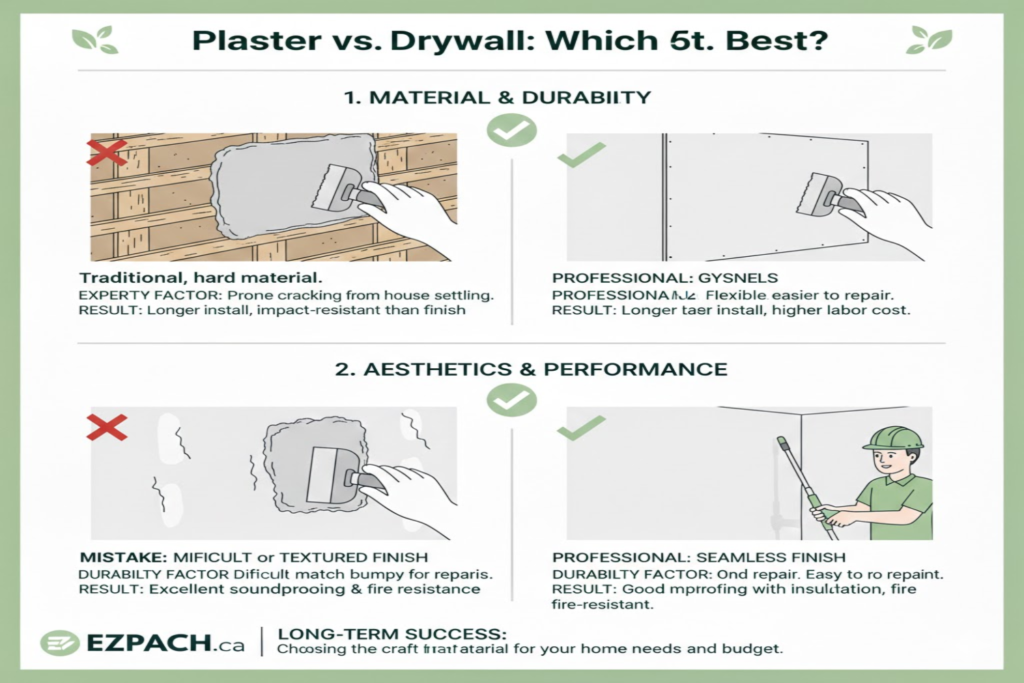
Durability Comparison
Durability often determines material selection. Both plaster and drywall have strengths and weaknesses depending on the environment and usage. Homes with high-traffic areas require materials that resist impact and wear.
Plaster Durability
Plaster creates a hard, rigid surface that resists minor impacts. Cracking may occur over time due to building settling, but repaired plaster can last decades. Stronger wall protection results in fewer dents and holes than drywall in high-traffic areas.
Drywall Durability
Drywall is prone to dents and punctures under stress. Quick and inexpensive repairs allow homeowners to maintain the wall’s appearance easily. While it lacks the longevity of plaster, drywall performs effectively in modern construction environments.
Soundproofing and Acoustics
Acoustic performance influences comfort and privacy within a home. Dense materials like plaster reduce sound transmission more effectively than standard drywall. Proper soundproofing may improve the value and livability of a property.
Plaster Acoustics
Plaster’s thickness and density naturally reduce sound transfer between rooms. Multi-layer plaster provides additional acoustic insulation. Homes built with plaster often have quieter interiors due to this feature.
Drywall Acoustics
Standard drywall offers moderate sound insulation. Soundproof drywall or double-layer installation improves acoustic performance. Insulation inside walls further enhances sound reduction.
Installation Process
Proper installation ensures the long-term performance of either material. Plaster requires more time and skill, while drywall is faster to install and easier to handle. Understanding each process helps determine labor costs and project timelines.
Plaster Installation
Plaster installation demands skill and time. Layers are applied over lath or veneer boards and require smoothing, sanding, and finishing. Textures and decorative elements can be incorporated during application for historic accuracy.
Drywall Installation
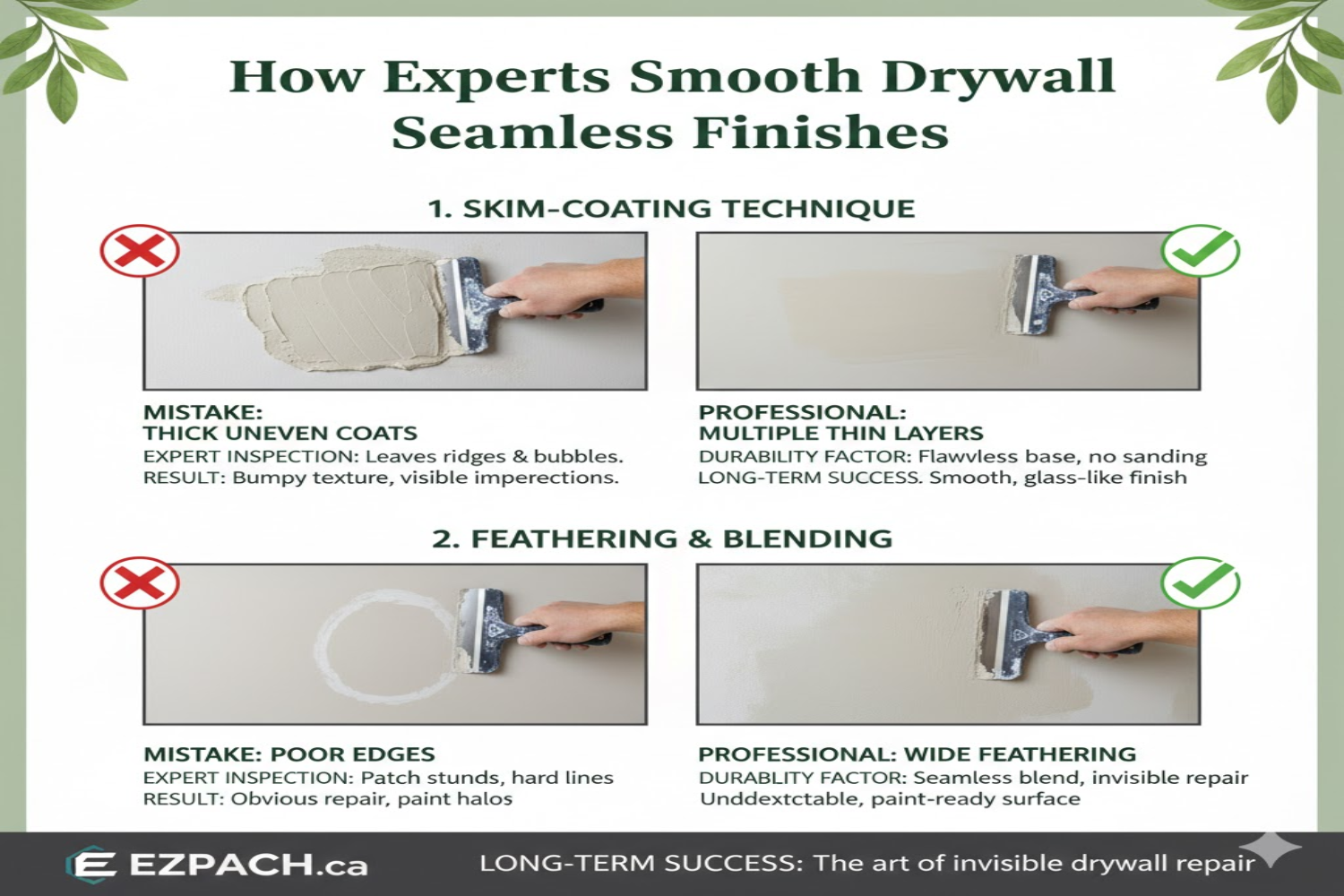
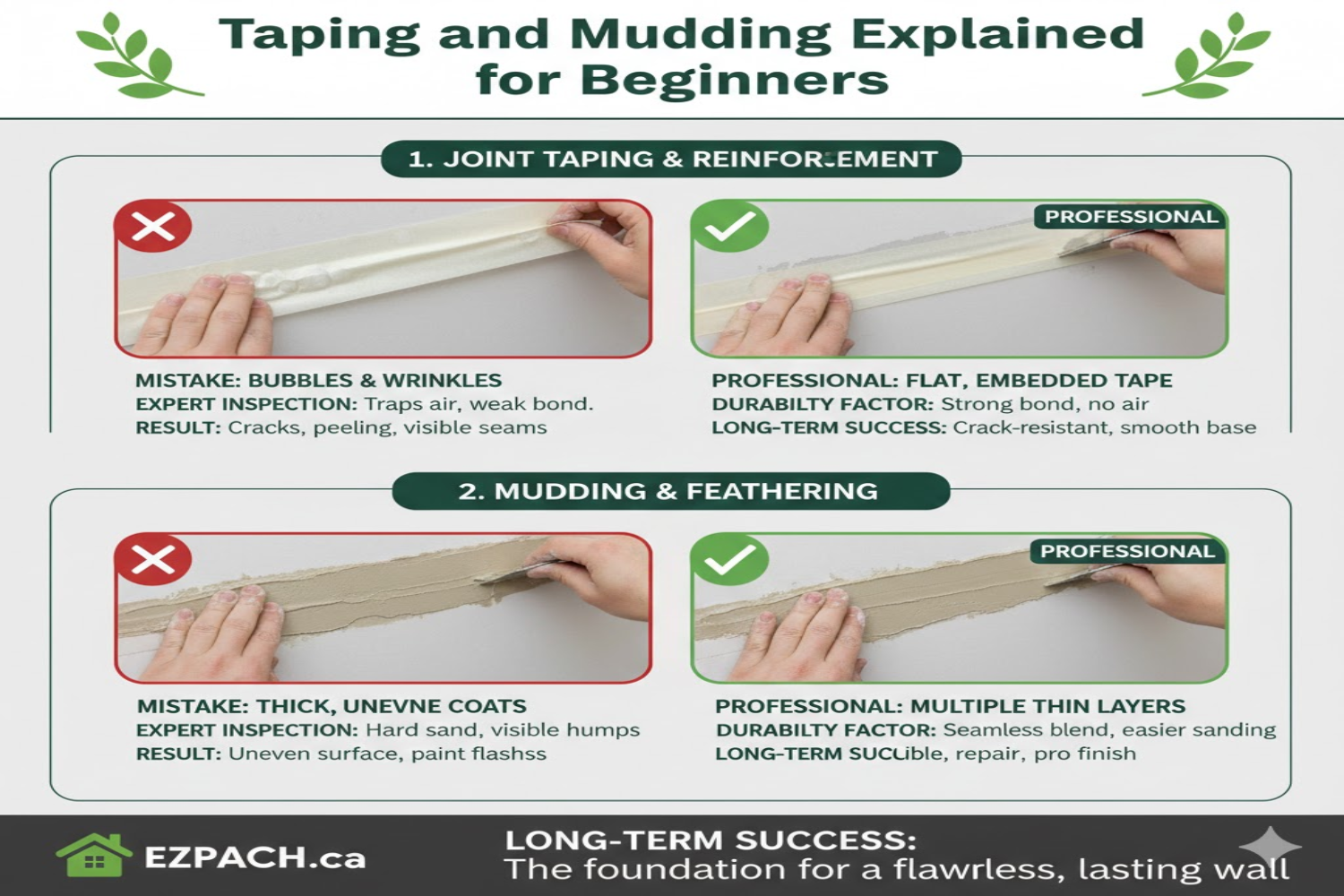
Drywall is faster to install using screws or nails onto wall studs. After attachment, seams are taped, mudded, and sanded. Surface finish can be smooth or textured, depending on design requirements. Fewer specialized skills are needed compared to plaster.
Maintenance and Repair
Maintaining walls depends on the material type.
Plaster Maintenance
Small cracks can appear over time, but are repairable with patching and blending. Large areas require more labor-intensive repair than drywall. Properly maintained plaster maintains structural integrity and visual appeal for decades.
Drywall Maintenance
Holes, dents, and scratches are easy to repair with joint compound. Entire sheets can be replaced without significant disruption. Repairs are cost-effective, which suits high-traffic or rental properties.
Cost Comparison
Budget considerations play a major role in material selection.
| Material | Average Material Cost | Installation Cost | Typical Use Case |
| Traditional Plaster | $5–$10 per sq. ft. | $8–$15 per sq. ft. | Historic homes, decorative finishes |
| Veneer Plaster | $3–$6 per sq. ft. | $5–$10 per sq. ft. | Modern plaster over drywall |
| Drywall (1/2-inch) | $10–$15 per sheet | $1–$3 per sq. ft. | Standard residential walls |
| Fire-Rated Drywall | $15–$20 per sheet | $2–$5 per sq. ft. | Ceilings, commercial buildings |
Cost Considerations
- Skilled labor increases plaster installation expenses.
- Drywall installation is faster and more economical for large projects.
- Repairs and touch-ups are simpler with drywall.
- Veneer plaster combines aesthetic benefits with moderate cost.
- Long-term durability of plaster may justify a higher initial investment.
Aesthetic Differences
Plaster allows intricate textures, decorative moldings, and historic finishes. Homes built before the 1950s often feature plaster for its aesthetic charm. Drywall offers smooth, uniform walls suitable for modern styles but lacks historical character and customization options.
Choosing Based on Application
Walls vs. Ceilings
High ceilings benefit from plaster’s rigidity, preventing sagging. Drywall suits standard walls in contemporary construction. Ceilings above 12 feet may require fire-rated drywall or thick plaster for optimal performance.
Residential vs. Commercial
Residential projects may prioritize aesthetics and durability, favoring plaster. Commercial buildings prioritize speed, cost, and ease of maintenance, making drywall the preferred material.
Environmental Considerations
Plaster is breathable, reducing moisture buildup and supporting healthy indoor air quality. Long-lasting walls produce less waste over time. Drywall has a lower initial environmental impact but generates more waste during replacement or renovation.
Conclusion
Selecting between plaster and drywall depends on project goals, budget, and desired finish. Plaster provides superior durability, soundproofing, and decorative versatility, but requires skilled labor and higher costs. Drywall offers affordability, ease of installation, and simple repairs, suiting most modern projects.
Careful assessment of durability, acoustic performance, installation complexity, and cost ensures the right choice. Historic homes or high-end interiors often benefit from plaster, while contemporary construction favors drywall. Proper selection preserves wall performance, aesthetics, and long-term value.
FAQs
1. Can drywall replace plaster in a historic home?
Drywall can replace plaster, but historic character may be lost.
2. Which material is better for soundproofing?
Plaster provides superior sound insulation due to its density.
3. Is drywall cheaper than plaster?
Yes, drywall is faster to install and costs less in both materials and labor.
4. Does plaster crack over time?
Cracks may appear due to settling, but are easily repairable.
5. Is drywall easier to maintain than plaster?
Drywall repairs are faster and less expensive than plaster repairs.
6. Can drywall mimic plaster textures?
Textured drywall can resemble plaster, but fine details are difficult to replicate.
7. Which lasts longer?
Plaster has greater longevity and can last decades with minimal maintenance.
8. Is veneer plaster a good compromise?
Veneer plaster combines a smooth finish, durability, and lower cost, providing a middle ground.
Drywall Repair Halifax
EZ Patch offers clean, professional drywall, ceiling, plaster, and water damage repair services in Halifax with minimal mess and long-lasting results.
EZ Patch – Drywall Repair Experts
Trusted drywall repair professionals serving Halifax and nearby areas.
Drywall Patch & Repair
Seamless drywall repairs for holes, cracks, dents, and damaged walls.
Ceiling Repairs
Professional ceiling repair services for stains, cracks, and water damage.
Drywall Installation
Complete drywall installation services for renovations and new builds.
Taping & Mudding
Smooth, paint-ready wall finishes by expert drywall finishers.
Plaster Repair Experts
Precision plaster repair services while maintaining original wall texture.
Water Damage Repair
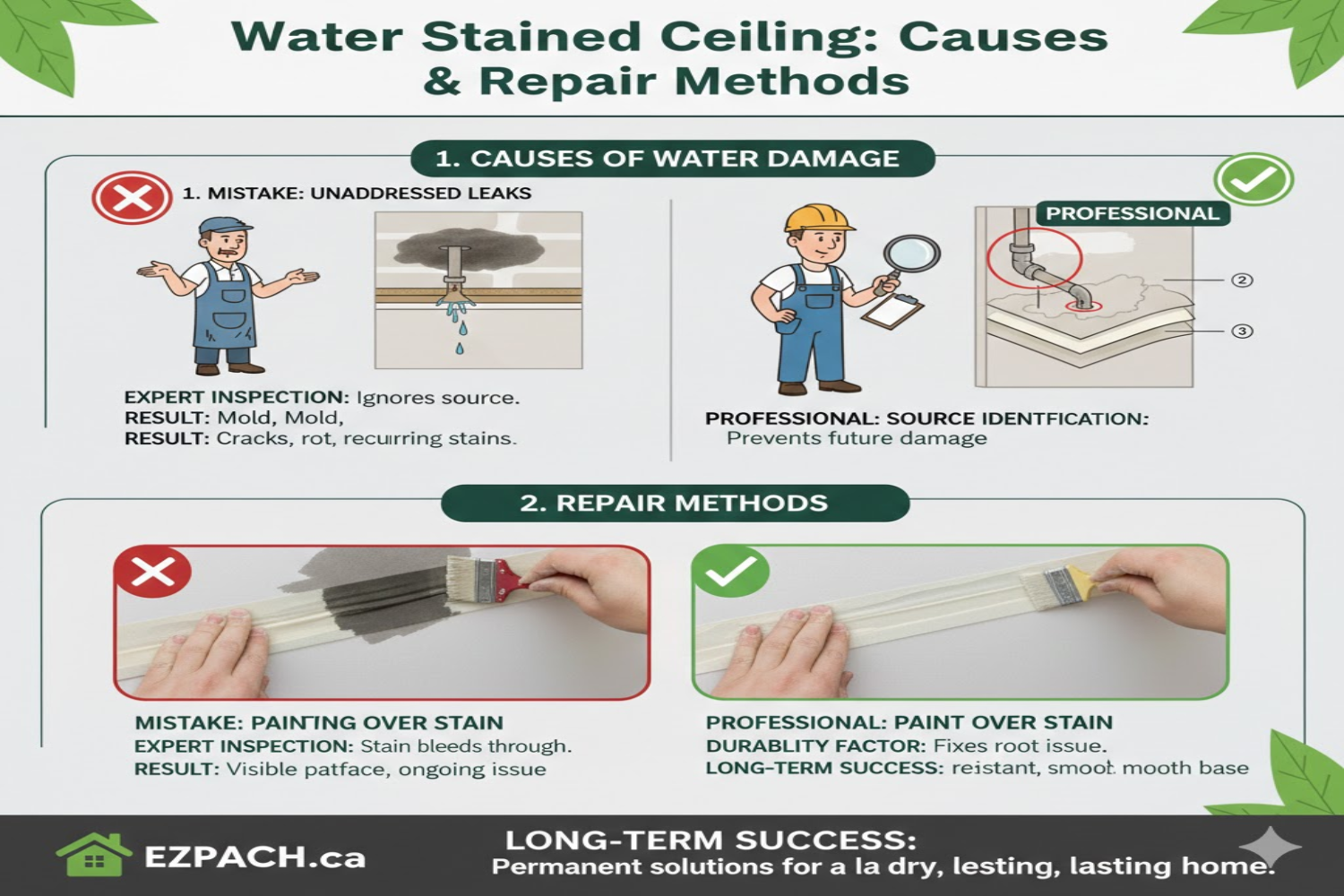
Drywall and ceiling restoration for properties affected by water damage.
Texture Matching
Accurate texture blending so repaired areas match existing finishes.
Installation, Repair & Removal
End-to-end drywall installation, repair, and removal solutions.