Heritage homes are more than just buildings; they are living pieces of history, reflecting the craftsmanship, style, and materials of a bygone era. Maintaining these structures often involves unique challenges, particularly when it comes to plaster repair. Unlike modern walls, heritage plaster demands specialized care to preserve both aesthetic and structural integrity.
Repairing plaster in heritage homes is not simply about filling cracks or smoothing surfaces. The original materials, techniques, and environmental conditions all influence how repairs should be approached. Using incompatible methods can lead to further deterioration and the loss of historical authenticity.
Understanding Heritage Plaster
Heritage homes typically feature lime-based plaster, gypsum plaster, or a mixture of traditional materials. These plasters age naturally, developing cracks, flaking, and discoloration over decades. Understanding their properties is essential for proper repair and preservation.
Traditional vs Modern Plaster
Traditional plaster is porous, allowing walls to breathe and manage humidity effectively. Modern cement-based plaster is denser and less flexible, often clashing with heritage materials. Using the wrong plaster can result in cracking, flaking, or moisture retention.
Common Signs of Plaster Damage
- Hairline cracks forming along seams or corners
- Bulging or sagging sections due to moisture absorption
- Powdering or flaking caused by age or dampness.
- Water stains or efflorescence indicate a rising dam.
The Role of Heritage Regulations
Many heritage homes are protected by local preservation laws. Repairs must comply with these guidelines to maintain historical value. Unauthorized changes can result in fines or the loss of heritage designation.
Key Challenges in Plaster Repair
Repairing plaster in heritage homes comes with several key challenges. Material compatibility, skilled labor shortage, and environmental factors all influence the success of restoration. Each of these must be carefully considered before starting repairs.
Material Compatibility
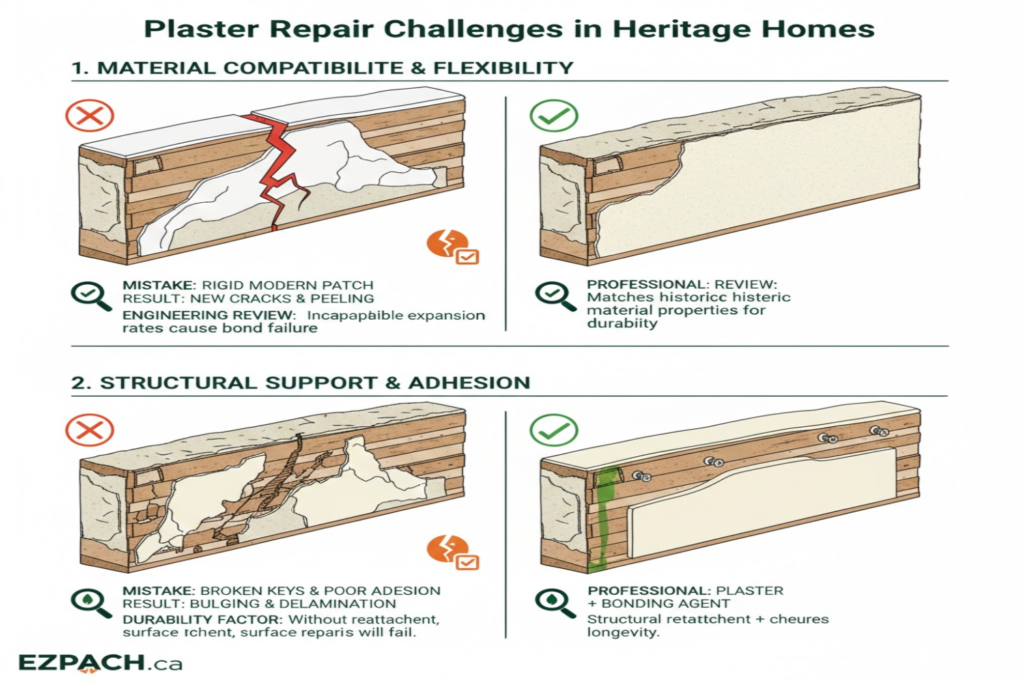
Older plaster often contains lime or gypsum, which behaves differently from modern materials. Cement-based plaster can shrink or expand at different rates, causing cracks. Choosing materials that mimic the original composition is essential for long-lasting repairs.
Skilled Labor Shortage
Finding craftsmen skilled in traditional plaster techniques is challenging. Modern contractors may not have experience with lime plaster or decorative finishes. Without proper expertise, repairs risk damaging historic walls.
Environmental Factors
Heritage homes are susceptible to moisture, temperature fluctuations, and pollution. These environmental stressors accelerate plaster deterioration and complicate repair efforts. Proper assessment of conditions is crucial to successful restoration.
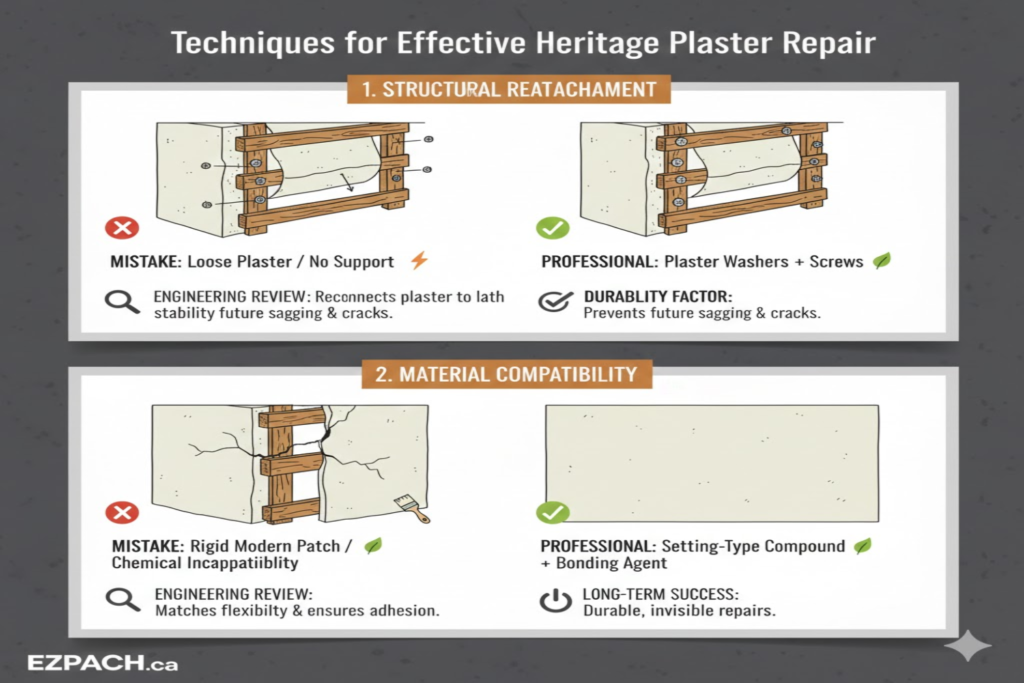
Techniques for Effective Heritage Plaster Repair
Repairing heritage plaster requires a strategic approach. Each step must consider historical accuracy, material properties, and long-term durability.
Assessment and Documentation
A thorough inspection is the first step in any repair project. Documenting cracks, moisture damage, and original finishes ensures that restoration aligns with heritage standards. Professional assessments can also identify hidden structural issues.
Layered Repair Approach
Repairs often involve multiple layers to match historical textures.
- Stabilize the base coat using compatible lime or gypsum plaster.
- Apply finishing layers to replicate the original surface detail.s
- Use color-matched lime washes to maintain visual consistency.
This layered method maintains both the wall’s structural integrity and historical authenticity.
H3: Surface Preparation Challenges
Preparation is key to a successful plaster repair. Loose or flaking material must be removed carefully to avoid further damage. Cleaning should use pH-neutral methods to prevent chemical reactions with lime plaster.
Common Mistakes in Heritage Plaster Repair
Even small mistakes can have major consequences in heritage plaster restoration.
Using Incompatible Materials
Modern cement plaster is often too rigid for heritage walls. It does not allow the wall to breathe and can cause cracking or delamination.
Neglecting Moisture Sources
Repairing plaster without addressing leaks leads to recurring damage. All sources of moisture must be fixed first to ensure long-lasting results.
Overlooking Historical Details
Flattening textures or removing decorative elements compromises the home’s heritage value. Restoration must preserve or accurately replicate original designs.
Environmental Challenges
Environmental factors significantly impact plaster longevity in heritage homes.
Humidity and Moisture
High humidity or water ingress weakens plaster over time. Walls may develop efflorescence, flaking, or bulging if moisture is not managed.
Temperature Fluctuations
Seasonal expansion and contraction of walls can cause cracks. Repairs must accommodate these movements to prevent further damage.
Pollution and Airborne Particulates
Urban environments expose heritage plaster to pollutants that erode surface finishes. Protective coatings may be necessary to preserve delicate details.
Preventive Measures
Taking preventive steps can extend the life of heritage plaster and reduce the need for costly repairs.
- Inspect walls regularly for cracks or moisture damage.
- Maintain a consistent indoor humidity level
- Address plumbing leaks and roof issues promptly.
- Avoid abrasive cleaning methods on the plaster surface.
- Use compatible materials for any minor touch-ups
Cost Considerations
Heritage plaster repair is often more expensive than standard wall maintenance. Costs are influenced by material type, historical detailing, and labor skill.
Material Costs
Specialized lime plaster or gypsum blends are more expensive than standard cement plaster. Using authentic materials ensures long-term compatibility.
Labor Costs
Artisans skilled in traditional techniques are rare, driving up labor expenses. The intricacy of historical textures further adds to time and cost.
Extent of Structural Repairs
Underlying structural issues, like weakened lath or water damage, increase repair complexity and cost. Budgeting for these contingencies is essential.
Benefits of Professional Heritage Plaster Repair
Professional repairs safeguard both aesthetic and structural integrity.
- Preserves historical and architectural value
- Enhances wall stability and prevents recurring damage
- Ensures compliance with heritage regulations
- Maintains original textures, patterns, and finishes
- Reduces long-term maintenance costs
DIY Challenges in Heritage Plaster Repair
DIY attempts often fail due to:
- Using incompatible plaster types
- Misidentifying historical materials
- Over-sanding or flattening textures
- Ignoring moisture sources
- Lack of layered repair knowledge
Even minor errors can damage historical walls and reduce home value.
FAQs
1. Can heritage plaster be patched like modern drywall?
No, patching heritage plaster requires compatible materials and traditional techniques. Using modern methods often causes further damage.
2. How do I know if my plaster contains lime?
A professional can test a small sample to determine if lime is present. This ensures proper repair material selection.
3. Can cracks in heritage plaster be cosmetic only?
Yes, some hairline cracks are superficial, but they should still be assessed for structural implications.
4. How long does lime plaster take to cure?
Curing can take several weeks, depending on environmental conditions. Patience ensures long-lasting repairs.
5. Are decorative moldings restorable?
Yes, skilled artisans can replicate or restore intricate designs with compatible materials.
6. Should I paint heritage plaster immediately after repair?
No, plaster must cure completely before painting. Premature painting can trap moisture and cause peeling.
7. Is moisture control essential for plaster longevity?
Absolutely. Managing leaks, humidity, and ventilation prevents recurring damage.
8. Can minor cracks be ignored in heritage homes?
Even small cracks should be monitored, as they can indicate underlying issues that may worsen over time.
Conclusion
Plaster repair challenges in heritage homes are complex and multifaceted. Successful restoration requires careful material selection, skilled craftsmanship, and a thorough understanding of environmental and structural factors. Ignoring these challenges can compromise both aesthetics and structural integrity.
By implementing proper preventive measures, engaging professionals, and respecting historical techniques, heritage plaster can be effectively preserved. Maintaining these walls ensures the home’s historical value endures for future generations while avoiding costly, repeated repairs.
Drywall Repair Halifax
EZ Patch offers clean, professional drywall, ceiling, plaster, and water damage repair services in Halifax with minimal mess and long-lasting results.
EZ Patch – Drywall Repair Experts
Trusted drywall repair professionals serving Halifax and nearby areas.
Drywall Patch & Repair
Seamless drywall repairs for holes, cracks, dents, and damaged walls.
Ceiling Repairs
Professional ceiling repair services for stains, cracks, and water damage.
Drywall Installation
Complete drywall installation services for renovations and new builds.
Taping & Mudding
Smooth, paint-ready wall finishes by expert drywall finishers.
Plaster Repair Experts
Precision plaster repair services while maintaining original wall texture.
Water Damage Repair
Drywall and ceiling restoration for properties affected by water damage.
Texture Matching
Accurate texture blending so repaired areas match existing finishes.
Installation, Repair & Removal
End-to-end drywall installation, repair, and removal solutions.