Water damage is one of the most common causes of mold growth in homes and buildings. Whether it is from a burst pipe, flooding, or roof leaks, standing water and excessive moisture create an ideal environment for mold spores to thrive. Without proper prevention, mold can develop quickly, causing not only structural damage but also potential health risks for occupants.
Preventing mold after water exposure requires immediate action and careful attention to drying, cleaning, and moisture control. Even minor water incidents can lead to significant mold growth if neglected. Understanding the strategies, tools, and techniques for mold prevention is essential to maintain a safe, healthy, and structurally sound environment.
Understanding Mold Growth After Water Damage
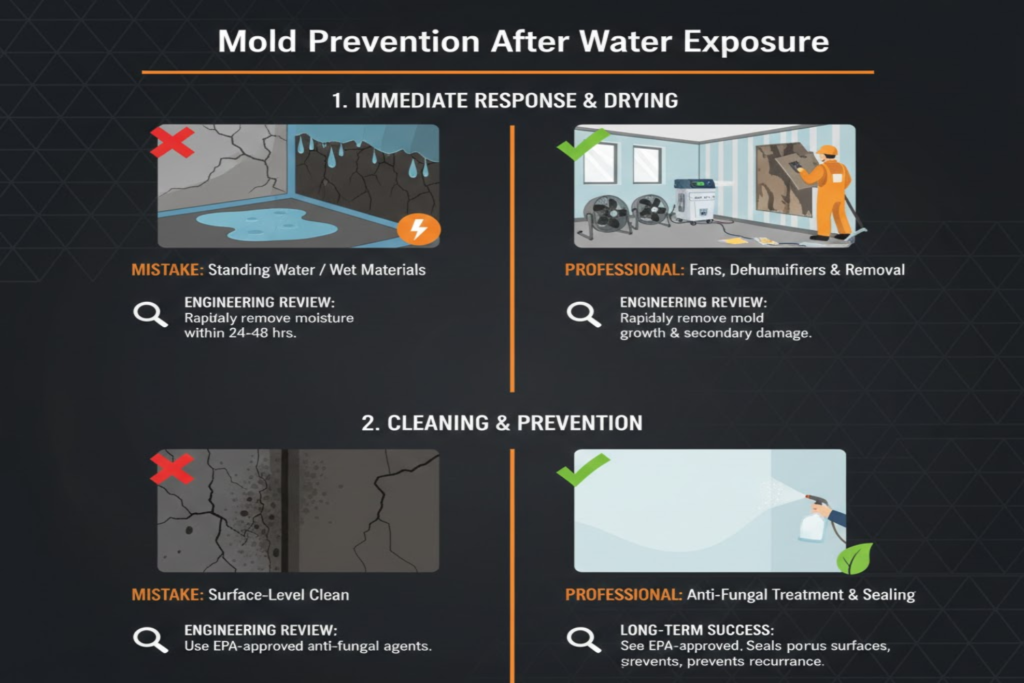
Mold spores are naturally present in the air and can begin to colonize surfaces within 24–48 hours after water exposure. The combination of moisture, organic material, and warm temperatures accelerates mold growth.
Even if water is removed, high humidity or damp materials like drywall, wood, and carpeting can continue to foster mold development. Knowing how mold behaves after water exposure helps homeowners take timely and effective preventive measures.
Immediate Actions to Prevent Mold
Acting quickly after water exposure is crucial in mold prevention. Immediate interventions can stop mold spores from taking hold and spreading.
Remove Standing Water
Standing water should be extracted using pumps, wet vacuums, or towels. The faster the water is removed, the lower the risk of mold formation.
Ventilate the Area
Open windows, doors, and use fans to improve airflow. Proper ventilation accelerates drying and prevents persistent moisture pockets.
Use Dehumidifiers
Dehumidifiers reduce ambient humidity, which is a key factor in mold prevention. Keeping indoor humidity below 50% inhibits mold spore growth.
Drying and Moisture Control
Drying wet areas thoroughly is the cornerstone of mold prevention after water exposure. Surfaces and materials must be completely dried to avoid hidden moisture that could support mold growth.
Remove Saturated Materials
Materials such as carpets, rugs, insulation, and cardboard may need to be removed if they retain excessive moisture. Removing these materials reduces organic matter for mold growth.
Target Hidden Moisture
Water can seep behind walls, under floors, and into cavities. Moisture meters and infrared cameras can help identify hidden wet spots that may harbor mold.
Monitor Drying Progress
Regularly check moisture levels in walls, floors, and structural materials. Even after visible drying, residual moisture can persist and encourage mold formation.
Cleaning and Disinfecting Surfaces
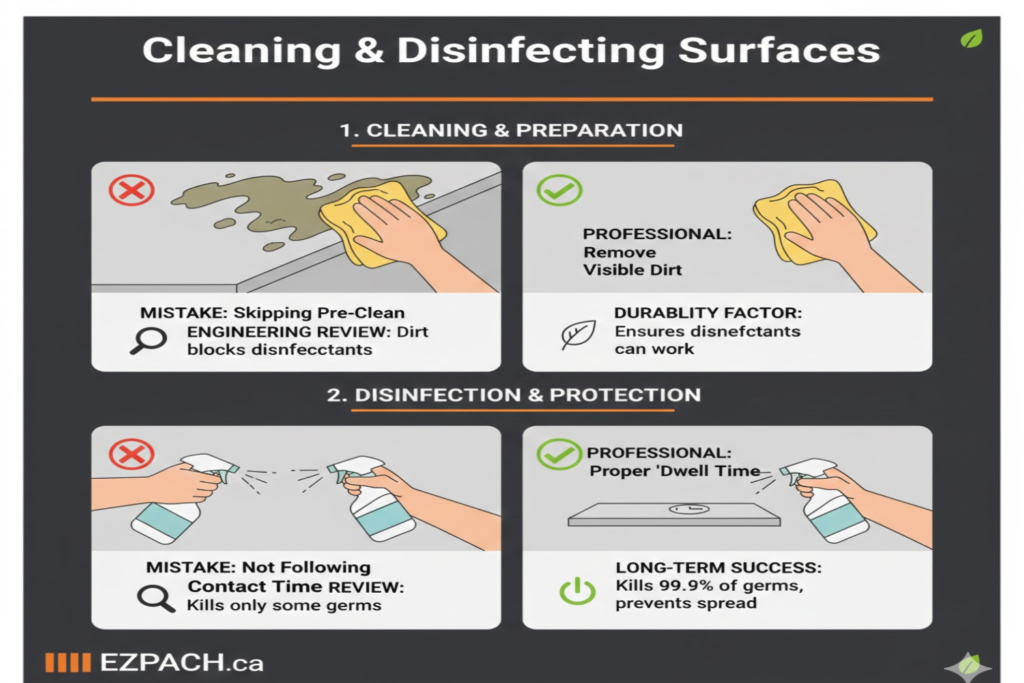
Cleaning water-affected surfaces removes debris, contaminants, and initial mold spores. Disinfection adds a layer of protection against future mold growth.
Mold spores are microscopic and can survive even after water is removed. Proper cleaning combined with antimicrobial treatment ensures long-term prevention.
Soap and Water
Start with soap and water to remove dirt, sediment, and debris. This prepares surfaces for more targeted antimicrobial treatments.
Antimicrobial Solutions
Apply EPA-registered antimicrobial sprays to disinfect surfaces. These solutions reduce the viability of spores and limit mold growth potential.
Avoid Excessive Water During Cleaning
Using excessive water during cleaning can reintroduce moisture. Clean surfaces lightly and dry immediately to prevent adding another water source.
High-Risk Areas After Water Exposure
Certain areas are more susceptible to mold growth following water damage. Identifying these zones is essential to focus preventive efforts effectively.
- Bathrooms and kitchens: Frequent water exposure and high humidity increase mold risk.
- Basements and crawl spaces: Poor ventilation and groundwater seepage create damp conditions.
- Ceiling and wall cavities: Hidden leaks or condensation can foster mold growth unseen.
- Carpeted or fabric surfaces: Porous materials absorb water quickly and retain moisture.
- Wooden structures: Beams and flooring can absorb water, swell, and create microenvironments for mold.
Monitoring and Long-Term Prevention
Even after immediate cleaning and drying, long-term monitoring is necessary to ensure mold does not develop.
Regular Inspections
Conduct visual inspections for discoloration, stains, or musty odors. Early detection prevents extensive mold infestations.
Use Moisture Sensors
Installing moisture sensors in vulnerable areas can alert homeowners to elevated humidity or leaks before mold grows.
Maintain Ventilation
Continuously ventilate spaces prone to moisture accumulation, especially basements and bathrooms. Consistent airflow reduces condensation.
Mold Prevention in Different Building Materials
Different materials respond differently to water exposure, and each requires a tailored approach to mold prevention.
Drywall
Drywall absorbs water easily and can harbor mold behind surfaces. Remove saturated sections and replace them when necessary.
Wood
Wooden beams and flooring may swell, but can be dried with proper airflow. Apply antifungal treatments to prevent mold colonization.
Concrete
Concrete is less susceptible but can retain moisture. Seal cracks and apply antimicrobial coatings for additional protection.
Fabrics and Upholstery
Soft furnishings should be removed if wet. Machine-washable fabrics may be cleaned and dried thoroughly, while non-washable materials may require professional treatment.
Tips for Effective Mold Prevention
- Remove water immediately after any incident.
- Ensure all materials are thoroughly dried.
- Use fans and dehumidifiers to control humidity.
- Clean surfaces with antimicrobial solutions.
- Monitor vulnerable areas regularly for signs of mold.
- Address hidden water leaks in walls, ceilings, and floors.
- Avoid storing organic materials in damp spaces.
- Consider professional mold remediation for extensive water exposure.
The Role of HVAC and Air Circulation
HVAC systems can exacerbate mold growth if water exposure occurs. Proper ventilation and air circulation are critical in mold prevention.
Mold spores can spread through air ducts if moisture is present. Maintaining clean and dry HVAC systems reduces risk.
Inspect and Clean Ducts
Water leaks can reach the ductwork. Inspect regularly and clean if moisture is detected.
Use HEPA Filters
HEPA filters trap airborne spores, limiting spread throughout the building.
Control Indoor Humidity
Maintain HVAC settings that reduce humidity in the air to prevent spore germination.
Comparison Table: High-Risk vs Low-Risk Areas for Mold Growth
| Area Type | Risk Level | Preventive Action | Key Notes |
| Bathroom | High | Ventilation + Dehumidifier | Frequent water exposure |
| Basement | High | Sump pump + Moisture barriers | Poor airflow increases mold |
| Kitchen | Medium | Immediate drying + Vent hood | Occasional spills create pockets |
| Living Room | Low | Regular inspection | Minimal water exposure, but carpeted areas may retain moisture |
| HVAC Ducts | Medium | HEPA filters + Inspections | Can spread spores if moisture is present |
| Wall Cavities | High | Monitor leaks + Remove wet insulation | Hidden water promotes rapid growth |
| Upholstery | Medium | Remove wet fabrics + Dry thoroughly | Porous, can harbor spores |
| Wood Surfaces | Medium | Drying + Antifungal treatment | Swelling creates microenvironments |
FAQs
1. How soon should I act after water exposure?
Ideally, remove water and start drying within 24 hours to prevent mold growth.
2. Can I use household bleach for mold prevention?
Bleach works on non-porous surfaces but is less effective on porous materials and may not prevent long-term growth.
3. Is professional help necessary after minor flooding?
Not always; small spills can be handled with drying and cleaning, but large-scale water exposure requires professionals.
4. How long does it take for mold to develop?
Mold can start growing within 24–48 hours under favorable moisture conditions.
5. Can dehumidifiers alone prevent mold?
They help reduce humidity, but must be combined with drying and cleaning to prevent growth effectively.
6. Are carpets more susceptible than hardwood floors?
Yes, carpets retain water longer and provide organic material for mold spores.
7. How can I detect hidden mold?
Look for musty odors, water stains, or use moisture meters and infrared cameras.
8. Can I paint over areas that had water exposure?
Only after surfaces are fully dried and treated, painting over moisture can trap water and promote mold.
Conclusion
Mold prevention after water exposure is a critical step in maintaining both the structural integrity and health of any building. Rapid response, thorough drying, cleaning, and moisture monitoring are essential to prevent mold growth. Neglecting these steps can result in costly repairs and health risks for occupants.
Long-term vigilance, including regular inspections, proper ventilation, and moisture control, ensures that mold does not develop even after minor water incidents. By understanding the principles of mold prevention and acting decisively, homeowners can protect their property and maintain a safe, healthy indoor environment.
Drywall Repair Halifax
EZ Patch offers clean, professional drywall, ceiling, plaster, and water damage repair services in Halifax with minimal mess and long-lasting results.
EZ Patch – Drywall Repair Experts
Trusted drywall repair professionals serving Halifax and nearby areas.
Drywall Patch & Repair
Seamless drywall repairs for holes, cracks, dents, and damaged walls.
Ceiling Repairs
Professional ceiling repair services for stains, cracks, and water damage.
Drywall Installation
Complete drywall installation services for renovations and new builds.
Taping & Mudding
Smooth, paint-ready wall finishes by expert drywall finishers.
Plaster Repair Experts
Precision plaster repair services while maintaining original wall texture.
Water Damage Repair
Drywall and ceiling restoration for properties affected by water damage.
Texture Matching
Accurate texture blending so repaired areas match existing finishes.
Installation, Repair & Removal
End-to-end drywall installation, repair, and removal solutions.