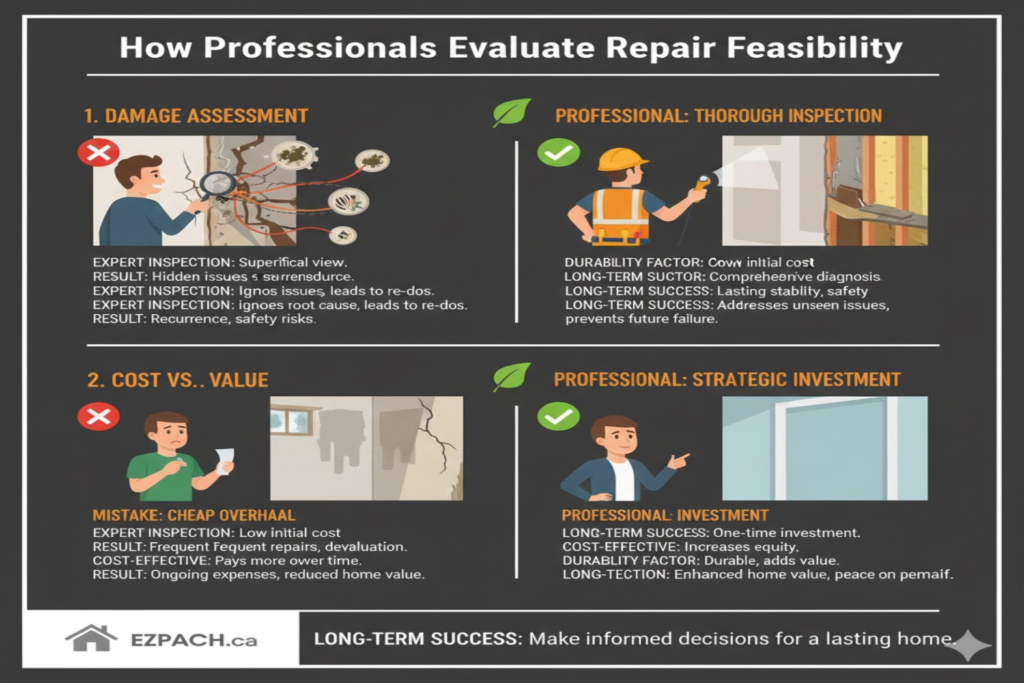
When it comes to assessing whether a repair can be undertaken effectively, professionals rely on a combination of experience, technical knowledge, and practical judgment. The process involves analyzing the extent of damage, understanding material limitations, and predicting potential outcomes. This careful evaluation ensures that resources are used efficiently and that repairs will provide long-lasting results.
Evaluating repair feasibility also involves considering cost, time, and safety factors. Professionals must weigh whether a repair is practical or if replacement is the better option. By systematically examining these factors, they can provide clients with informed recommendations and prevent future complications that may arise from poor repair decisions.
Initial Inspection and Assessment
The first step in evaluating repair feasibility is a thorough initial inspection. Professionals carefully examine the damaged area to determine the extent and nature of the issue. This helps identify hidden problems that might not be visible at first glance.
During this inspection, experts also check structural integrity and any underlying causes of the damage. They document findings through photographs, notes, and measurements. This comprehensive approach provides a clear picture of what repairs are necessary and whether they are viable.
Identifying Visible Damage
Visible signs of damage, such as cracks, warping, or corrosion, are the most obvious indicators that repairs are needed. Professionals assess the severity and distribution of these issues to prioritize repair tasks. This step ensures that resources focus on critical areas first.
Checking for Hidden Issues
Not all damage is immediately apparent. Moisture, mold, or internal structural problems may be lurking beneath the surface. Advanced tools like moisture meters and thermal imaging cameras help uncover these hidden challenges.
Determining Scope of Work
After identifying both visible and hidden damage, professionals define the full scope of the repair. This includes estimating the materials, labor, and time required to complete the job efficiently. A clear scope definition prevents unexpected costs and delays.
Understanding Material Conditions
Evaluating the condition of materials is critical for determining repair feasibility. Professionals analyze whether the existing materials are salvageable or if they need replacement. Material assessment ensures that repairs are durable and do not compromise structural integrity.
Materials deteriorate over time due to wear, environmental factors, or poor installation. Professionals test material strength, flexibility, and resistance to stress. By understanding the limitations of materials, they can decide if a repair is practical or if complete replacement is necessary.
Assessing Durability
Durable materials can withstand repair processes without further damage. Professionals check for brittleness, cracks, or fatigue that could affect repair longevity. This helps ensure that the repaired area will remain functional for years.
Compatibility Considerations
Sometimes repairs require new materials to be compatible with old ones. Professionals evaluate chemical and physical compatibility to avoid issues such as bonding failure or accelerated wear.
Environmental Impact
Certain materials react differently under environmental stressors like humidity, temperature changes, or sunlight. Professionals consider these factors to prevent premature failure of repairs.
Safety Evaluation
Safety is a primary concern in determining repair feasibility. Professionals assess the potential hazards involved in the repair process. This includes structural risks, electrical hazards, and exposure to toxic substances.
If a repair poses significant safety risks, alternative solutions are explored. Protective equipment, temporary supports, or partial closures may be implemented to mitigate dangers. Ensuring safety is essential for both workers and occupants of the property.
Cost Analysis
Analyzing costs is a key factor in repair feasibility. Professionals calculate the total expenditure for materials, labor, and additional services. Comparing this to the value of the asset helps determine if the repair is economically viable.
Material Costs
Material prices vary depending on quality and availability. Professionals factor in local market conditions to ensure realistic budgeting.
Labor Expenses
Labor costs depend on skill level and repair complexity. Accurate estimation helps clients avoid unexpected expenses.
Hidden Costs
Unforeseen issues often arise during repairs. Professionals include contingency allowances for these surprises, ensuring a comprehensive cost analysis.
Technical Expertise Requirements
Not all repairs can be completed by general workers; some require specialized skills. Professionals evaluate whether the repair demands advanced techniques or certifications.
Skill Assessment
Assessing the skill needed ensures that the repair is performed correctly the first time. Inadequate expertise can lead to recurring problems.
Equipment Needs
Certain repairs require specialized tools or machinery. Professionals ensure that the necessary equipment is available before committing to a repair plan.
Structural Integrity Considerations
Ensuring that repairs do not compromise structural stability is crucial. Professionals evaluate load-bearing components, alignment, and stress points. Maintaining structural integrity prevents accidents and prolongs the life of the repair.
Timeframe and Project Planning
Repair feasibility is also influenced by the time required to complete the project. Professionals create detailed schedules to balance efficiency with quality. Shorter timelines may require additional resources, while longer projects might affect cost and usability.
Scheduling Efficiency
Organizing repair tasks in a logical sequence reduces downtime. Professionals plan for material delivery, labor availability, and weather conditions if applicable.
Contingency Planning
Unexpected delays can impact the feasibility of a repair. Professionals incorporate buffer periods to manage unforeseen challenges without compromising quality.
Regulatory and Code Compliance
Repairs must adhere to local building codes and safety regulations. Professionals check compliance requirements to ensure legality and prevent future penalties. Non-compliance can render a repair invalid or unsafe.
Permits and Approvals
Some repairs require permits or professional inspections. Ensuring all documentation is completed protects property owners from legal issues.
Environmental Guidelines
Certain repairs must follow environmental regulations, such as proper disposal of hazardous materials. Professionals consider these factors to maintain compliance.
Client Preferences and Expectations
Evaluating repair feasibility also involves understanding client priorities. Professionals discuss budget, aesthetic expectations, and functional requirements. Aligning repair plans with client needs ensures satisfaction and realistic outcomes.
- Prioritizing durability over aesthetics in critical areas
- Considering budget constraints without compromising safety
- Offering alternative solutions when original plans are impractical
- Explaining realistic timelines to manage expectations
- Providing clear communication throughout the repair process
Risk Assessment
Risk evaluation is essential for long-term success. Professionals identify potential failures, environmental impacts, and recurrence of damage. This proactive approach minimizes future costs and ensures safe, lasting repairs.
Probability of Failure
Analyzing the likelihood of repair failure guides decision-making. Professionals use historical data and expertise to estimate risks.
Mitigation Strategies
Preventive measures, such as reinforcement or protective coatings, reduce the chance of recurrence. These strategies enhance repair feasibility and durability.
Conclusion
Evaluating repair feasibility is a multifaceted process that combines technical knowledge, experience, and practical judgment. Professionals carefully assess damage, material conditions, costs, safety, and client requirements. This thorough evaluation ensures that repairs are both practical and durable.
By understanding the factors that influence repair feasibility, property owners can make informed decisions. Professionals’ assessments help prevent unnecessary expenses, improve safety, and guarantee long-lasting results. Ultimately, a strategic approach to repairs saves time, money, and stress while maintaining property value.
FAQs
1. How do professionals determine if a repair is worth doing?
They assess damage severity, cost, and potential outcome. If the repair is cost-effective and safe, it is usually feasible.
2. Can all materials be repaired, or do some require replacement?
Some materials, like concrete or metal, may be repaired depending on condition. Others, such as severely rotted wood, often require replacement.
3. Do repairs always comply with local building codes?
Professional evaluations include code compliance. Non-compliant repairs are either modified or rejected.
4. How is hidden damage detected during repair assessment?
Tools like moisture meters, thermal cameras, and structural tests uncover unseen problems. Professionals use these to plan accurate repairs.
5. How important is the client’s input in repair feasibility?
Clients’ budget and preferences influence repair planning. Professionals incorporate these factors to ensure satisfaction.
6. Are risk assessments necessary for all repairs?
Yes, identifying potential failures prevents costly or dangerous outcomes. Risk analysis is a standard part of feasibility studies.
7. How long does the feasibility evaluation process take?
It depends on the damage complexity and inspection methods. Minor assessments may take hours, while major structures may require days.
8. Can feasibility evaluations reduce overall repair costs?
Absolutely. By identifying issues early and planning efficiently, unnecessary work is avoided, reducing overall costs.
Drywall Repair Halifax
EZ Patch offers clean, professional drywall, ceiling, plaster, and water damage repair services in Halifax with minimal mess and long-lasting results.
EZ Patch – Drywall Repair Experts
Trusted drywall repair professionals serving Halifax and nearby areas.
Drywall Patch & Repair
Seamless drywall repairs for holes, cracks, dents, and damaged walls.
Ceiling Repairs
Professional ceiling repair services for stains, cracks, and water damage.
Drywall Installation
Complete drywall installation services for renovations and new builds.
Taping & Mudding
Smooth, paint-ready wall finishes by expert drywall finishers.
Plaster Repair Experts
Precision plaster repair services while maintaining original wall texture.
Water Damage Repair
Drywall and ceiling restoration for properties affected by water damage.
Texture Matching
Accurate texture blending so repaired areas match existing finishes.
Installation, Repair & Removal
End-to-end drywall installation, repair, and removal solutions.