Drywall systems rely heavily on proper planning and execution, especially when it comes to joint layout. Poor joint placement can compromise the structural strength, visual quality, and long-term durability of walls and ceilings. Understanding how poor joint layout weakens drywall systems is essential for builders, contractors, and homeowners alike.
Many drywall failures are not caused by low-quality materials but by incorrect joint alignment and spacing. When joints are poorly planned, stress concentrates in weak areas, leading to cracks, visible seams, and premature deterioration. Addressing joint layout at the installation stage prevents costly repairs and ensures long-lasting wall performance.
Understanding the Role of Joints in Drywall Systems
Drywall joints are the connecting points where individual panels meet to form a continuous surface. These joints must distribute stress evenly across the wall or ceiling to maintain structural stability. When laid out correctly, joints reinforce the drywall system rather than weaken it.
Improper joint placement creates stress points that react poorly to temperature changes, moisture, and structural movement. Over time, these weak points become visible defects, reducing both durability and aesthetics. A well-designed joint layout is foundational to drywall system performance.
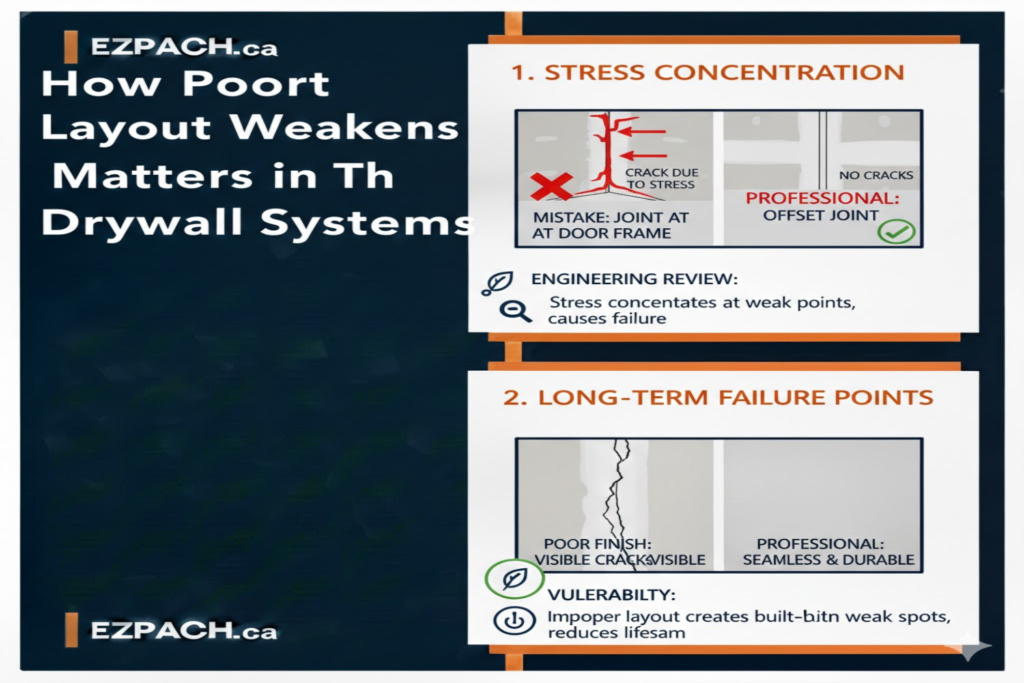
Joint Stress Distribution
- Proper joints spread the load evenly across panels.
- Poor alignment concentrates stress in a narrow area.
- Stress concentration leads to cracking and seam failure.
Structural Integration
- Joints connect drywall to framing systems.
- Incorrect layout disrupts load transfer.
- Weak integration increases wall movements.
What Is Poor Joint Layout?
Poor joint layout refers to incorrect positioning, alignment, or spacing of drywall joints. This includes stacked joints, continuous seams, short panel cuts, or joints placed near high-stress areas. These mistakes weaken the drywall system over time.
Such layouts often result from rushed installations or a lack of planning. While walls may appear acceptable initially, defects emerge as the building settles. Understanding how poor joint layout weakens drywall systems begins with recognizing these common layout errors.
Structural Consequences of Improper Joint Placement
Improper joint placement reduces the drywall’s ability to resist movement and vibration. Structural shifts transfer stress directly to weak seams rather than distributing it evenly. This accelerates joint failure and surface damage.
Over time, walls with poor joint layouts develop cracks that reappear even after repairs. These recurring issues indicate deeper structural weaknesses within the drywall system. Correct joint planning is essential for long-term structural performance.
Load Transfer Issues
- Joints interrupt structural continuity.
- Misplaced seams redirect stress improperly.
- Increased risk of drywall separation
Framing Interaction
- Joints near studs amplify movement.
- Improper fastening worsens stress transfer.
- Structural vibration damages joint compounds.
Ceiling-Specific Risks
- Gravity increases stress on ceiling joints.
- Continuous seams sag over time.
- Poor layout leads to a visible joint line.
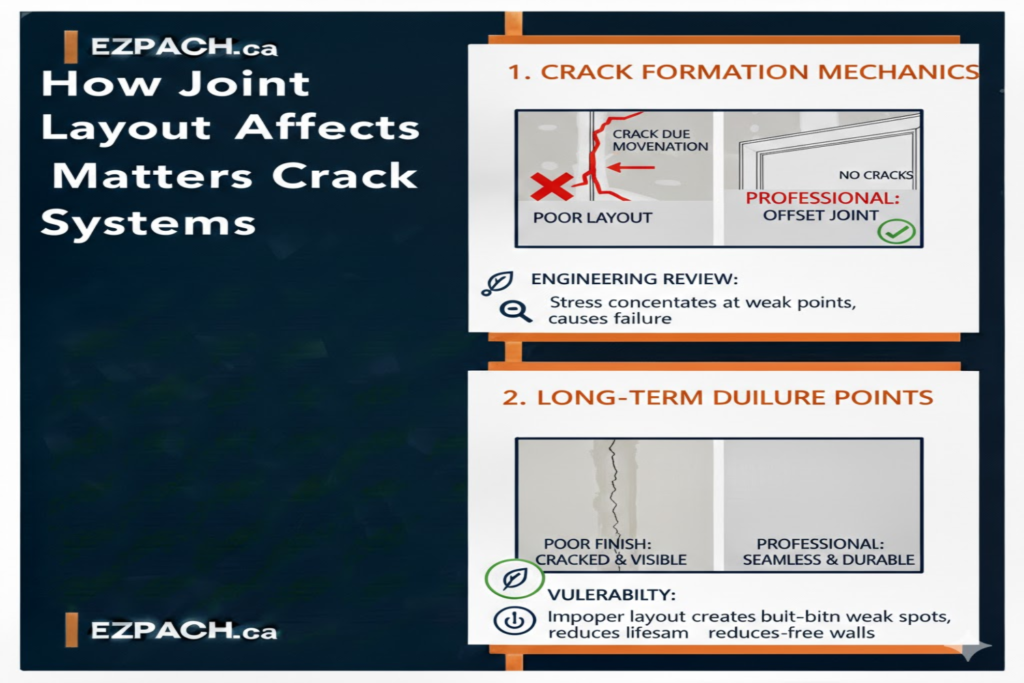
How Joint Layout Affects Crack Formation
Crack formation is one of the earliest signs of a failing drywall system. When joints are improperly aligned, they become focal points for movement-induced cracking. Seasonal expansion and contraction worsen these weaknesses.
Repeated repairs often fail because the original joint layout remains unchanged. Without correcting the underlying layout issue, cracks will continue to reappear. This demonstrates clearly how poor joint layout weakens drywall systems over time.
Visual Defects Caused by Poor Joint Planning
Beyond structural problems, poor joint layout causes noticeable visual imperfections. Visible seams, uneven surfaces, and shadow lines reduce the quality of finished walls. These defects become more obvious under direct lighting.
Aesthetic flaws reduce property value and undermine professional workmanship. Even high-quality finishing compounds cannot compensate for badly planned joints. Proper layout ensures smooth, visually consistent surfaces.
Visible Seams
- Continuous joints create shadow lines.
- Poor staggering exposes the seam.
- Light exaggerates surface defects.
Surface Irregularities
- Uneven joints cause bulging.
- Improper spacing leads to depression.
- Finishing becomes inconsistent
Paint and Finish Failures
- Cracks bleed through paint.
- Texture inconsistencies become visible.
- Repairs remain noticeable
The Impact of Stacked and Continuous Joints
Stacked joints occur when seams align vertically or horizontally across multiple rows of drywall. This creates uninterrupted stress paths that weaken the entire wall system. Continuous joints amplify structural movement rather than resisting it.
Drywall industry standards discourage stacked joints because they significantly reduce wall strength. Breaking joint continuity improves load distribution and minimizes cracking risks. Avoiding stacked joints is critical for durable drywall systems.
Poor Joint Layout and Moisture-Related Damage
Moisture exposure magnifies the effects of poor joint layout. Water infiltration causes joint compounds to soften and lose adhesion. Weak joints absorb moisture more readily, accelerating damage.
Bathrooms, kitchens, and basements are especially vulnerable to this issue. Poorly planned joints in these areas often lead to mold growth and material breakdown. Proper joint layout enhances moisture resistance.
Moisture Penetration
- Joints allow water entry.
- Poor sealing worsens absorption.
- Damp joints weaken rapidly.
Mold Risk
- Moisture-retaining joints promote mold.ld
- Organic compounds support growth.
- Health risks increase
Long-Term Deterioration
- Repeated moisture cycles degrade joints.
- Repairs become frequent
- Wall lifespan shortens
Effects on Soundproofing and Fire Resistance
Drywall joints play a key role in acoustic and fire performance. Poor joint layout creates gaps that allow sound and heat to pass through walls. This reduces the effectiveness of the drywall system.
Soundproofing relies on airtight construction, which poor joints compromise. Fire-rated assemblies also depend on proper joint continuity to slow fire spread. Incorrect joint layout weakens these critical safety functions.
Installation Errors That Lead to Poor Joint Layout
Many joint layout problems stem from installation shortcuts or a lack of experience. Using incorrect panel sizes or ignoring framing alignment leads to weak joints. These errors often occur during fast-paced construction.
Training and planning prevent most layout-related failures. Following manufacturer guidelines and industry standards ensures joints are placed strategically. Prevention is far more cost-effective than repair.
Measurement Mistakes
- Incorrect panel cuts
- Short pieces create extra joints.
- Increased failure points
Framing Misalignment
- Stud spacing ignored
- Joints placed off-center
- Fastener stress increases
Rushed Installation
- Layout planning skipped
- Joint staggering overlooked
- Long-term issues created
Best Practices to Prevent Joint Layout Failures
Preventing joint layout problems requires careful planning and execution. Strategic panel placement reduces stress concentration and improves durability. Following best practices ensures long-lasting drywall systems.
- Stagger joints horizontally and vertically.
- Avoid continuous seams across walls.
- Use full-length panels whenever possible.
- Keep joints away from high-stress areas.
- Follow industry layout standards.
Long-Term Cost Implications of Poor Joint Layout
Poor joint layout increases maintenance and repair costs over time. Frequent crack repairs, repainting, and refinishing strain budgets. Structural drywall failures may even require full wall replacement.
Investing in proper joint planning during installation reduces long-term expenses. Quality workmanship pays off by extending the life of drywall systems. Understanding how poor joint layout weakens drywall systems highlights the importance of upfront precision.
Conclusion
Poor joint layout is one of the most overlooked yet damaging factors in drywall construction. It undermines structural integrity, visual quality, and long-term performance. Understanding how poor joint layout weakens drywall systems helps prevent recurring damage and costly repairs.
By following best practices and proper layout planning, drywall systems can perform reliably for decades. Contractors and homeowners alike benefit from reduced maintenance and improved wall durability. Attention to joint layout ensures stronger, safer, and more visually appealing interiors.
FAQs
1. Can joint layout issues appear years after installation?
Yes, poor joint layout often causes delayed failures as buildings settle and materials expand or contract.
2. Are joint layout problems visible immediately?
Some defects appear later, especially cracks and seam visibility under changing conditions.
3. Does joint layout affect ceiling durability?
Yes, ceilings are more vulnerable because gravity increases stress on poorly placed joints.
4. Can finishing compounds fix poor joint layout?
No, finishing materials only mask problems temporarily without correcting structural weaknesses.
5. Are short drywall pieces bad for joint layout?
Yes, they increase the number of joints and potential failure points.
6. Does joint layout impact insulation performance?
Yes, gaps created by poor joints reduce thermal and acoustic efficiency.
7. Is joint layout more important in large rooms?
Larger surfaces experience more movement, making proper joint layout even more critical.
8. Can professionals identify poor joint layout early?
Experienced installers can spot layout issues during installation and correct them immediately.
Drywall Repair Halifax
EZ Patch offers clean, professional drywall, ceiling, plaster, and water damage repair services in Halifax with minimal mess and long-lasting results.
EZ Patch – Drywall Repair Experts
Trusted drywall repair professionals serving Halifax and nearby areas.
Drywall Patch & Repair
Seamless drywall repairs for holes, cracks, dents, and damaged walls.
Ceiling Repairs
Professional ceiling repair services for stains, cracks, and water damage.
Drywall Installation
Complete drywall installation services for renovations and new builds.
Taping & Mudding
Smooth, paint-ready wall finishes by expert drywall finishers.
Plaster Repair Experts
Precision plaster repair services while maintaining original wall texture.
Water Damage Repair
Drywall and ceiling restoration for properties affected by water damage.
Texture Matching
Accurate texture blending so repaired areas match existing finishes.
Installation, Repair & Removal
End-to-end drywall installation, repair, and removal solutions.