Plaster walls have been a staple of homes for centuries, known for their smooth finish, durability, and classic aesthetic appeal. However, they are not immune to environmental factors. Seasonal changes in temperature and humidity can cause plaster walls to expand, contract, and sometimes crack or warp. Understanding how plaster reacts to these changes is essential for homeowners who want to maintain both the appearance and structural integrity of their walls.
Seasonal movement affects plaster differently depending on the type of plaster, the wall’s structure, and local climate conditions. Homes in areas with extreme winters and hot, humid summers are particularly susceptible to noticeable wall movement. Recognizing the signs early and understanding the causes and prevention techniques can save homeowners significant repair costs in the long run.
Why Plaster Responds to Seasonal Changes
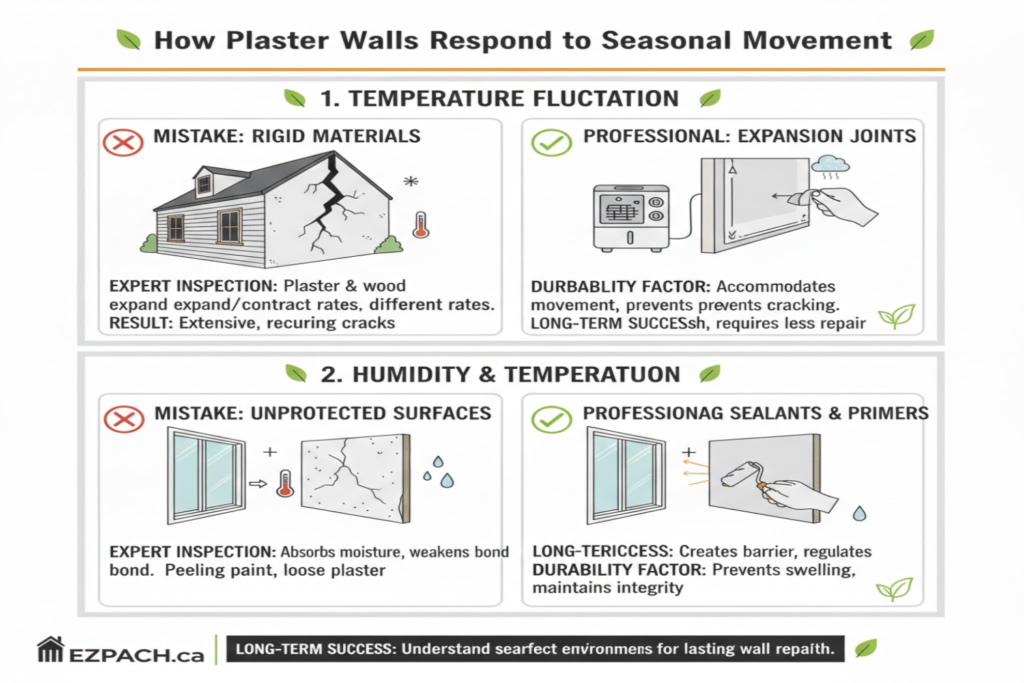
Plaster is a rigid material that is highly sensitive to environmental variations. Unlike more flexible wall coverings, plaster cannot easily absorb expansion or contraction, so even minor seasonal changes can manifest as cracks or surface imperfections.
Temperature Fluctuations
Temperature swings cause plaster to expand when heated and contract when cooled. Over repeated seasonal cycles, this expansion and contraction create stress points on the wall surface. These stress points often appear near corners, ceiling joints, and around doors or windows.
Humidity Effects
High humidity can cause plaster to swell slightly, while dry conditions shrink it. This is particularly noticeable in older plaster walls that are bonded to wooden lath, as the wood also expands and contracts. Moisture-related swelling may lead to flaking, bubbling, or detachment of plaster.
Structural Settling
Homes naturally settle over time, and seasonal movement can exacerbate the effects of settling. Minor wall shifts may cause hairline cracks or gaps at joints, especially if the plaster has already weakened with age.
Common Signs of Seasonal Movement in Plaster Walls
Seasonal movement usually starts small but can become more noticeable over time. By identifying the signs early, homeowners can prevent more serious damage.
Hairline Cracks
Hairline cracks are thin cracks that often appear along ceiling lines, corners, or near window and door frames. While typically cosmetic, repeated seasonal stress can cause these cracks to widen over time.
Flaking or Crumbling
In areas with extreme humidity or repeated wetting, plaster can start to flake or crumble at the edges. This occurs when the plaster loses adhesion to the underlying lath or drywall. Regular inspection and early repair prevent the problem from worsening.
Bowing or Warping
Plaster walls may slightly bow between studs during high-humidity seasons. Though minor, this bowing can make surfaces difficult to paint or wallpaper and may indicate excessive moisture behind the wall.
Seasonal Movement and Wall Components
Understanding the structure of plaster walls helps explain why they are sensitive to seasonal changes. Each component reacts differently to temperature and humidity shifts.
Lath and Plaster Bond
Traditional plaster walls use wooden laths as a support framework. Wood naturally expands and contracts with humidity changes, transferring movement to the plaster layer. Proper maintenance and early crack repair are essential to avoid long-term damage.
Drywall Baseboards
Modern plaster walls may incorporate drywall layers. Seasonal movement can cause slight shifting of drywall, creating stress points along plaster seams. Ensuring that seams are properly taped and mudded helps reduce visible cracks.
Window and Door Openings
Areas around openings are especially vulnerable. As frames expand and contract, plaster may crack near corners and edges. Regular inspection and flexible caulking help prevent recurring issues in these spots.
Preventing Seasonal Movement Damage
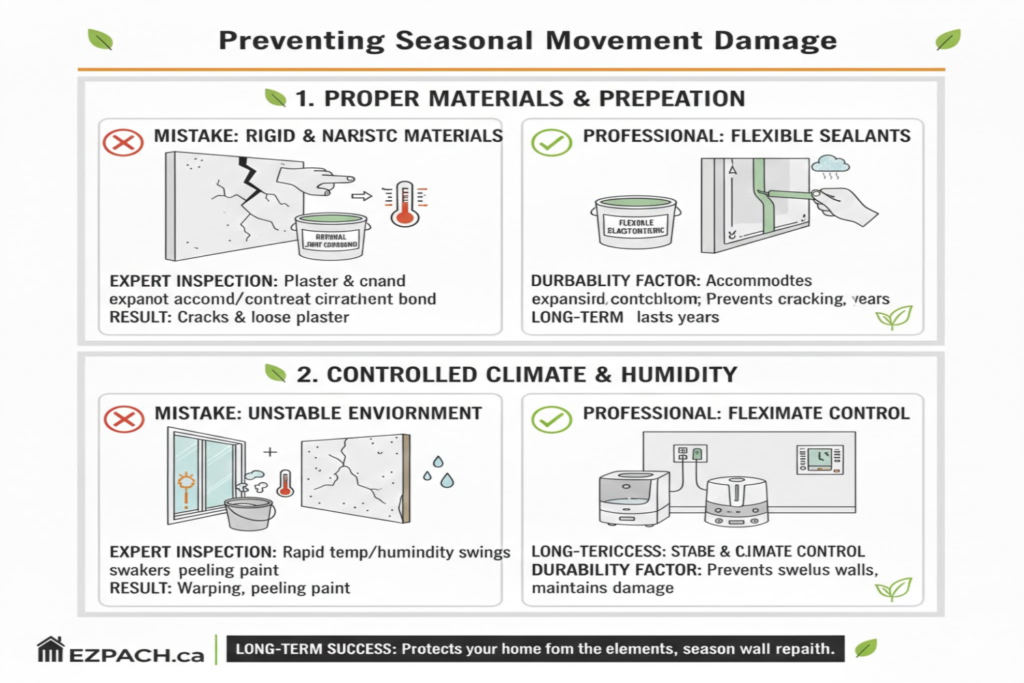
Proactive measures can minimize the impact of seasonal movement on plaster walls. The goal is to maintain a stable indoor environment and allow slight movement without causing cracks or surface damage.
Maintain Consistent Indoor Humidity
Using humidifiers during dry winters and dehumidifiers in hot summers helps stabilize plaster expansion and contraction. This reduces stress on the wall surfaces and minimizes visible cracks.
Proper Insulation
Well-insulated walls maintain a more consistent temperature, limiting the effects of seasonal extremes. Insulation not only improves energy efficiency but also protects plaster walls from unnecessary stress.
Flexible Fillers
Applying joint compounds or caulking that allows for slight wall movement prevents cracks from reappearing. Using flexible fillers at joints and corners is especially effective in high-stress areas.
Early Crack Repairs
Small cracks should be repaired promptly using fillers or plaster patches. Waiting too long allows cracks to widen, which may lead to more extensive and expensive repairs later.
Repairing Seasonal Movement Damage
Repair techniques vary depending on the severity of the damage, from minor hairline cracks to significant flaking or warping.
Hairline Crack Repair
- Clean the crack and the surrounding area to remove dust.
- Apply a flexible filler or spackling compound.
- Sand smooth after drying and repaint for a seamless finish.
Flaking or Loose Plaster
- Remove any damaged plaster carefully.
- Reapply new plaster in thin, even layers to ensure adhesion.
- Smooth, sand, and paint once dry for a durable repair.
Bowing or Warping
- Minor bowing may be corrected with reinforcement behind the wall.
- Severe warping requires partial wall replacement for structural safety.
- Always allow plaster to dry completely between repair layers to prevent recurring issues.
Maintenance Tips After Seasonal Movement
Preventative maintenance helps reduce the frequency and severity of seasonal damage to plaster walls.
- Keep walls dry by addressing leaks promptly
- Inspect walls during seasonal transitions to detect early signs of movement.
- Touch up paint and plaster as needed to prevent visible seams.
- Avoid hanging heavy items near recently repaired areas.
- Regularly check wooden laths or frames for moisture-related expansion or rot.
FAQs
1. Do all plaster walls crack with seasonal changes?
Minor hairline cracks are common, but large cracks usually indicate more significant issues like water damage or structural movement.
2. Can seasonal cracks be completely prevented?
No, but stable humidity levels and proper insulation reduce the frequency and severity of cracks.
3. Are cracks dangerous to the structure?
Small cosmetic cracks are not dangerous, but wide or spreading cracks may require professional inspection.
4. How often should I check my plaster walls?
Inspect walls at the start of each season, especially in regions with extreme humidity or temperature changes.
5. Can I paint over seasonal cracks?
Yes, but it’s best to repair them with flexible fillers before painting to prevent recurrence.
6. Does plaster expand more in summer or winter?
Plaster expands during warm, humid summers and contracts during cold, dry winters.
7. Are older plaster walls more susceptible to movement?
Yes, older plaster tends to be less flexible and more prone to cracking due to age and drying of underlying materials.
8. Should I hire a professional for seasonal cracks?
Small cracks can be repaired DIY, but extensive or recurring damage should be handled by professionals for long-term results.
Conclusion
Plaster walls naturally respond to seasonal movement, expanding and contracting with changes in temperature and humidity. This movement can lead to hairline cracks, flaking, or slight warping, but most issues are cosmetic and preventable with proper maintenance. By understanding how plaster reacts to seasonal cycles, homeowners can protect their walls and extend their lifespan.
Investing in preventive measures such as consistent humidity control, proper insulation, and timely repairs ensures that plaster walls remain beautiful and structurally sound. Regular inspections and early interventions allow homeowners to enjoy the durability and aesthetic appeal of plaster without facing costly seasonal damage.
Drywall Repair Halifax
EZ Patch offers clean, professional drywall, ceiling, plaster, and water damage repair services in Halifax with minimal mess and long-lasting results.
EZ Patch – Drywall Repair Experts
Trusted drywall repair professionals serving Halifax and nearby areas.
Drywall Patch & Repair
Seamless drywall repairs for holes, cracks, dents, and damaged walls.
Ceiling Repairs
Professional ceiling repair services for stains, cracks, and water damage.
Drywall Installation
Complete drywall installation services for renovations and new builds.
Taping & Mudding
Smooth, paint-ready wall finishes by expert drywall finishers.
Plaster Repair Experts
Precision plaster repair services while maintaining original wall texture.
Water Damage Repair
Drywall and ceiling restoration for properties affected by water damage.
Texture Matching
Accurate texture blending so repaired areas match existing finishes.
Installation, Repair & Removal
End-to-end drywall installation, repair, and removal solutions.