Drywall is an essential component in modern construction, providing smooth, uniform walls and ceilings. Its durability and lifespan, however, are directly influenced by the structural framework that supports it. Improper framing, whether due to poor planning, incorrect spacing, or substandard materials, can significantly compromise drywall integrity over time.
When framing is not executed correctly, drywall panels can experience uneven stress, leading to cracks, sagging, and premature wear. Even small mistakes in stud alignment or spacing can magnify these issues, making repairs frequent and costly. Understanding the relationship between framing and drywall longevity is crucial for builders, homeowners, and renovation specialists alike.
The Role of Framing in Drywall Stability
Proper framing ensures that drywall panels are securely attached and evenly supported. Studs, joists, and blocking provide the foundation that absorbs weight, resists movement, and maintains wall straightness. Without this support, drywall can bow, crack, or even detach from the wall over time.
Framing also affects the overall lifespan of drywall finishes. Uneven or weak framing increases stress on drywall joints, leading to paint flaking, seam separation, and fastener pops. Essentially, the quality of the framing dictates whether drywall performs as expected or fails prematurely.
Stud Placement and Drywall Support
Correct stud spacing is critical for preventing drywall sagging. Standard spacing is typically 16 inches on center, but deviations can create weak points. Drywall attached over improperly spaced studs may bow between supports, causing uneven surfaces.
Joists and Ceiling Drywall
Ceiling drywall is especially sensitive to joist placement. Improperly aligned or undersized joists can lead to sagging or cracks in the ceiling. Reinforcing the framing or adjusting joist spacing during installation mitigates these risks.
Blocking and Load Distribution
Blocking helps distribute loads evenly across drywall panels. Missing or misaligned blocking increases stress at seams and corners. Properly installed blocking ensures panels remain flat and secure over time.
Common Framing Mistakes That Reduce Drywall Lifespan
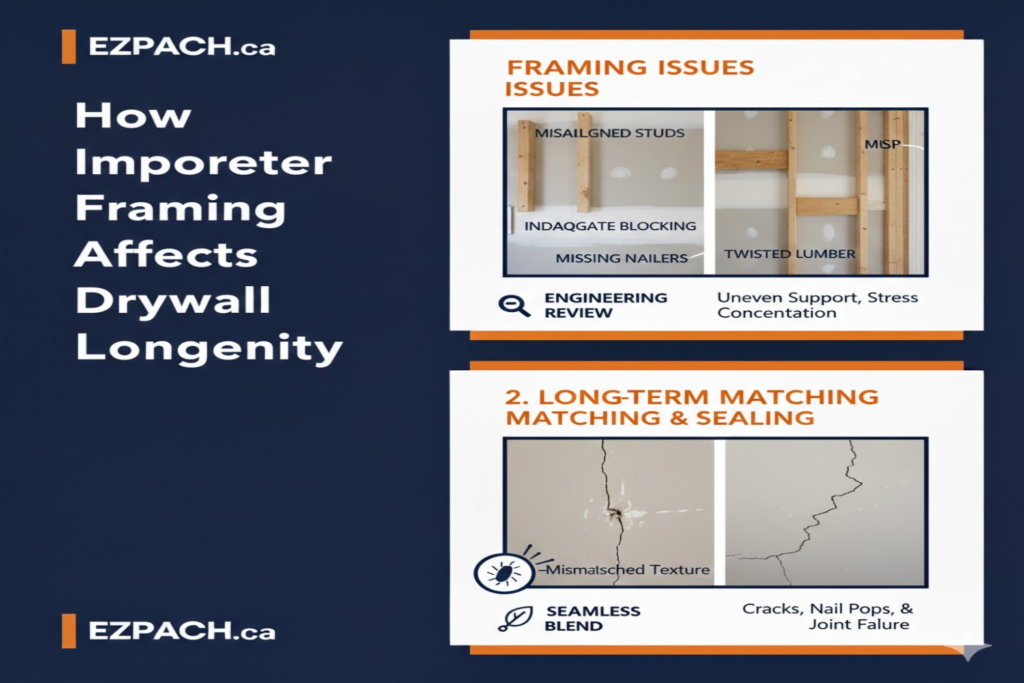
Improper framing is a leading cause of drywall problems, reducing its lifespan and causing frequent repairs. Even small errors in stud alignment, joist spacing, or blocking can lead to cracks, sagging, and joint separation. Identifying and avoiding these common framing mistakes ensures stronger, longer-lasting drywall.
Common framing mistakes include:
- Misaligned studs are causing uneven wall surfaces.
- Insufficient fastener points leading to sagging panels.
- Improper nailing or screwing weakens the drywall attachment.
- Missing or poorly installed blocking at stress points.
- Using substandard or warped lumber for framing.
Effects of Poor Framing on Wall Cracks
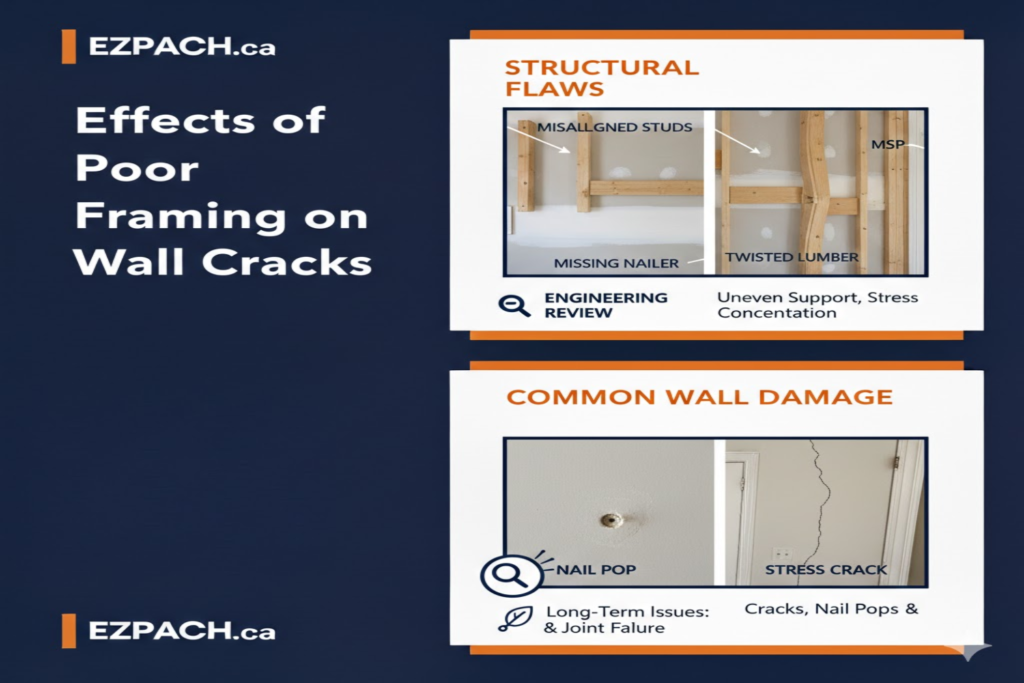
Cracks usually appear along seams, corners, or at joints where stress is concentrated. When framing is uneven, drywall absorbs these stresses rather than distributing them evenly. Over time, minor cracks may expand, requiring extensive repair work to restore the wall’s appearance.
Hairline Cracks
Small, hairline cracks often result from minor stud misalignment. Though initially cosmetic, they can widen over time if framing is not addressed. Regular inspection during construction helps prevent hairline cracks from escalating.
Joint Separation
Joints between drywall sheets are particularly vulnerable. Poorly framed walls cannot support joint tape and compound adequately. This results in separation or crumbling of the joint material, leading to unsightly gaps.
Corner Damage
Corners are stress points where framing errors are most evident. Inadequate support can cause corners to crack or crumble. Installing corner beads and ensuring proper stud placement reinforces these areas.
Ceiling Drywall Issues From Improper Framing
Ceilings bear more weight than walls, making proper framing essential.
Sagging is a common result of joists spaced too far apart or undersized lumber. Even minor inconsistencies can create noticeable dips and waves in the ceiling surface. Proper bracing and joist reinforcement prevent these problems, extending drywall longevity.
Sagging Panels
Sagging occurs when drywall is unsupported for long spans. Panels bend under their own weight, creating visible waves. This not only looks unattractive but also stresses joints, causing cracks and potential detachment.
Fastener Pops
Ceiling drywall fasteners are prone to popping if framing shifts or weakens. This is exacerbated by temperature and humidity changes. Using adequate fasteners and checking framing alignment reduces fastener pops.
Moisture and Improper Framing
Framing errors can exacerbate moisture-related drywall issues.
Gaps, misaligned studs, or poorly installed blocking allow moisture to penetrate drywall panels. This can result in warping, mold growth, and faster material degradation. Proper framing techniques, combined with moisture barriers, protect drywall and prolong its lifespan.
Warping and Bulging
Drywall absorbs moisture unevenly if the framing is not level. Warped or bulging panels compromise structural integrity. Moisture-resistant drywall combined with correct framing minimizes these risks.
Mold Development
Persistent gaps or poorly supported areas trap humidity. Mold thrives in these weak points, damaging drywall and posing health risks. Ensuring tight framing and proper ventilation mitigates mold formation.
Fastener Issues Linked to Framing Problems
Fasteners like screws and nails rely on proper framing for stability.
Insufficient or unevenly spaced studs reduce the effectiveness of fasteners. This results in nail pops, screw backing, or joint separation. Correct framing ensures that each fastener is anchored securely, maintaining a smooth wall surface.
Nail Pops
Nail pops appear when nails loosen over time due to shifting framing. They are more common in ceilings with inadequate joist support. Using screws rather than nails in these areas reduces the problem.
Screw Backing
Screws can back out if studs are improperly spaced or misaligned. This weakens the drywall attachment. Frequent inspection during installation prevents fastener failure and maintains wall integrity.
Repair Challenges Due to Framing Mistakes
Repairing drywall affected by improper framing is more complicated than standard fixes.
Panels must often be replaced rather than patched if structural support is inadequate. In some cases, entire sections of framing may need adjustment before new drywall can be installed. This increases labor costs, time, and material expenses for homeowners and contractors alike.
Patch Repairs
Minor cracks may be patched, but underlying framing issues remain. Without addressing the root cause, cracks are likely to reappear. Properly realigning studs ensures long-lasting repair results.
Full Replacement
Severe sagging or joint separation requires complete panel replacement. Replacing drywall without correcting framing will lead to recurring damage. Full replacement combined with proper framing delivers a durable solution.
Reinforcement Strategies
Adding blocking, sistering studs, or adjusting spacing reinforces weak areas. These methods enhance drywall longevity by improving load distribution. Reinforcement is essential for ceilings and high-traffic walls.
Inspection and Prevention Tips
Preventing drywall issues starts with proper framing inspection.
- Always check stud alignment before drywall installation.
- Ensure joist spacing meets load requirements
- Use high-quality lumber and fasteners.
- Install blocking in stress-prone areas.
- Verify moisture barriers and ventilation systems.
Regular inspections during construction and renovation prevent minor framing issues from becoming major drywall problems. Investing time in proper installation upfront saves significant repair costs later.
Conclusion
Improper framing has a direct and measurable impact on drywall longevity. From wall cracks to ceiling sagging, the consequences of poor structural support are both aesthetic and functional. Addressing framing issues during construction ensures a durable, long-lasting drywall installation.
By adhering to proper framing practices, using quality materials, and conducting regular inspections, homeowners and builders can prevent premature drywall failure. Ultimately, the longevity of drywall is as much about the quality of its support structure as it is about the panels themselves.
FAQs
1. How does stud spacing affect drywall life?
Stud spacing directly influences load distribution. Too wide or uneven spacing causes sagging and joint cracks.
2. Can improper framing lead to mold growth?
Yes, gaps and misalignment can trap moisture. This creates ideal conditions for mold development.
3. Are nail pops always a sign of framing problems?
Not always, but frequent pops often indicate shifting or weak studs. Proper framing reduces this issue.
4. Does ceiling drywall require different framing than walls?
Yes, ceilings bear more weight and need closer joist spacing or reinforcement to prevent sagging.
5. How can I prevent drywall cracks in new construction?
Ensure studs are aligned and spaced correctly. Reinforce corners and joints before hanging drywall.
6. Can replacing drywall fix framing issues?
Replacing drywall alone won’t fix structural problems. Correcting framing is essential for long-term durability.
7. Is moisture-resistant drywall enough to prevent damage?
It helps, but improper framing can still cause warping and bulging. Both factors must be addressed.
8. How often should framing be inspected during construction?
Inspections should occur before and during drywall installation. Frequent checks prevent long-term issues.
Drywall Repair Halifax
EZ Patch offers clean, professional drywall, ceiling, plaster, and water damage repair services in Halifax with minimal mess and long-lasting results.
EZ Patch – Drywall Repair Experts
Trusted drywall repair professionals serving Halifax and nearby areas.
Drywall Patch & Repair
Seamless drywall repairs for holes, cracks, dents, and damaged walls.
Ceiling Repairs
Professional ceiling repair services for stains, cracks, and water damage.
Drywall Installation
Complete drywall installation services for renovations and new builds.
Taping & Mudding
Smooth, paint-ready wall finishes by expert drywall finishers.
Plaster Repair Experts
Precision plaster repair services while maintaining original wall texture.
Water Damage Repair
Drywall and ceiling restoration for properties affected by water damage.
Texture Matching
Accurate texture blending so repaired areas match existing finishes.
Installation, Repair & Removal
End-to-end drywall installation, repair, and removal solutions.