Achieving a flawless drywall surface requires more than basic taping and mudding skills. How experts smooth drywall seamless finishes is a combination of precise technique, quality materials, and careful preparation. Professionals understand the nuances of drywall seams, joint compound application, and sanding to create a finish that looks smooth and continuous.
Even minor imperfections can become highly visible after painting, making seamless finishes critical in both residential and commercial projects. Knowing how experts smooth drywall seamless finishes helps homeowners and DIYers understand the tools, methods, and best practices necessary for professional-looking results. From proper material selection to finishing touches, every step matters in achieving a truly smooth wall or ceiling.
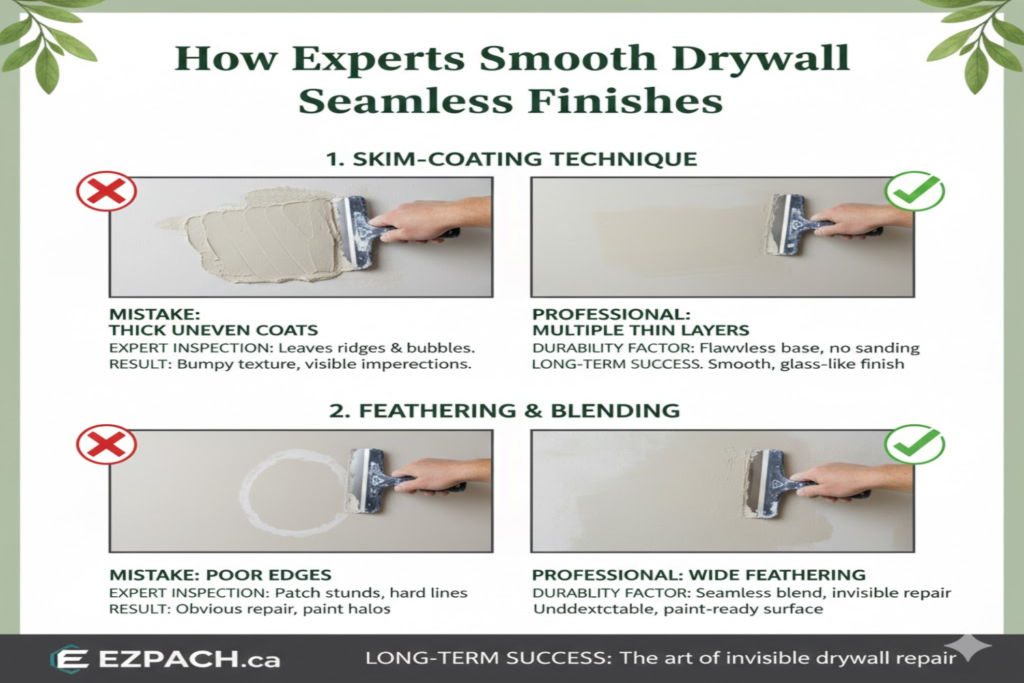
What Are Seamless Drywall Finishes?
Seamless drywall finishes eliminate visible joints, nail pops, and texture inconsistencies. They provide a polished, uniform surface suitable for painting or wallpaper. Professionals strive for seamless finishes because they enhance aesthetics and increase property value.
Creating a seamless surface requires attention to every seam, corner, and edge. Proper joint compound application, tape embedding, and sanding techniques are essential. Achieving this finish often separates professionals from inexperienced installers.
When Should You Aim for Seamless Drywall Finishes?
Seamless drywall finishes are ideal for high-visibility areas such as living rooms, hallways, and offices. Achieving perfection is crucial before applying glossy paint or decorative finishes.
In renovations or remodels, how experts smooth drywall seamless finishes becomes especially important where new drywall meets older surfaces. Consistency in texture and color ensures the repair is virtually invisible.
How Experts Smooth Drywall Seamless Finishes
The process involves multiple steps: preparation, taping, mudding, sanding, and finishing. How experts smooth drywall seamless finishes begins with clean, dust-free surfaces. Every joint and fastener head is treated carefully to eliminate bumps and indentations.
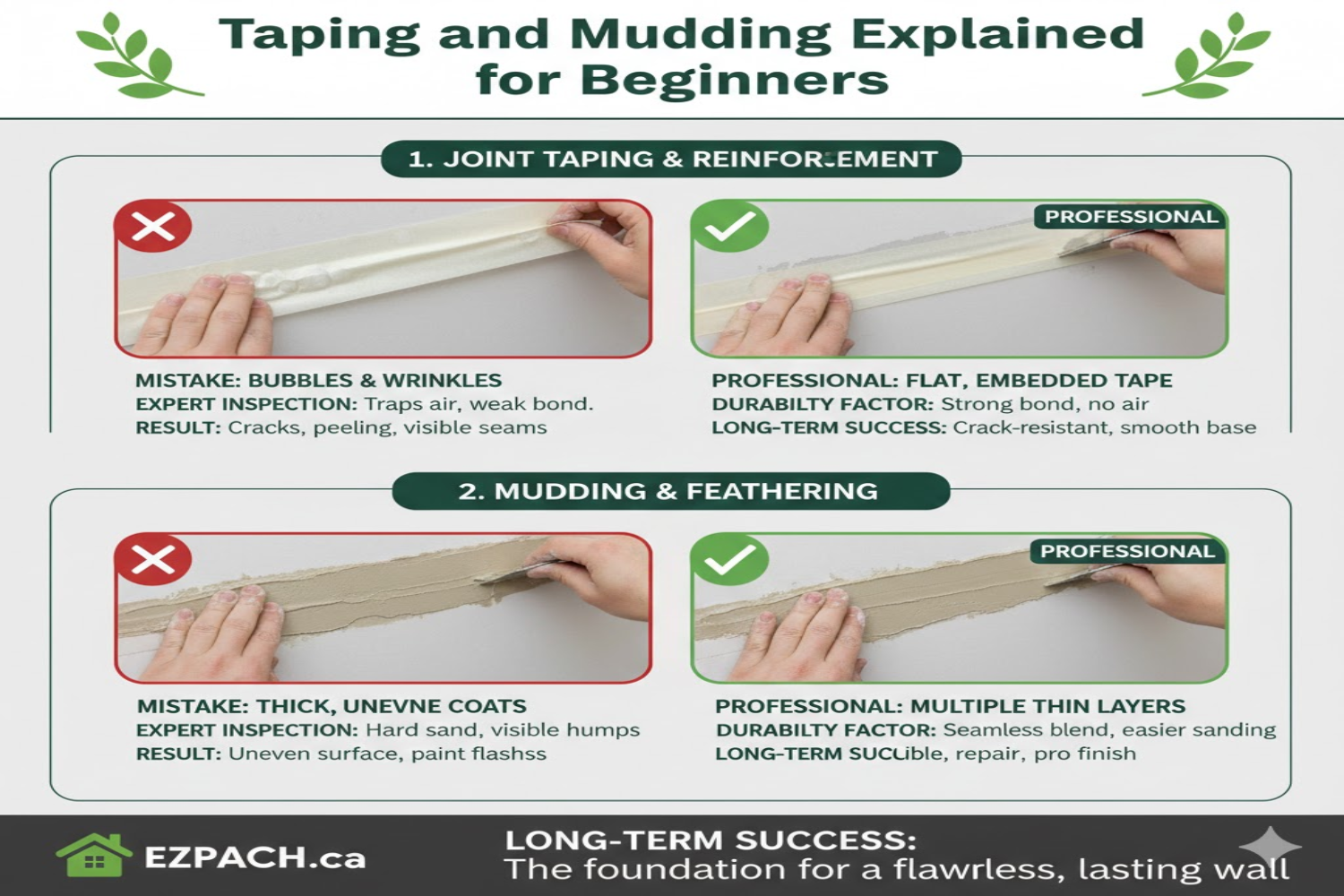
Experts use thin layers of joint compound applied in stages. Layering allows proper drying and reduces cracking. The final coat is feathered to blend edges seamlessly with the surrounding wall.
Surface Preparation Techniques
Proper preparation ensures the joint compound adheres correctly. Professionals clean drywall, remove loose dust, and sand rough spots. Moisture-prone areas may require primers or moisture-resistant compounds.
Tape Selection and Embedding
Choosing the right tape is critical. Paper tape offers strength for standard seams, while fiberglass mesh suits minor repairs. Correct embedding prevents bubbles and cracking.
Layering Joint Compound
Experts apply multiple thin layers rather than a single thick coat. Each layer is allowed to dry fully. Light sanding between layers creates a smooth transition.
Types of Joint Compounds for Seamless Finishes
The type of joint compound affects ease of application and smoothness. How experts smooth drywall seamless finishes relies on selecting the right compound for the project.
All-Purpose Compound
All-purpose compound is versatile and easy to work with. It suits most taping and finishing needs. Drying time allows adjustments.
Lightweight Compound
Lightweight compound is easier to sand and ideal for final coats. It reduces effort without sacrificing finish quality. Less shrinkage occurs compared to the standard compound.
Setting-Type Compound
Setting compounds chemically harden and dry faster. They are used for quick repairs or wet areas. Proper mixing ensures optimal consistency.
Common Tips Experts Follow for Seamless Drywall
Achieving a seamless finish requires consistent technique and attention to detail. Small mistakes can ruin a wall’s appearance. Professionals follow tested methods for predictable results.
Proper Knife Technique
Using the right knife size matters. Larger knives create wider, smoother spreads. Angled strokes help feather edges for invisible transitions.
Sanding and Finishing
Sanding removes minor ridges and bumps. Fine-grit sandpaper ensures smoothness without gouging drywall paper. Light passes, and circular motion is preferred.
Environmental Considerations
Drying conditions affect finish quality. Low humidity or improper ventilation reduces cracking. Avoid direct airflow to prevent uneven drying.
Where Professionals Use Seamless Drywall Finishes
Seamless drywall is preferred in both residential and commercial settings. Living rooms, bedrooms, offices, and retail spaces benefit from clean, polished walls. How experts smooth drywall seamless finishes ensures high-quality aesthetics.
Commercial buildings often use seamless finishes for walls and ceilings in lobbies, corridors, and conference rooms. These areas require professional techniques to maintain a uniform appearance across large surfaces.
What Tools Are Essential for Seamless Drywall Finishes?
Proper tools are as important as technique. Professionals use specialized knives, trowels, sanding blocks, and sprayers. Quality tools allow the precise application of joint compound.
Using low-quality or incorrect tools increases imperfections. Correct tools reduce effort and ensure consistent results.
- Wide taping knives for final coats
- Corner trowels for edges and corners.
- Sanding sponges and sanding poles
- Mud pans and hawk boards for compound control
- Spray texture equipment for a large area.
How to Avoid Common Mistakes in Seamless Drywall Finishes
Even experienced workers can make mistakes if they rush. How experts smooth drywall seamless finishes involves patience and methodical work. Avoiding common pitfalls improves durability and appearance.
- Applying joint compound too thickly
- Skipping sanding between layers
- Using the wrong tape for the seam
- Not allowing the compound to dry fully.
- Over-sanding and damaging drywall paper
Cost Considerations for Seamless Drywall Finishes
Costs vary based on wall area, complexity, and labor. Professional application may be higher initially,y but it reduces long-term repair needs. Tools and materials also factor into expenses.
| Item | Estimated Cost Range |
| Joint Compound | $15 – $50 per bucket |
| Tape (Paper/Fiberglass) | $5 – $15 per roll |
| Sanding Tools | $20 – $80 |
| Knife Set | $15 – $60 |
| Professional Labor | $30 – $70 per hour |
Maintenance After Seamless Drywall
Proper maintenance preserves the seamless appearance. Gentle cleaning prevents dust accumulation and surface damage. Minor repairs should be addressed promptly to maintain smoothness.
- Use soft cloths or sponges for cleaning.
- Avoid abrasive materials
- Touch up cracks immediately.
- Inspect high-traffic areas regularly
- Repaint periodically with a matching finish.
Conclusion
Seamless drywall finishes are achievable when proper techniques and tools are used. How experts smooth drywall seamless finishes involves a step-by-step approach that balances skill, time, and materials. Results improve with experience and adherence to best practices.
Maintaining smooth finishes prolongs wall life and ensures consistent aesthetics. Investing in the right methods and tools delivers professional-grade walls and ceilings. Seamless drywall finishes are both functional and visually appealing.
FAQs
1. Can I achieve seamless drywall without experience?
It is challenging; beginners may leave visible lines. Practice and proper tools improve results.
2. How long does a seamless finish take to dry?
Drying typically requires 24 hours per layer. Environmental factors can affect timing.
3. Is sanding always necessary?
Yes, sanding smooths imperfections. Skipping it leads to visible ridges.
4. Can I use a paint sprayer on seamless drywall?
Yes, it ensures uniform coverage. A primer may be needed for the best results.
5. What type of tape is best for seamless finishes?
Paper tape is strong for standard seams. Mesh tape suits minor repairs.
6. How many layers of joint compound are recommended?
Typically, 2–3 layers for seams. The final layer should be thin for feathering.
7. Do seamless finishes require special paint?
No, standard paints work. High-gloss paints may highlight imperfections.
8. Can ceiling drywall also be finished seamlessly?
Yes, but ladders and tools must be used carefully. Patience ensures smoothness.
Drywall Repair Halifax
EZ Patch offers clean, professional drywall, ceiling, plaster, and water damage repair services in Halifax with minimal mess and long-lasting results.
EZ Patch – Drywall Repair Experts
Trusted drywall repair professionals serving Halifax and nearby areas.
Drywall Patch & Repair
Seamless drywall repairs for holes, cracks, dents, and damaged walls.
Ceiling Repairs
Professional ceiling repair services for stains, cracks, and water damage.
Drywall Installation
Complete drywall installation services for renovations and new builds.
Taping & Mudding
Smooth, paint-ready wall finishes by expert drywall finishers.
Plaster Repair Experts
Precision plaster repair services while maintaining original wall texture.
Water Damage Repair
Drywall and ceiling restoration for properties affected by water damage.
Texture Matching
Accurate texture blending so repaired areas match existing finishes.
Installation, Repair & Removal
End-to-end drywall installation, repair, and removal solutions.