Drywall installation is often seen as a simple step in home construction, but it plays a crucial role in soundproofing. The way drywall is installed, its thickness, and the materials used can significantly impact how sound travels through walls and ceilings. Understanding these factors is essential for homeowners looking to reduce noise and improve acoustic comfort in their living spaces.
In addition to material selection, the installation technique directly affects the effectiveness of soundproofing. Poorly installed drywall can create gaps and vibrations that allow sound to pass through more easily. By optimizing drywall installation, you can create a quieter, more serene environment that enhances privacy and overall home comfort.
What Is Soundproofing in Drywall?
Soundproofing refers to the process of minimizing sound transmission between rooms. Drywall is the first barrier that absorbs and blocks noise in a wall assembly. High-quality drywall, when installed correctly, can reduce the impact of airborne noise, such as talking or television sounds, and limit vibrations from mechanical sources like HVAC systems.
Airborne Noise
Airborne noise is transmitted through the air and can easily pass through gaps or thin walls. Proper drywall installation with minimal seams helps reduce this type of sound transfer.
Impact Noise
Impact noise, like footsteps or furniture movement, travels through the structure. Using multiple layers of drywall or sound-damping materials can reduce these vibrations.
Resonance
Resonance occurs when drywall panels vibrate at certain frequencies. Proper fastening techniques, such as staggered studs or resilient channels, can help reduce resonance and improve soundproofing.
How Drywall Thickness Influences Soundproofing
Thicker drywall naturally blocks more sound due to its mass. Standard 1/2-inch drywall is sufficient for general applications, but 5/8-inch drywall is preferred for soundproofing walls and ceilings. The additional mass of thicker drywall decreases the amount of sound energy transmitted from one room to another. This is particularly important in multi-family housing, offices, or home theaters.
Single vs. Double Layer
Adding a second layer of drywall can significantly improve sound insulation. It increases the wall’s density, making it harder for sound waves to pass through.
Mass-Loaded Drywall
Specialized mass-loaded drywall contains additional materials that enhance soundproofing. These panels are particularly effective for high-noise environments.
Key Factors in Drywall Installation Affecting Soundproofing
Several installation factors influence the performance of drywall in soundproofing:
- Stud Spacing: Narrow spacing reduces wall vibrations.
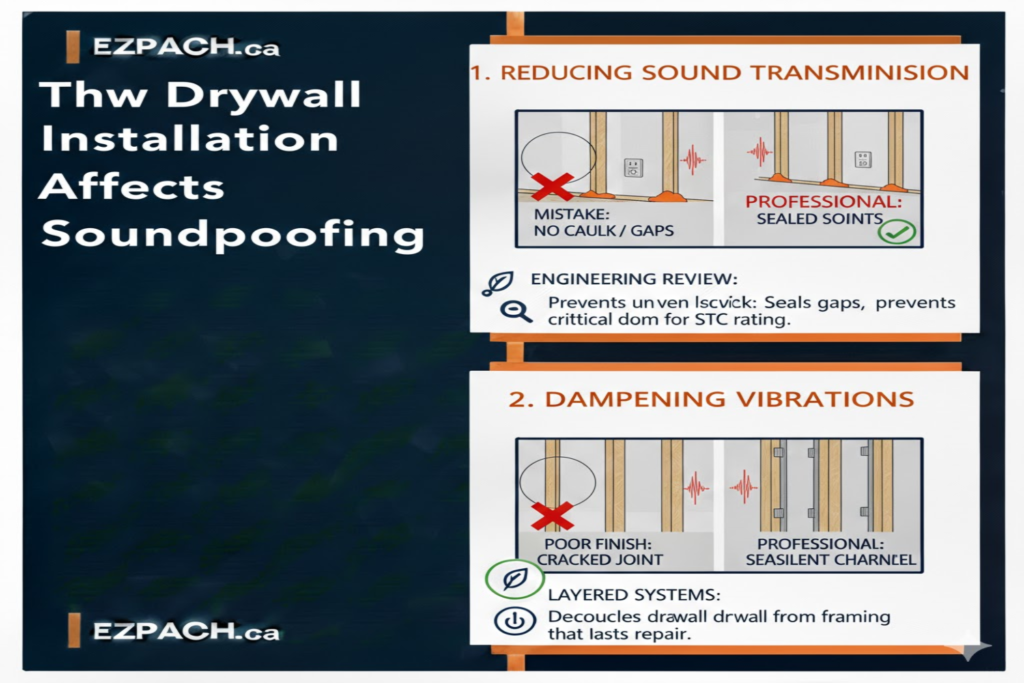
- Sealing Gaps: Proper caulking and sealing prevent sound leaks.
- Fastener Type: Screws are preferred over nails to minimize popping sounds.
- Resilient Channels: These create separation between drywall and framing, reducing sound transmission.
- Insulation: Adding insulation like mineral wool or fiberglass between studs improves acoustic performance.
When to Use Specialized Soundproofing Techniques
Soundproofing techniques should be considered during both new construction and renovations. Homes near busy streets or apartments with shared walls benefit most from advanced methods.
Using acoustic panels, resilient channels, or double-layer drywall installations enhances the effectiveness of traditional drywall in controlling noise.
Resilient Channels
Resilient channels decouple the drywall from the framing, which dramatically reduces vibration transmission.
Green Glue Application
Green Glue is a damping compound applied between drywall layers. It converts sound energy into heat, significantly reducing noise.
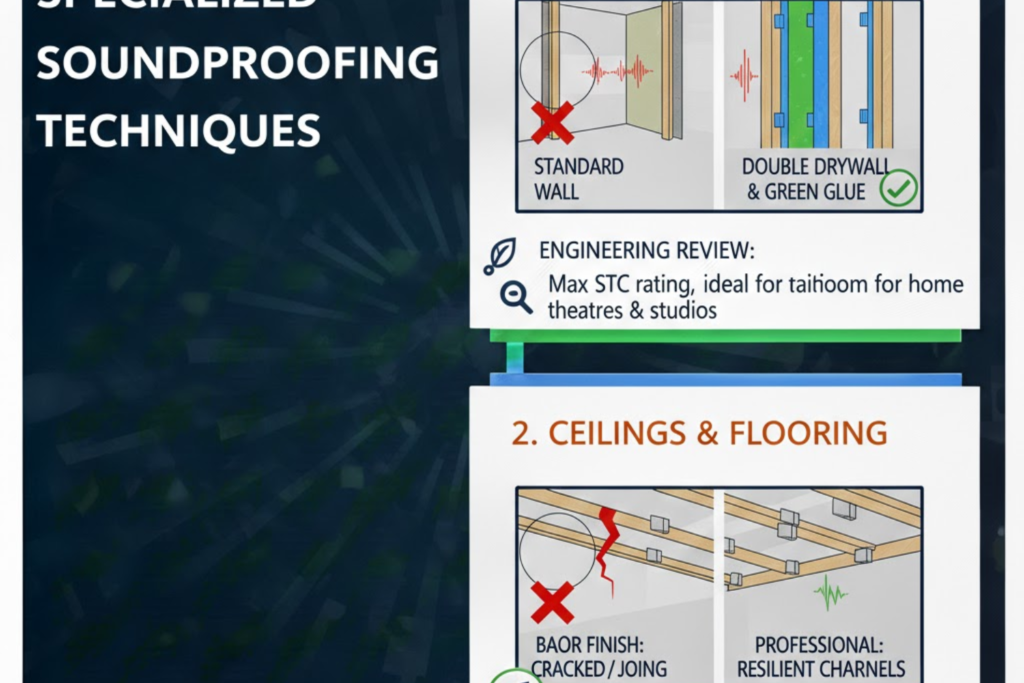
Common Drywall Installation Mistakes: Reducing Soundproofing
Even high-quality drywall can fail to soundproof effectively if installed improperly.
Gaps and Openings
Gaps around electrical outlets, windows, and doors act as channels for sound. Always seal these openings with acoustic caulk.
Improper Fastening
Over-tightening screws or using nails instead of screws can create weak points, increasing vibration.
Ignoring Insulation
Installing drywall without insulation between studs severely limits soundproofing performance. Insulation helps absorb and dissipate noise.
How Multiple Layers of Drywall Improve Soundproofing
Adding multiple layers of drywall creates both mass and damping effects. This approach is particularly effective for rooms requiring high acoustic performance, like home theaters or studios.
- First layer: Standard drywall
- Second layer: Acoustic drywall or standard drywall with Green Glue
- Seal all seams and edges to prevent air gaps.
- Use staggered seams to avoid a continuous weak point.s
Multiple layers reduce airborne and impact noise, providing a more peaceful living space.
Key Materials to Enhance Soundproofing During Drywall Installation
Several materials can be incorporated to improve drywall soundproofing:
- Acoustic Insulation: Mineral wool or fiberglass absorbs sound effectively.
- Soundproof Drywall: Denser panels reduce noise transmission.
- Resilient Channels: Decouple drywall from framing.
- Acoustic Sealant: Seals gaps and prevents sound leakage.
- Green Glue: Converts sound energy to heat between layers.
When DIY Drywall Installation May Fail in Soundproofing
DIY installation often overlooks critical factors that impact soundproofing:
- Failing to seal all gaps
- Incorrect fastener placement
- Lack of proper insulation
- Skipping resilient channels
- Using only a single drywall layer
These errors can cause future issues, with sound traveling freely between rooms despite having new drywall.
How to Test Drywall Soundproofing Effectiveness
Testing drywall soundproofing can help identify weak spots.
- Clap test: Listen for echo and vibration
- Use a decibel meter to measure sound levels in adjacent rooms.
- Inspect seams, outlets, and edges for air leaks.
- Identify areas where additional insulation or damping is needed.
Regular testing ensures drywall installation is performing as intended.
Key Considerations Before Installing Soundproof Drywall
Before beginning drywall installation for soundproofing, consider:
- Room Purpose: Bedrooms, media rooms, or offices may require more soundproofing.
- Budget: Specialized materials can be costly but offer long-term benefits.
- Professional Consultation: Acoustic engineers can suggest optimal solutions.
- Material Availability: Check for soundproof drywall and insulation options.
- Installation Complexity: Advanced techniques like resilient channels may require professional help.
Conclusion
Proper drywall installation is not just about aesthetics—it has a significant impact on soundproofing. From material choice and thickness to installation techniques, every detail matters. Poor installation can compromise the wall’s ability to block or absorb noise, reducing privacy and comfort.
By paying attention to these factors, homeowners can create quieter, more comfortable spaces. Multiple layers, proper insulation, sealing, and resilient channels dramatically enhance soundproofing performance. Prioritizing drywall installation quality ensures long-lasting acoustic comfort and effective noise reduction throughout the home.
FAQs
1. Does standard drywall reduce noise effectively?
Standard drywall provides some noise reduction but is less effective than soundproof or double-layer drywall. For high-noise areas, additional layers or acoustic solutions are recommended.
2. Can I install soundproof drywall myself?
Yes, but specialized techniques like using resilient channels or damping compounds are better handled by professionals. Incorrect DIY installation can reduce effectiveness.
3. Is insulation necessary for soundproofing?
Yes, insulation absorbs sound and prevents vibration transfer between walls. Without it, even thick drywall may allow significant noise to pass.
4. How does Green Glue work?
Green Glue is a damping compound that converts sound energy into heat. It is applied between drywall layers for improved soundproofing.
5. Can drywall alone block impact noise?
Drywall reduces some impact noise, but it is not sufficient alone. Combining insulation, resilient channels, and multiple layers is more effective.
6. What is the best drywall thickness for soundproofing?
5/8-inch or double-layer drywall is ideal for soundproofing. Thicker panels increase mass and reduce sound transmission.
7. Are there specialized soundproof drywall types?
Yes, soundproof drywall is denser and often includes materials that enhance noise reduction. It is commonly used in studios and high-noise environments.
8. How important is sealing gaps in drywall installation?
Sealing gaps is crucial, as even small openings allow sound to travel freely. Acoustic sealants around outlets and edges greatly improve performance.
Drywall Repair Halifax
EZ Patch offers clean, professional drywall, ceiling, plaster, and water damage repair services in Halifax with minimal mess and long-lasting results.
EZ Patch – Drywall Repair Experts
Trusted drywall repair professionals serving Halifax and nearby areas.
Drywall Patch & Repair
Seamless drywall repairs for holes, cracks, dents, and damaged walls.
Ceiling Repairs
Professional ceiling repair services for stains, cracks, and water damage.
Drywall Installation
Complete drywall installation services for renovations and new builds.
Taping & Mudding
Smooth, paint-ready wall finishes by expert drywall finishers.
Plaster Repair Experts
Precision plaster repair services while maintaining original wall texture.
Water Damage Repair
Drywall and ceiling restoration for properties affected by water damage.
Texture Matching
Accurate texture blending so repaired areas match existing finishes.
Installation, Repair & Removal
End-to-end drywall installation, repair, and removal solutions.