Ceiling repairs may look like a surface-level improvement, but they directly affect the performance, safety, and appearance of lighting fixtures. From minor patchwork to full ceiling replacements, every repair changes how fixtures are mounted, aligned, and supported. Understanding how ceiling repairs impact lighting fixtures helps homeowners avoid costly mistakes and ensures long-term lighting efficiency.
Lighting fixtures are often integrated into the ceiling structure, making them vulnerable during repairs. If repairs are rushed or poorly planned, fixtures can become loose, misaligned, or even hazardous. This detailed guide explains how ceiling repairs impact lighting fixtures, covering structural, electrical, aesthetic, and safety aspects in depth.
What Is the Relationship Between Ceiling Repairs and Lighting Fixtures
Ceiling repairs and lighting fixtures are closely connected because fixtures rely on the ceiling for support and placement. Any repair that alters ceiling material, thickness, or framing can change how a fixture sits. This relationship becomes especially important with recessed, pendant, or flush-mounted lights.
When ceiling repairs impact lighting fixtures, issues can range from cosmetic flaws to serious electrical risks. Understanding this relationship early helps homeowners plan repairs without compromising lighting performance.
How Ceiling Repairs Impact Lighting Fixture Alignment
Ceiling repairs often involve sanding, re-plastering, or drywall replacement, all of which can affect alignment. Even a small change in ceiling level can make fixtures appear crooked. This misalignment is particularly noticeable with pendant lights and chandeliers.
In many cases, ceiling repairs impact lighting fixtures by shifting their mounting points. If alignment is not corrected during the repair process, fixtures may hang unevenly and disrupt the overall visual balance of the room.
How Ceiling Repairs Affect Electrical Connections
Electrical wiring is usually hidden behind the ceiling surface. When repairs involve cutting, drilling, or removing sections of the ceiling, wiring can be disturbed. This is one of the most critical ways ceiling repairs impact lighting fixtures.
Loose connections, damaged insulation, or pinched wires can cause flickering lights or short circuits. Professional coordination between ceiling repair work and electrical inspection is essential to prevent long-term electrical problems.
Common Lighting Problems After Ceiling Repairs
Ceiling repairs impact lighting fixtures in ways that may not be immediately visible. Some problems only appear weeks or months later. Recognizing these common issues helps in early detection.
- Flickering or dimming lights due to loose wiring
- Fixtures are becoming loose or sagging.
- Uneven light distribution caused by misaligned fixtures
- Cracks forming around fixture edges
- Buzzing sounds from disturbed electrical connections
How Ceiling Repairs Impact Recessed Lighting
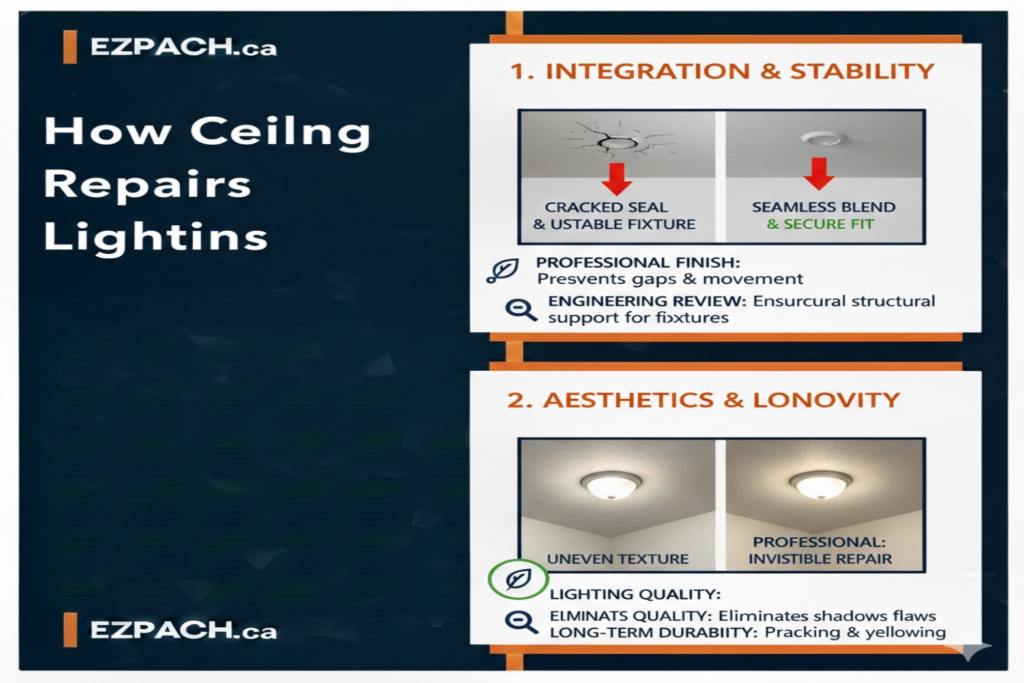
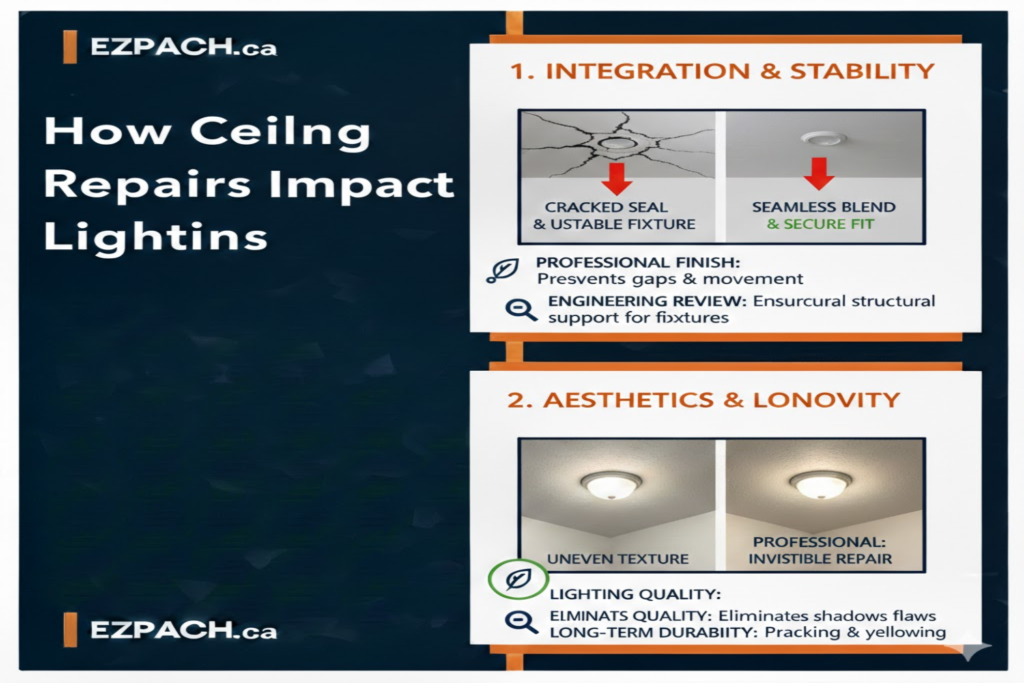
Recessed lighting is especially sensitive to ceiling repairs because it depends on precise cutouts. Any change in ceiling thickness or material can affect how recessed fixtures sit.
When ceiling repairs impact lighting fixtures like recessed lights, gaps may appear around the trim. These gaps reduce visual appeal and can allow dust or air leakage, affecting energy efficiency.
Ceiling Thickness Changes
Ceiling repairs often add new layers of plaster or drywall. This changes the depth at which recessed lights sit, causing them to appear sunken or protruding. Adjustments are necessary to maintain a clean finish.
Heat and Ventilation Issues
Recessed lights generate heat and require proper clearance. Ceiling repairs that reduce ventilation space can lead to overheating. This is a hidden but serious way ceiling repairs impact lighting fixtures.
Trim and Finish Problems
Poor finishing around recessed lights creates uneven edges. These cosmetic flaws become more noticeable once the lighting is turned on. Proper trimming ensures a seamless look.
How Ceiling Repairs Impact Pendant and Chandelier Lights
Pendant and chandelier lights rely heavily on ceiling anchors and junction boxes. During repairs, these support systems may be weakened or moved.
Ceiling repairs impact lighting fixtures like chandeliers by altering load distribution. If the ceiling structure is not reinforced properly, heavy fixtures may become unsafe over time.
What Happens to Junction Boxes During Ceiling Repairs
Junction boxes are critical for safely housing electrical connections. Ceiling repairs sometimes involve relocating or covering these boxes, which can violate electrical codes.
When ceiling repairs impact lighting fixtures by interfering with junction boxes, the risk of electrical failure increases. All boxes must remain accessible and properly secured after repairs.
How Ceiling Repairs Affect Lighting Fixture Stability
Stability is one of the most important concerns when evaluating how ceiling repairs impact lighting fixtures. Any weakening of the ceiling material can reduce the fixture’s ability to stay securely mounted.
Over time, unstable fixtures may loosen further due to vibration or temperature changes. Ensuring proper anchoring during repairs prevents future hazards.
Key Factors That Determine Lighting Impact During Ceiling Repairs
Several factors influence how ceiling repairs impact lighting fixtures. Understanding these variables helps in planning safer and more effective repairs.
- Type of ceiling material used
- Weight and style of lighting fixtures
- Quality of repair workmanship
- Age and condition of existing wiring
- Ceiling height and structure
How Ceiling Repairs Impact LED Lighting Systems
LED lighting systems are sensitive to heat and power fluctuations. Ceiling repairs that restrict airflow or disturb wiring can shorten LED lifespan.
When ceiling repairs impact lighting fixtures using LED technology, issues like color shifting or premature failure may occur. Proper ventilation and wiring protection are essential.
Driver Accessibility
LED fixtures use drivers that may be hidden in the ceiling. Repairs that seal off access make future maintenance difficult. Planning for accessibility reduces long-term costs.
Heat Dissipation
LEDs require adequate heat dissipation. Ceiling repairs that trap heat can reduce efficiency. This is a subtle but important way ceiling repairs impact lighting fixtures.
Voltage Stability
Disturbed wiring can cause voltage irregularities. LEDs are particularly sensitive to these changes. Stable connections are crucial.
When Ceiling Repairs Require Lighting Fixture Removal
Some repairs require the temporary removal of lighting fixtures. This process must be handled carefully to avoid damage.
Ceiling repairs impact lighting fixtures during removal if fixtures are not properly labeled or reinstalled. Incorrect reinstallation can lead to wiring errors or alignment issues.
Common Mistakes Homeowners Make During Ceiling Repairs
Many homeowners underestimate how ceiling repairs impact lighting fixtures. These common mistakes can lead to costly fixes later.
- Ignoring fixture weight requirements
- Painting over fixture edges
- Covering ventilation gaps
- Failing to realign fixtures
- Skipping electrical inspections
How Ceiling Repairs Impact Smart Lighting Systems
Smart lighting systems include sensors, controllers, and network connections. Ceiling repairs that interfere with these components can disrupt functionality.
Ceiling repairs impact lighting fixtures with smart features by blocking signals or damaging sensors. Careful planning preserves smart lighting performance.
What Electrical Codes Say About Ceiling Repairs and Lighting
Electrical codes exist to ensure safety during ceiling repairs. These codes regulate fixture clearance, junction box access, and wiring protection.
Ceiling repairs impact lighting fixtures legally if codes are not followed. Non-compliance can result in fines or insurance issues.
How Ceiling Repairs Affect Ceiling Fans With Lights
Ceiling fans with integrated lights are heavier and more complex. Repairs must account for both rotation and lighting needs.
Ceiling repairs impact lighting fixtures in ceiling fans by affecting balance and support. Improper repairs can cause wobbling and light failure.
Key Safety Risks When Ceiling Repairs Impact Lighting Fixtures
Safety is the biggest concern when ceiling repairs impact lighting fixtures. Ignoring risks can lead to serious accidents.
- Electrical shock hazards
- Fire risks from exposed wiring
- Falling fixtures due to weak anchors
- Overheating from poor ventilation
How to Minimize Lighting Issues During Ceiling Repairs
Planning is the best way to reduce problems. Coordinating repairs with lighting assessments ensures better outcomes.
Ceiling repairs impact lighting fixtures less when professionals evaluate fixtures before work begins. Preventive steps save time and money.
How Ceiling Repairs Impact Natural and Artificial Light Balance
Ceiling repairs can subtly change how both natural and artificial light interacts within a room, as alterations in height, texture, or finish affect light reflection and diffusion. Even small changes to the ceiling surface can shift brightness patterns, impacting the overall ambiance and functionality of the space.
Key points to consider:
- Ceiling color changes after repairs can either enhance or diminish light reflection, directly influencing room brightness and energy efficiency.
- Uneven surfaces from repairs may create shadows, disrupting the natural flow of daylight and artificial illumination.
- Shifts in ceiling height during repairs can require fixture repositioning to maintain balanced lighting throughout the room.
- Poorly executed repairs can result in glare or dark spots, forcing artificial lighting to compensate for uneven natural light distribution.
Conclusion
Ceiling repairs may seem unrelated to lighting at first, but they significantly influence fixture safety, performance, and appearance. From wiring disturbances to alignment issues, the ways ceiling repairs impact lighting fixtures are numerous and interconnected. Ignoring these factors can lead to electrical problems and reduced lighting efficiency.
By understanding how ceiling repairs impact lighting fixtures, homeowners can plan repairs more effectively. Coordinating ceiling work with lighting assessments ensures better results, improved safety, and long-lasting visual appeal. Thoughtful planning turns ceiling repairs into an opportunity to enhance lighting rather than compromise it.
Frequently Asked Questions (FAQs)
1. Can ceiling repairs cause lights to flicker even if the wiring looks fine?
Yes, minor wiring disturbances hidden behind the ceiling can cause flickering. Even small connection shifts during repairs can impact electrical flow.
2. Do ceiling repairs affect light brightness?
Ceiling texture and color changes can alter light reflection. This can make rooms appear brighter or dimmer without changing the fixture itself.
3. Is it safe to leave lighting fixtures installed during ceiling repairs?
It depends on the repair type. Minor cosmetic work may be safe, but structural repairs often require fixture removal.
4. Can ceiling repairs damage LED drivers?
Yes, dust, heat buildup, or restricted airflow during repairs can affect LED drivers. Proper protection is essential.
5. Do ceiling repairs impact lighting fixture lifespan?
Poor repairs can shorten fixture lifespan by causing instability or electrical stress. Quality repairs help fixtures last longer.
6. Should lighting be upgraded during major ceiling repairs?
Major repairs are a good opportunity to upgrade lighting. Access is easier, reducing installation costs.
7. Can ceiling repairs affect smart lighting connectivity?
Yes, repairs can block sensors or interfere with signals. Smart systems need careful handling during repairs.
8. How long after ceiling repairs should lighting be inspected?
Lighting should be inspected immediately after repairs. Early checks help catch issues before they worsen.
Drywall Repair Halifax
EZ Patch offers clean, professional drywall, ceiling, plaster, and water damage repair services in Halifax with minimal mess and long-lasting results.
EZ Patch – Drywall Repair Experts
Trusted drywall repair professionals serving Halifax and nearby areas.
Drywall Patch & Repair
Seamless drywall repairs for holes, cracks, dents, and damaged walls.
Ceiling Repairs
Professional ceiling repair services for stains, cracks, and water damage.
Drywall Installation
Complete drywall installation services for renovations and new builds.
Taping & Mudding
Smooth, paint-ready wall finishes by expert drywall finishers.
Plaster Repair Experts
Precision plaster repair services while maintaining original wall texture.
Water Damage Repair
Drywall and ceiling restoration for properties affected by water damage.
Texture Matching
Accurate texture blending so repaired areas match existing finishes.
Installation, Repair & Removal
End-to-end drywall installation, repair, and removal solutions.