Drywall installation is often treated as a quick finishing step, but mistakes made during this phase can take years to reveal themselves. Many homeowners only notice problems long after construction is complete, when cracks, sagging, or surface imperfections begin to appear. These drywall installation errors that show up years later can compromise both aesthetics and structural performance.
What makes drywall installation errors particularly frustrating is that they often seem minor at first. Over time, however, temperature changes, humidity, and building movement amplify these hidden issues. Understanding drywall installation errors that show up years later is essential for preventing costly repairs and preserving long-term wall integrity.
Poor Stud Alignment During Drywall Installation
Improper stud alignment is one of the most common drywall installation errors that show up years later. When studs are uneven or twisted, drywall panels cannot sit flat against the framing. This creates stress points that slowly worsen over time.
As the building settles, drywall attached to misaligned studs begins to crack or bow. These issues may not appear immediately, but gradually become visible as seams open and fasteners loosen. Proper framing inspection before drywall installation is crucial to avoid these long-term problems.
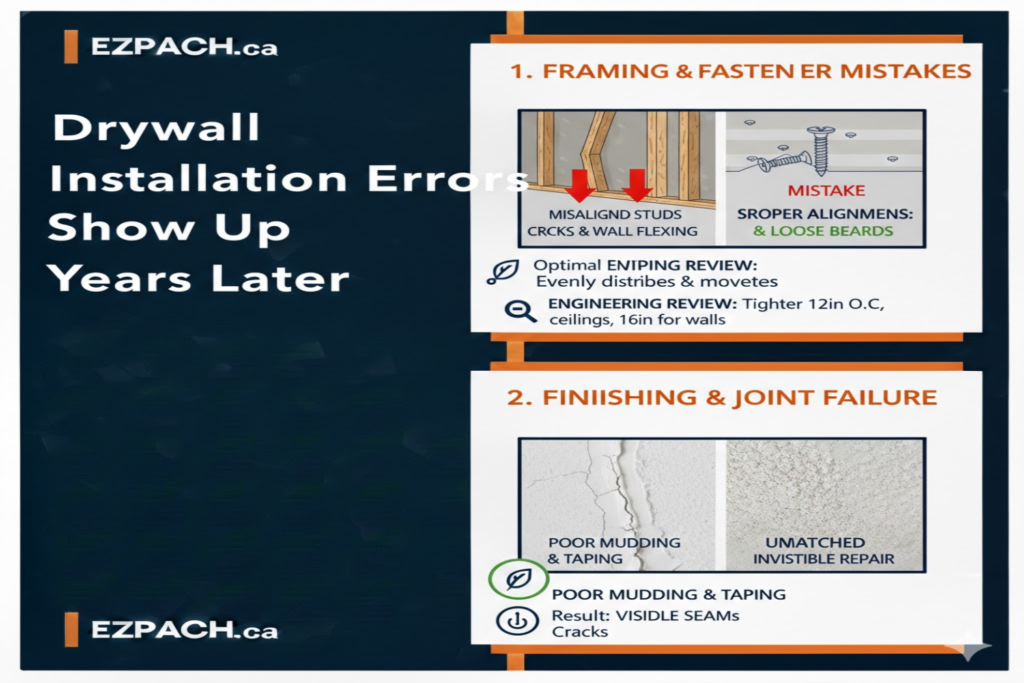
Incorrect Fastener Placement and Spacing
Fastener mistakes are subtle drywall installation errors that show up years later, often in the form of nail pops and surface dimpling. When screws or nails are spaced too far apart, drywall panels can shift with temperature changes. This movement eventually causes visible imperfections.
Overdriven fasteners are equally problematic, as they break the paper face of the drywall. Once the paper is compromised, the fastener loses its holding strength, leading to loosening over time. Correct fastener depth and spacing are essential for long-lasting drywall performance.
Overdriven Screws
Overdriven screws weaken the drywall’s core and reduce structural grip. Years later, this results in popped fasteners and uneven wall surfaces.
Underdriven Fasteners
Underdriven fasteners prevent drywall from sitting flush. Over time, this creates bulges and visible shadows along wall surfaces.
Inconsistent Spacing
Uneven fastener spacing leads to inconsistent support. As drywall expands and contracts, weak areas become increasingly noticeable.
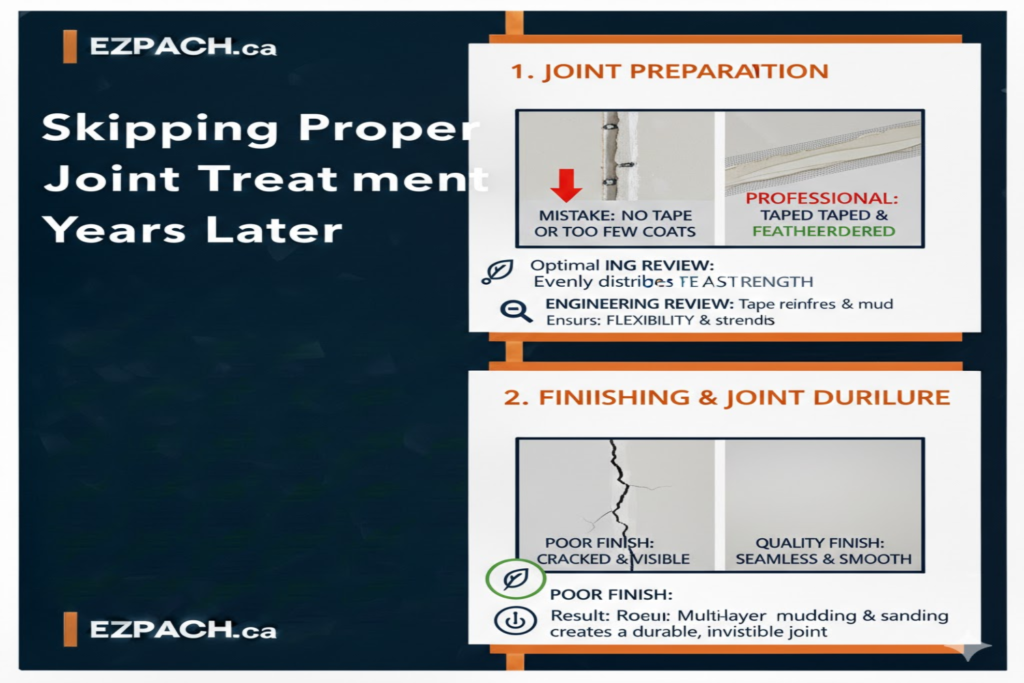
Skipping Proper Joint Treatment
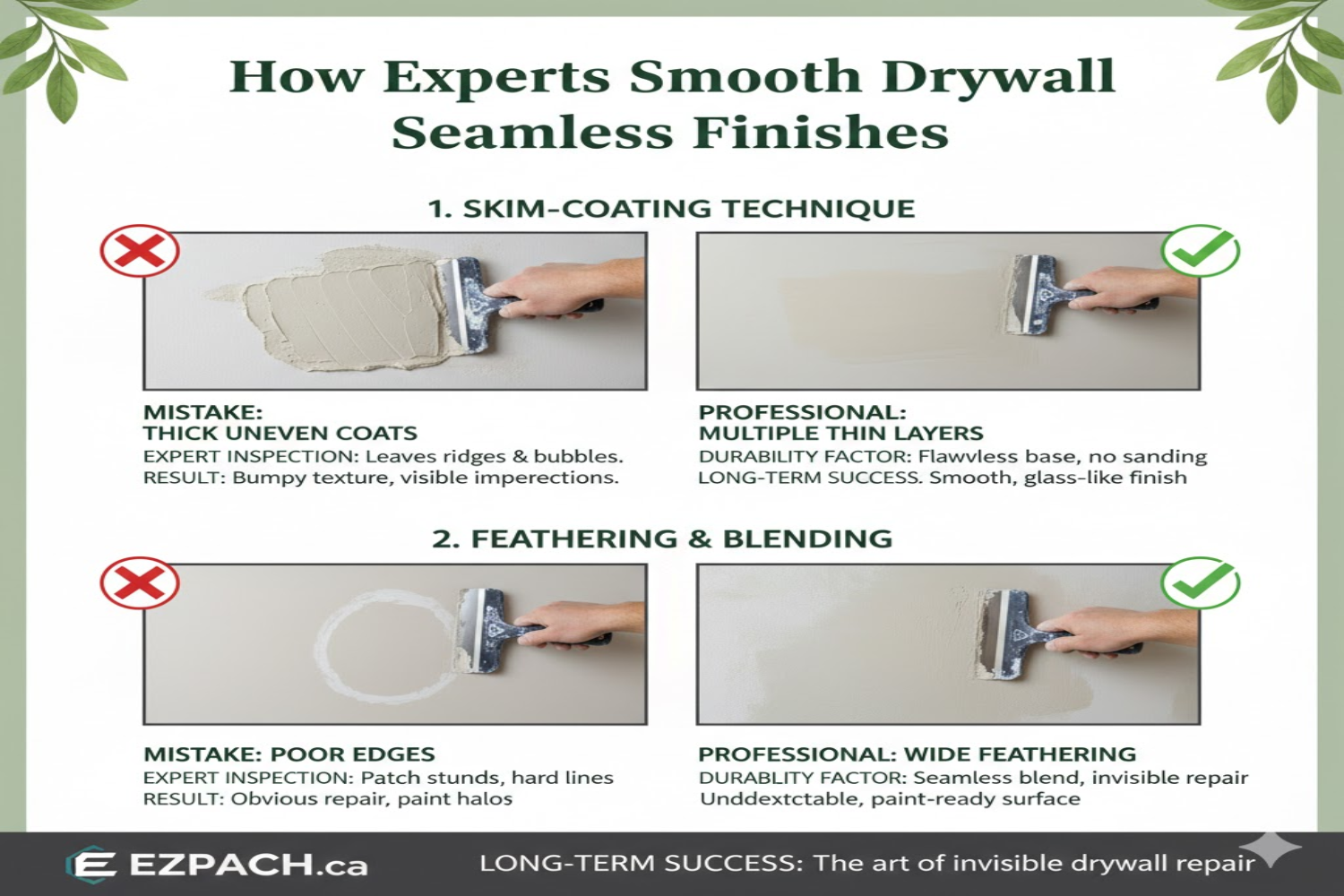
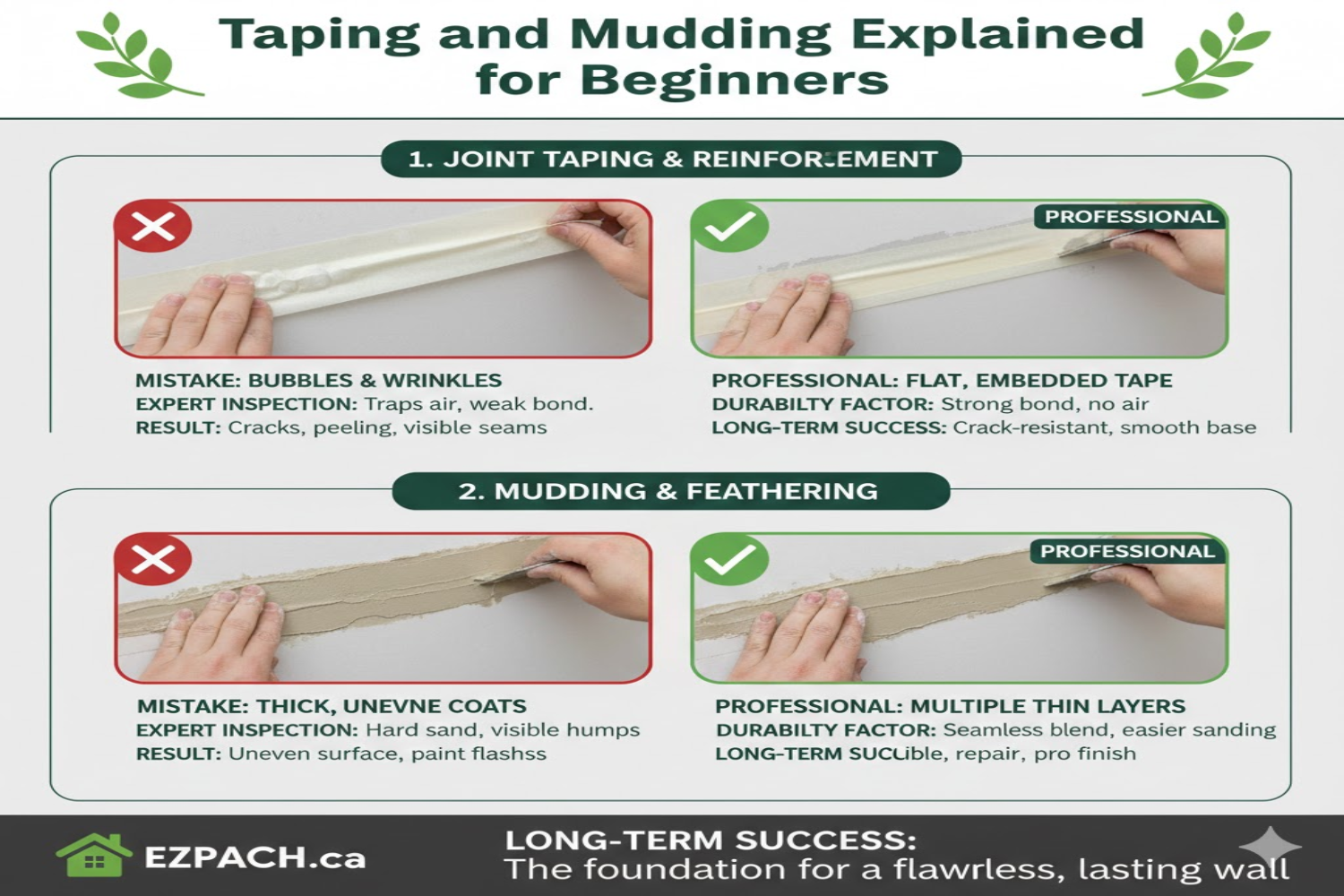
Improper joint treatment is a classic example of drywall installation errors that show up years later. Joints that are poorly taped or insufficiently coated may look acceptable initially. Over time, these joints begin to crack, separate, or telegraph through paint.
Joint compound shrinks as it dries, and inadequate layering can cause recessed seams. Seasonal humidity changes make these flaws more visible, especially under angled lighting. Correct joint taping and multiple compound layers are necessary for durability.
Using the Wrong Type of Drywall
Selecting the wrong drywall type is another major cause of drywall installation errors that show up years later. Standard drywall used in high-moisture areas absorbs humidity and weakens over time. This often leads to sagging, staining, or mold growth.
Fire-rated drywall installed incorrectly can also fail prematurely. Each drywall type is designed for specific conditions, and misuse shortens its lifespan significantly.
Moisture-Prone Areas
Bathrooms and kitchens require moisture-resistant drywall. Using standard drywall leads to long-term deterioration.
Fire-Rated Assemblies
Incorrect installation compromises fire resistance. This flaw may go unnoticed until inspections or emergencies occur.
Ceiling Applications
Lightweight drywall on ceilings can sag over time. Thicker panels are better suited for overhead installation.
Ignoring Expansion and Contraction Gaps
Drywall installation errors that show up years later often stem from ignoring natural material movement. Drywall expands and contracts with temperature and humidity changes. When panels are installed too tightly, stress builds at seams and edges.
Over time, this stress causes cracking around corners and ceilings. Small gaps allow movement without damage, but many installers overlook this detail. Proper spacing prevents long-term structural stress.
Inadequate Insulation Behind Drywall
Insulation plays a critical role in drywall stability, yet its absence leads to drywall installation errors that show up years later. Without insulation, walls experience greater temperature fluctuations. These changes increase expansion and contraction cycles.
Lack of insulation also allows moisture buildup inside wall cavities. Over time, this weakens drywall from behind, leading to sagging and surface degradation.
Poor Ceiling Drywall Support
Ceiling installations are especially vulnerable to drywall installation errors that show up years later. Gravity constantly pulls on ceiling panels, making proper support essential. Insufficient joist spacing or lightweight drywall increases the risk of sagging.
Ceiling drywall failures often appear years after installation, once fasteners loosen, and panels deform. Using appropriate thickness and support spacing prevents these delayed issues.
Incorrect Joist Spacing
Wide joist spacing reduces support. Over time, drywall begins to bow between framing members.
Thin Drywall Panels
Thin panels lack rigidity for ceilings. They gradually sag under their own weight.
Improper Fastening
Too few fasteners accelerate ceiling failure. Proper screw patterns are critical for long-term stability.
Moisture Exposure During Installation
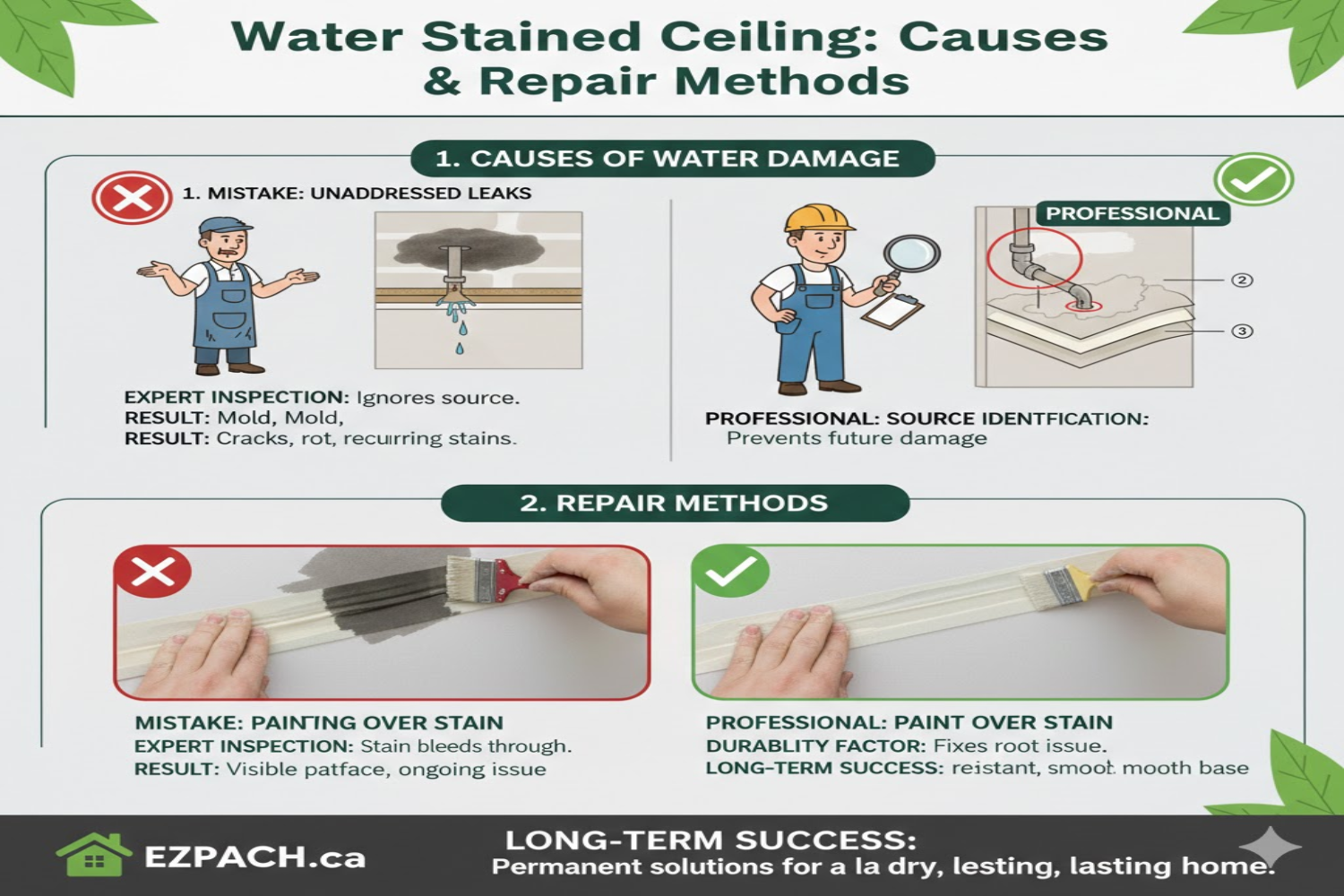
Moisture exposure during construction creates drywall installation errors that show up years later. Drywall that gets wet before installation may appear dry later, but remains structurally compromised. This hidden damage weakens the gypsum core.
Years later, affected areas may crumble, discolor, or develop mold. Protecting drywall from moisture throughout installation is essential for longevity.
Rushed Finishing and Sanding Practices
Rushed finishing is a subtle source of drywall installation errors that show up years later. Excessive sanding removes protective paper layers, weakening the drywall surface. Initially, your smooth walls later develop dents and uneven textures.
Insufficient drying time between coats also causes compound shrinkage. These flaws become more visible as paint ages and lighting conditions change.
Lack of Long-Term Planning in Drywall Installation
Failure to consider long-term use leads to drywall installation errors that show up years later. Walls supporting heavy fixtures require reinforcement during installation. Without proper backing, drywall weakens over time.
Electrical and plumbing access points also need reinforcement. Poor planning results in cracking, shifting, and patch failures years after completion.
Key issues include:
- No backing for wall-mounted fixtures
- Weak support around outlets
- Inadequate corner reinforcement
- Poor planning for future modifications
- Ignoring structural movement
Conclusion
Drywall installation errors that show up years later are often the result of small oversights during construction. These mistakes remain hidden until environmental factors expose them through cracks, sagging, or surface defects. Understanding these errors allows homeowners and professionals to take preventive measures early.
By focusing on correct materials, proper fastening, adequate insulation, and careful finishing, long-term drywall performance can be significantly improved. Avoiding drywall installation errors that show up years later ensures walls remain strong, smooth, and visually appealing for decades.
FAQs
1. Can drywall installation errors be fixed years later?
Yes, many issues can be repaired, but long-term errors often require extensive patching or replacement. Early detection reduces repair costs.
2. Why do drywall cracks appear after several years?
Cracks usually result from structural movement, poor joint treatment, or ignored expansion gaps that worsen over time.
3. Are drywall installation errors covered by warranties?
Most builder warranties are limited and may not cover issues that appear years later. Coverage depends on contract terms.
4. Do temperature changes affect drywall longevity?
Yes, repeated expansion and contraction accelerate damage when drywall is improperly installed.
5. Can paint hide drywall installation errors permanently?
Paint may temporarily conceal flaws, but errors typically reappear as the wall ages.
6. How long should drywall last if installed correctly?
Properly installed drywall can last 50 years or more with minimal maintenance.
7. Are ceilings more prone to long-term drywall errors?
Yes, ceilings experience constant gravity stress, making them more vulnerable to delayed failures.
8. Does professional installation reduce future drywall issues?
Professional installation significantly lowers the risk of drywall installation errors that show up years later.
Drywall Repair Halifax
EZ Patch offers clean, professional drywall, ceiling, plaster, and water damage repair services in Halifax with minimal mess and long-lasting results.
EZ Patch – Drywall Repair Experts
Trusted drywall repair professionals serving Halifax and nearby areas.
Drywall Patch & Repair
Seamless drywall repairs for holes, cracks, dents, and damaged walls.
Ceiling Repairs
Professional ceiling repair services for stains, cracks, and water damage.
Drywall Installation
Complete drywall installation services for renovations and new builds.
Taping & Mudding
Smooth, paint-ready wall finishes by expert drywall finishers.
Plaster Repair Experts
Precision plaster repair services while maintaining original wall texture.
Water Damage Repair
Drywall and ceiling restoration for properties affected by water damage.
Texture Matching
Accurate texture blending so repaired areas match existing finishes.
Installation, Repair & Removal
End-to-end drywall installation, repair, and removal solutions.