Plaster walls are often misunderstood because their damage patterns can look deceptively simple on the surface. Many homeowners, contractors, and even inspectors misread early warning signs, leading to incorrect repair decisions. These misunderstandings frequently result in recurring damage, higher repair costs, and hidden structural risks.
Understanding Common Misdiagnoses in Plaster Wall Damage is critical for protecting older buildings and preserving their structural integrity. What appears to be a harmless crack or cosmetic flaw can often indicate deeper issues such as moisture intrusion, substrate failure, or building movement. Without proper diagnosis, repairs become temporary fixes rather than long-term solutions.
What Makes Plaster Wall Damage Difficult to Diagnose
Plaster wall systems are layered and complex, making surface symptoms misleading. Unlike drywall, plaster interacts differently with moisture, temperature changes, and structural stress. This complexity is the primary reason why Common Misdiagnoses in Plaster Wall Damage occur so frequently.
Hidden Layers Behind the Surface
Plaster walls consist of lath, base coats, and finish coats that can fail independently. Surface cracks may not reflect deeper separation within the wall system. Misjudging which layer is compromised leads to incorrect repair strategies.
Age-Related Material Behavior
Older plaster behaves differently from modern materials. Over time, lime-based plaster hardens while becoming more brittle. Many professionals misinterpret age-related movement as structural failure when it is actually material fatigue.
Similar Appearance of Different Problems
Water damage, settlement cracks, and thermal expansion can look nearly identical. Without thorough inspection, professionals often apply the wrong fix. This similarity is one of the most common causes of plaster wall misdiagnosis.
Mistaking Structural Cracks for Cosmetic Damage
One of the most dangerous Common Misdiagnoses in Plaster Wall Damage is treating structural cracks as cosmetic flaws. This mistake can allow serious building movement to worsen over time.
Structural cracks usually follow specific patterns, such as diagonal lines near doors or windows. These cracks often widen over time and reappear after patching. When misdiagnosed, homeowners waste money on repeated cosmetic repairs.
Ignoring structural indicators can compromise safety and property value. Early professional evaluation prevents costly future reconstruction.
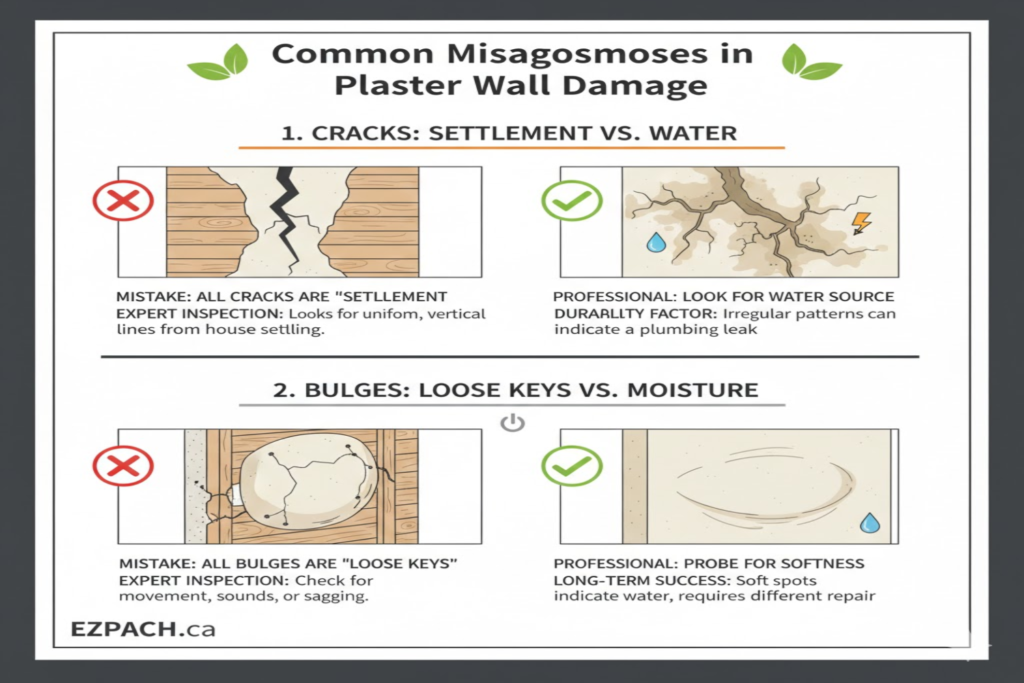
Assuming All Cracks Are Due to Normal Settlement
Settlement does occur in buildings, but not all cracks result from harmless movement. This assumption is a leading contributor to Common Misdiagnoses in Plaster Wall Damage.
Differential Settlement Issues
Uneven foundation movement creates stress points in plaster walls. These cracks are typically wider at one end and follow stair-step patterns. Treating them as normal settlement delays, necessary foundation repairs.
Seasonal Movement vs Permanent Shifts
Seasonal expansion causes hairline cracks that close and reopen throughout the year. Permanent shifts create cracks that grow steadily. Misreading seasonal movement as permanent damage—or vice versa—leads to unnecessary or insufficient repairs.
Repeating Crack Locations
When cracks return in the same location after repair, they indicate unresolved stress. Repatching without addressing the underlying cause only masks the real issue.
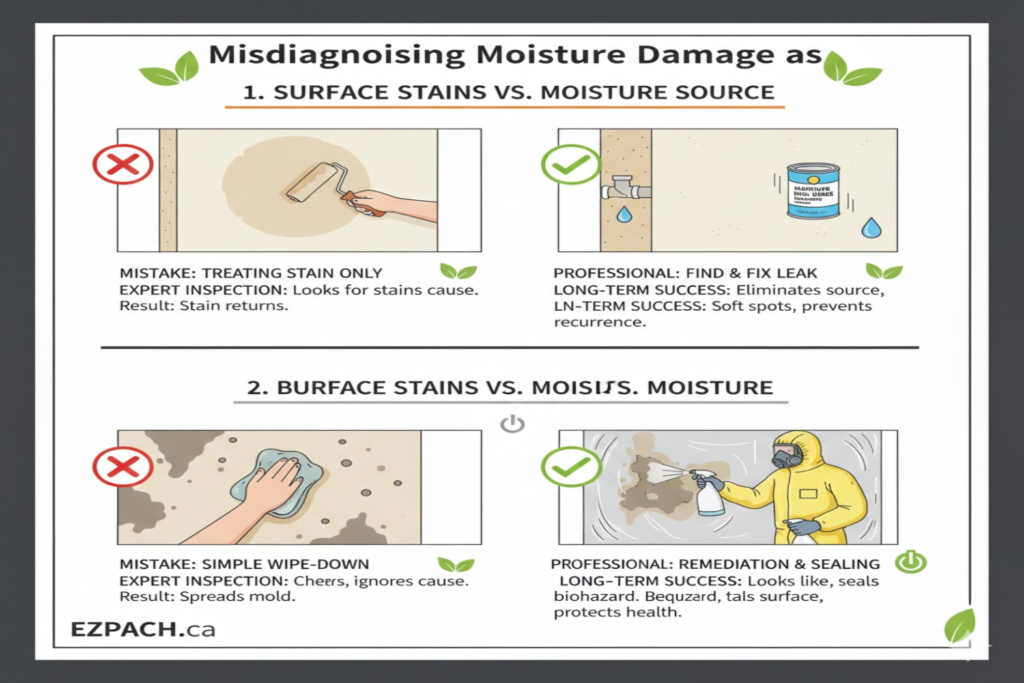
Misdiagnosing Moisture Damage as Surface Staining
Moisture-related plaster damage is one of the most frequently misunderstood problems. Many Common Misdiagnoses in Plaster Wall Damage involve mistaking water intrusion for cosmetic discoloration.
Water damage weakens plaster internally long before visible signs appear. Surface stains may fade temporarily after painting, but the underlying moisture remains. This leads to crumbling plaster, mold growth, and eventual wall failure.
Moisture sources such as roof leaks, plumbing issues, or condensation must be identified first. Without moisture control, plaster repairs will always fail prematurely.
Confusing Plaster Delamination with Paint Failure
Peeling or bubbling surfaces are often blamed on poor paint adhesion. In reality, these symptoms frequently indicate plaster delamination.
Delamination occurs when plaster separates from the lath beneath it. This separation creates hollow sounds and surface instability. Painting over delaminated plaster traps moisture and accelerates failure.
Correct diagnosis requires tapping tests, moisture readings, and sometimes exploratory openings. Mislabeling delamination as paint failure is a costly and recurring error.
Overlooking Hairline Cracks as Insignificant
Hairline cracks may appear harmless, but ignoring them is a classic example of Common Misdiagnoses in Plaster Wall Damage. These cracks often represent early stress signals.
Small cracks can expand due to vibration, humidity changes, or structural shifts. Over time, they compromise the integrity of the plaster finish. Early intervention prevents widespread cracking.
Professionals who dismiss hairline cracks risk allowing manageable issues to become extensive repairs.
Treating Lath Failure as Plaster Weakness
Plaster depends entirely on the stability of the lath behind it. When the lath fails, plaster loses its support regardless of surface condition.
Wood Lath Deterioration
Wood lath can rot, warp, or detach due to moisture exposure. Plaster cracks resulting from lath movement are often misdiagnosed as plaster fatigue. Repairing the surface without stabilizing the lath ensures failure.
Metal Lath Corrosion
In some structures, metal lath corrodes over time. Rust expansion causes cracking and bulging. Many misdiagnoses attribute this to settlement rather than corrosion.
Nail Fatigue and Fastener Loss
Fasteners holding the lath loosen over decades. This causes movement behind intact plaster. Without securing the lath, surface repairs remain temporary.
Assuming All Bulging Areas Are Structural Failures
Bulging plaster is alarming, but not always structural. One of the Common Misdiagnoses in Plaster Wall Damage is assuming immediate collapse risk.
Bulging can result from moisture absorption, thermal expansion, or adhesive failure. While dangerous in some cases, not all bulges indicate framing issues.
Accurate assessment distinguishes between localized failure and broader structural instability. This prevents unnecessary demolition.
Misinterpreting Efflorescence as Dirt or Mold
Efflorescence appears as white powdery residue on plaster surfaces. It is often mistaken for dust or mold. This residue indicates moisture migration through masonry or plaster. Cleaning without addressing moisture sources leads to recurring deposits and progressive damage. Correct identification helps prevent repeated cosmetic treatments that fail to stop deterioration.
Using Drywall Repair Methods on Plaster Walls
Using drywall repair techniques on plaster walls is a common mistake that leads to premature failure and visible defects. Plaster and drywall are fundamentally different materials, and treating them the same often results in cracking, poor adhesion, and uneven finishes. This issue is a frequent contributor to long-term wall deterioration in older homes.
- Material Incompatibility: Drywall joint compound does not bond properly with plaster surfaces, causing repairs to crack or separate over time. This incompatibility weakens the repair and reduces its lifespan.
- Shrinkage Issues: Drywall compounds shrink more as they dry, which creates visible depressions and hairline cracks on plaster walls. These flaws become more noticeable as lighting and temperature conditions change.
- Lack of Flexibility: Plaster walls require repair materials with higher flexibility to handle building movement. Drywall products are too rigid, leading to recurring damage.
- Poor Moisture Resistance: Many drywall repair products absorb moisture easily, making them unsuitable for plaster walls exposed to humidity. This increases the risk of delamination and surface breakdown.
- Short-Term Fixes: Drywall repair methods often mask plaster problems instead of addressing underlying issues. As a result, the same damage reappears, increasing repair costs over time.
Failing to Recognize Thermal Stress Damage
Temperature fluctuations affect plaster more dramatically than drywall. Expansion and contraction cause cracking that mimics settlement issues.
Misdiagnosing thermal stress as structural movement leads to unnecessary foundation inspections. Conversely, ignoring thermal effects results in repeated surface repairs.
Understanding building orientation, insulation, and heating patterns helps identify thermal damage accurately.
Ignoring Vibration-Related Damage
Vibration from traffic, construction, or mechanical systems can damage plaster over time. This cause is often overlooked.
Cracks caused by vibration tend to be irregular and widespread. Misdiagnosing them as poor workmanship ignores the root problem.
Addressing vibration sources prevents continuous plaster deterioration.
Common Diagnostic Errors Made During Quick Inspections
Rushed inspections are responsible for many Common Misdiagnoses in Plaster Wall Damage. Surface-only evaluations miss deeper problems.
Professionals must assess moisture levels, wall movement, and substrate condition. Skipping these steps leads to incomplete diagnoses.
Time pressure often sacrifices accuracy, resulting in recurring repair failures.
Key Warning Signs Commonly Misdiagnosed
- Cracks that reappear after repair indicate unresolved stress
- Soft or powdery plaster suggests moisture infiltration.
- Hollow sounds point to delamination.
- Bulging areas may indicate lath failure.
- Discoloration often signals hidden water damage.
How Professionals Should Properly Diagnose Plaster Wall Damage
Accurate diagnosis requires a systematic approach. Professionals must consider building age, materials, and environmental factors.
Moisture testing, sound testing, and movement monitoring improve accuracy. Documentation over time reveals patterns missed in single inspections.
Proper diagnosis reduces misdiagnosis-related repair failures.
Long-Term Consequences of Misdiagnosing Plaster Damage
Misdiagnosis leads to escalating repair costs and structural risk. Repeated cosmetic repairs weaken plaster further.
Hidden moisture encourages mold growth and wood decay. Over time, neglected issues compromise the entire wall system.
Correct diagnosis protects both safety and property value.
Preventing Common Misdiagnoses in Plaster Wall Damage
Education and patience are key to prevention. Understanding plaster behavior reduces assumptions.
Hiring specialists familiar with historic materials improves outcomes. Avoiding one-size-fits-all repair methods preserves wall integrity.
Prevention always costs less than correction.
Conclusion
Common Misdiagnoses in Plaster Wall Damage occur because plaster behaves differently from modern wall systems. Superficial similarities between different damage types often mislead even experienced professionals. Without careful evaluation, repairs address symptoms rather than causes.
Accurate diagnosis protects structural integrity, reduces long-term costs, and ensures repairs last. By recognizing early warning signs and understanding plaster behavior, homeowners and professionals can avoid costly mistakes. Correct diagnosis is not optional—it is essential for durable plaster wall restoration.
FAQs
1. Why do plaster wall cracks keep coming back after repair?
Recurring cracks usually indicate unresolved structural movement or lath instability. Cosmetic repairs alone cannot fix underlying stress.
2. Can plaster damage be mistaken for foundation problems?
Yes, thermal stress and moisture issues often mimic foundation-related cracks. Proper assessment distinguishes between them.
3. Is peeling paint always a paint issue on plaster walls?
No, peeling paint often indicates moisture or plaster delamination beneath the surface.
4. Are hairline cracks always harmless in plaster walls?
Hairline cracks can signal early stress or movement. Ignoring them may allow damage to worsen.
5. Why does plaster sound hollow in some areas?
Hollow sounds indicate separation between plaster and lath, a common sign of delamination.
6. Can drywall compound be safely used on plaster?
Drywall compound lacks compatibility with plaster and often causes cracking or bond failure.
7. How does moisture cause internal plaster damage?
Moisture weakens plaster structure and lath support before visible damage appears.
8. When should a plaster specialist be consulted?
Specialists should be consulted when cracks recur, moisture is present, or walls show bulging or delamination.
Drywall Repair Halifax
EZ Patch offers clean, professional drywall, ceiling, plaster, and water damage repair services in Halifax with minimal mess and long-lasting results.
EZ Patch – Drywall Repair Experts
Trusted drywall repair professionals serving Halifax and nearby areas.
Drywall Patch & Repair
Seamless drywall repairs for holes, cracks, dents, and damaged walls.
Ceiling Repairs
Professional ceiling repair services for stains, cracks, and water damage.
Drywall Installation
Complete drywall installation services for renovations and new builds.
Taping & Mudding
Smooth, paint-ready wall finishes by expert drywall finishers.
Plaster Repair Experts
Precision plaster repair services while maintaining original wall texture.
Water Damage Repair
Drywall and ceiling restoration for properties affected by water damage.
Texture Matching
Accurate texture blending so repaired areas match existing finishes.
Installation, Repair & Removal
End-to-end drywall installation, repair, and removal solutions.