Ceiling repair requires precision and careful attention to detail. Accurate alignment, flatness, and joint treatment determine the overall durability and appearance of the ceiling. Professionals follow specific tolerances to ensure repairs meet industry standards and long-lasting performance.
Proper adherence to tolerances minimizes cracks, sagging, and uneven surfaces. These tolerances also affect the finish quality, paint adhesion, and long-term stability of the ceiling. Understanding ceiling repair tolerances professionals follow provides insight into quality standards and maintenance expectations.
What Are Ceiling Repair Tolerances?
Ceiling repair tolerances are the allowable limits for deviations during repair work. These include variations in flatness, joint alignment, and finish. Tolerances ensure repairs are performed consistently and professionally.
Professional tolerances help prevent aesthetic defects and reduce future maintenance needs. Repairs outside tolerance can lead to visible ridges, cracks, or uneven surfaces. Following tolerances is essential for quality assurance.
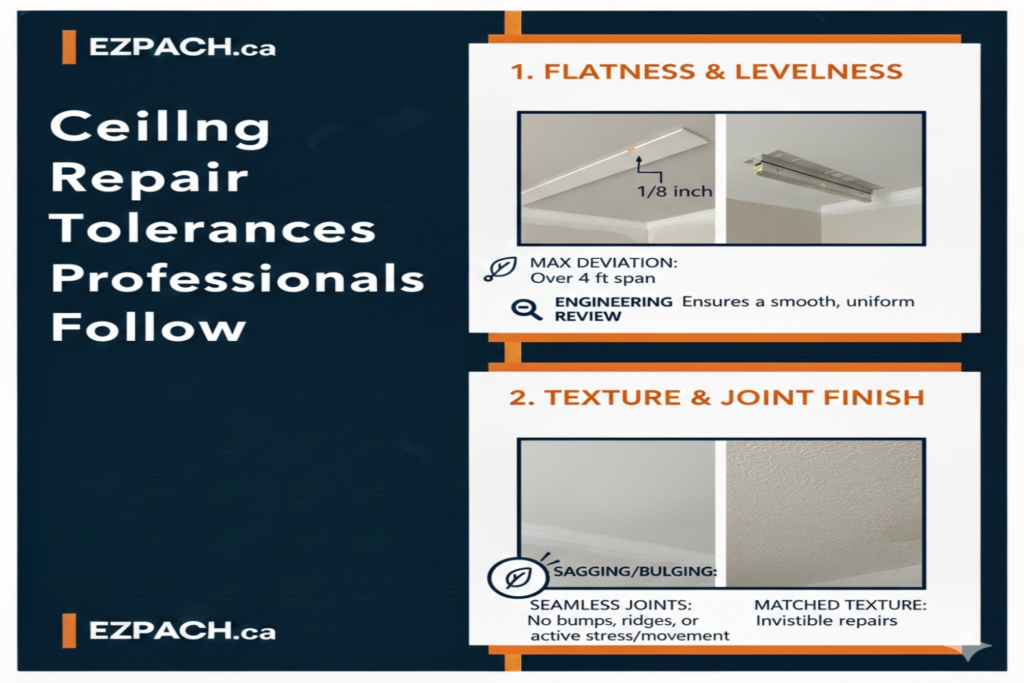
How Professionals Measure Flatness
Short paragraph: Flatness is a primary factor in ceiling repair quality. Professionals use tools like laser levels, straightedges, and string lines to ensure even surfaces.
Laser Levels
Laser levels provide a continuous reference across the ceiling. They allow detection of deviations down to millimeters. Laser-guided measurements reduce errors in large-scale repairs.
Straightedges and Chalk Lines
Straightedges help identify localized dips or ridges. Chalk lines provide visual guides for alignment. Combined, these tools ensure precise leveling.
Digital Sensors
Advanced sensors detect subtle variations in height. Professionals use these for high-precision work. Sensors improve accuracy for complex ceiling designs.
Joint and Seam Alignment Standards
Proper joint and seam alignment prevents visible defects and structural weaknesses. Professionals maintain strict tolerances when taping and finishing.
Staggered Joint Placement
Joints are staggered to avoid continuous stress lines. Proper staggering minimizes cracking risk. This technique is standard in professional repairs.
Seam Finishing Tolerances
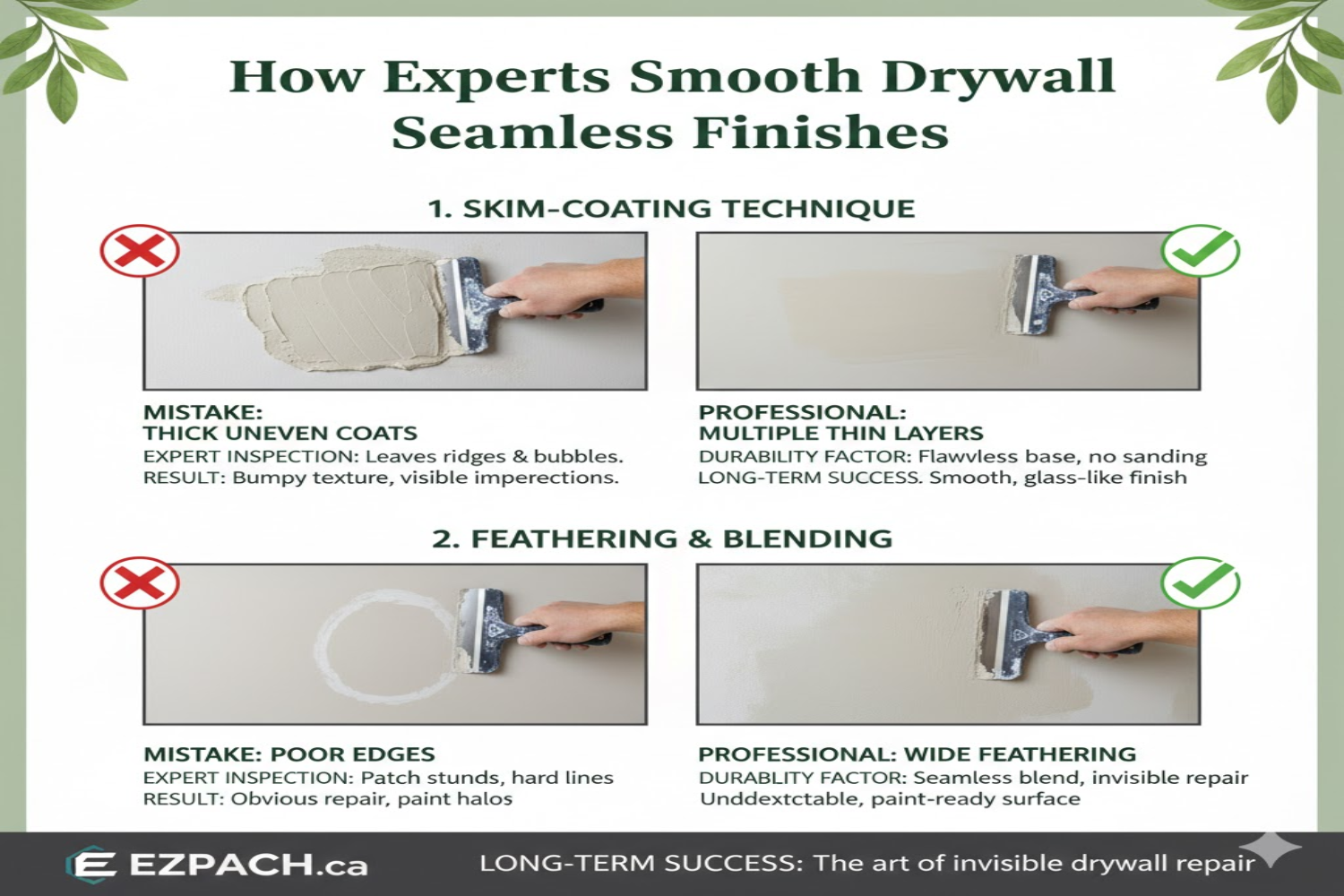
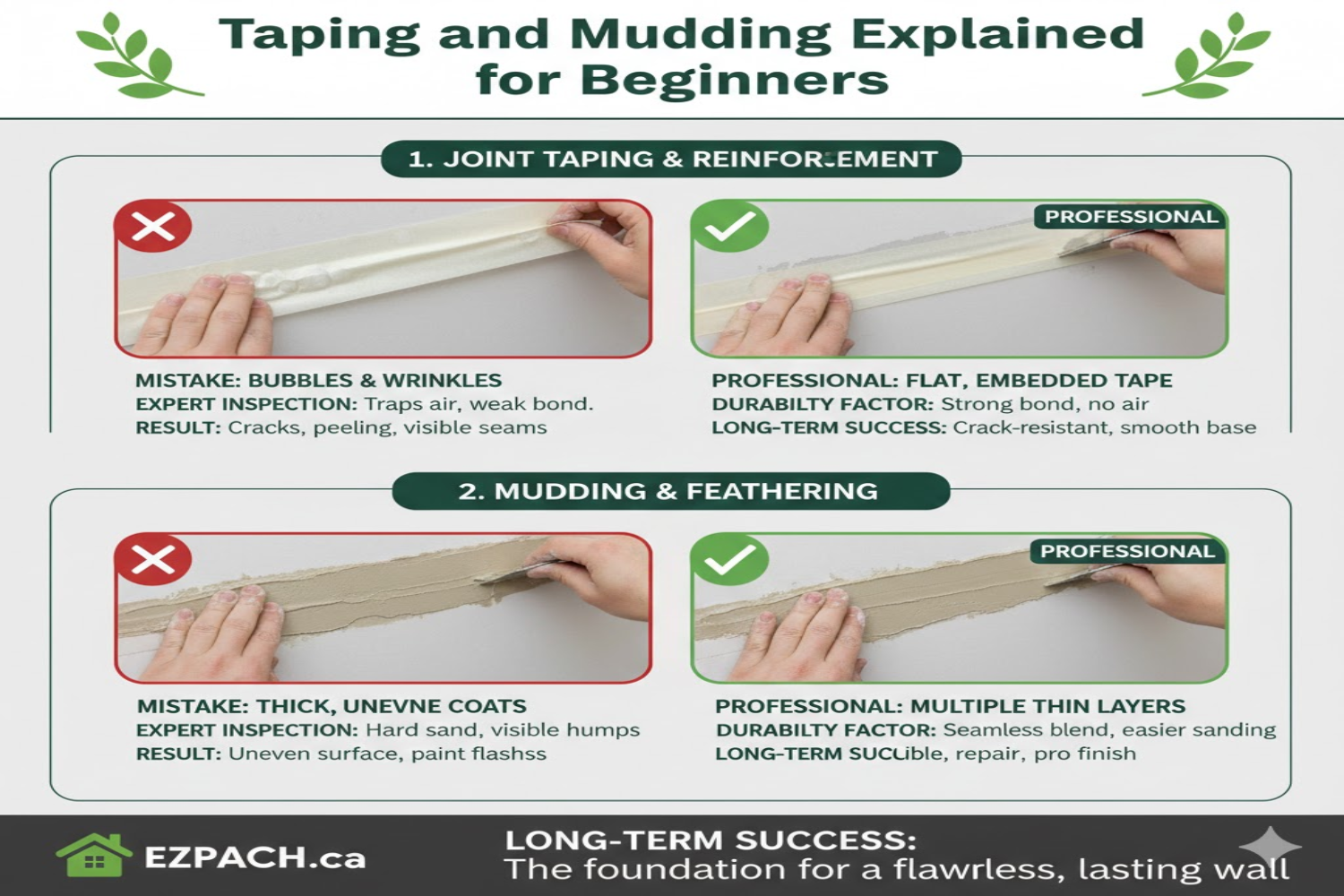
Taping and mudding are applied within tolerance limits. Excessive compound or uneven layers violate professional standards. Proper finishing ensures smooth surfaces.
Corner and Edge Alignment
Corners must meet flush with walls or adjacent panels. Misaligned edges are easily visible after painting. Professionals carefully align these areas to maintain uniformity.
How Material Choice Impacts Repair Tolerances
Different ceiling materials have unique tolerance requirements. Drywall, plaster, and specialty finishes all respond differently to stress and humidity. Professionals adjust their approach depending on the material type.
Using appropriate materials ensures tolerances are maintained. For example, lightweight drywall may sag if joints are not properly supported. Material choice directly affects achievable precision.
Environmental Factors Affecting Tolerance
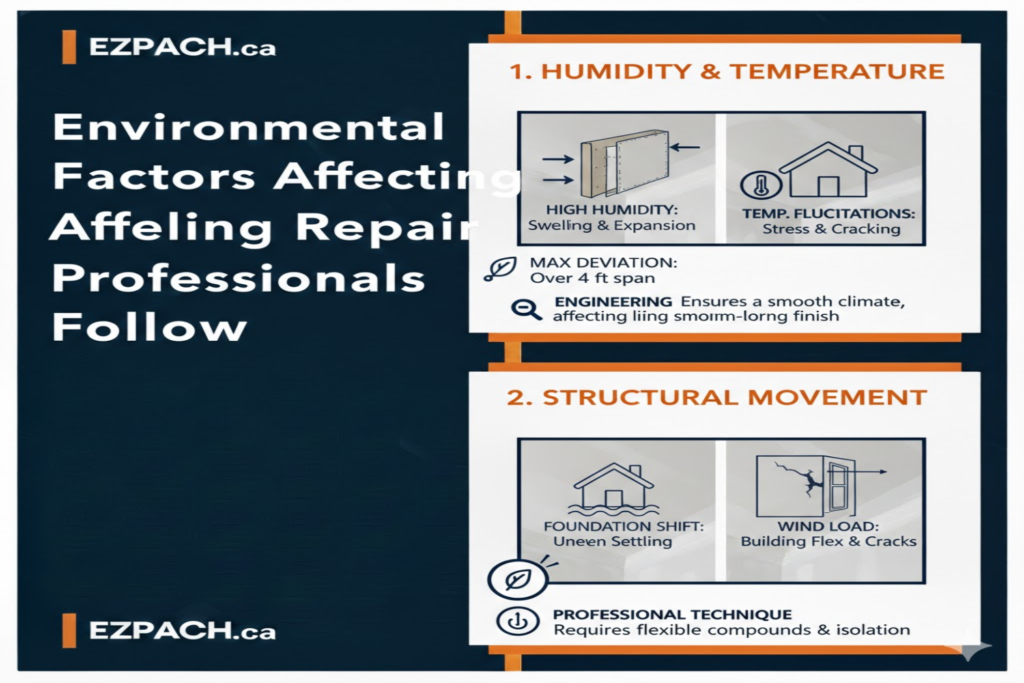
Temperature, humidity, and building movement affect ceiling repair tolerances. Professionals account for these factors during repair and finishing.
Moisture Control
High humidity can cause swelling or warping. Professionals allow for drying time to maintain flatness. Controlled conditions improve long-term stability.
Temperature Effects
Expansion and contraction may affect alignment. Professionals monitor temperature during installation. This ensures consistency within tolerance limits.
Building Settling
Older structures may have slight movements. Professionals measure and adjust for these variations. Accounting for settling prevents future cracks.
Cost Implications of Maintaining Tolerances
Maintaining professional tolerances may slightly increase labor and material costs, but it reduces long-term repair expenses. High-quality repairs avoid repeat work and cosmetic defects.
| Factor | Cost Impact | Notes |
| Laser Leveling Equipment | Moderate | Increases precision but adds upfront cost |
| Material Quality | Moderate | High-quality plaster or drywall |
| Labor Skill Level | High | Skilled installers are required |
| Environmental Control | Low to Moderate | Controlled workspace improves outcomes |
| Rework Prevention | High | Less long-term maintenance |
Common Professional Tolerances for Ceilings
- Maximum allowable deviation: 1/8 inch per 8-foot span
- Joint tape and mud thickness: ±1/32 inch uniformity
- Edge alignment with walls: flush within ±1/16 inch
- Corners and intersections: no visible gaps
- Texture or finish uniformity: ±1/32 inch variations
Tools and Techniques to Achieve Tolerances
Professionals rely on precise tools and methods to achieve ceiling repair tolerances. Proper technique ensures uniformity and reduces errors.
Laser and Leveling Tools
Used for continuous reference across the surface. Detects uneven areas for adjustment. Ensures ceiling meets flatness tolerances.
Proper Fastening and Support
Secures panels to the framing effectively. Reduces sagging or warping. Maintains long-term alignment.
Controlled Compound Application
Professional taping and mudding techniques ensure smooth seams. Prevents over-application that violates tolerances. Leads to flawless finishing.
Inspection and Correction
Continuous inspection allows adjustments in real time. Minor corrections keep repairs within tolerances. Final inspection confirms compliance with professional standards.
Signs That Tolerances Are Not Met
- Uneven or wavy surfaces
- Visible cracks along seams
- Corners not flush with walls.
- Nail or screw pops along the joint.
- Inconsistent texture or paint finish
Conclusion
Understanding the ceiling repair tolerances professionals follow is essential for achieving quality, durable, and visually appealing results. These tolerances ensure flatness, proper joint alignment, and consistent finishes. Without adherence to tolerances, repairs are prone to cracks, sagging, and recurring maintenance issues.
Investing in professional techniques and tools guarantees long-term stability and aesthetic excellence. Proper tolerance management saves time, reduces costs, and ensures that ceiling repairs meet industry standards. Contractors and homeowners alike benefit from attention to detail and quality execution.
Frequently Asked Questions (FAQs)
1. What is the standard flatness tolerance for ceilings?
Most professionals allow a maximum deviation of 1/8 inch over an 8-foot span. This ensures a visually smooth surface.
2. How does humidity affect ceiling tolerances?
High humidity can cause swelling or warping of drywall and plaster. Professionals control environmental conditions to maintain precision.
3. Are textured ceilings harder to repair within tolerance?
Yes, textures require more careful alignment and finishing. Professionals adjust technique to maintain uniformity.
4. Do older buildings have different tolerance requirements?
Yes, building settling can impact achievable tolerances. Professionals account for movement to prevent future issues.
5. Can a homeowner achieve professional tolerances without experience?
It is difficult; professional tools and skills are needed. Improper repairs often exceed tolerance limits.
6. How do misaligned joints affect ceiling longevity?
They concentrate stress, leading to cracks and sagging. Proper alignment improves durability.
7. Does ceiling height affect tolerance standards?
Yes, higher ceilings may require stricter tolerance control. Small deviations are more noticeable on large surfaces.
8. Are professional tolerances more important than material thickness?
Yes, alignment and tolerance adherence impact performance more than panel thickness. Correct installation ensures longevity.
Drywall Repair Halifax
EZ Patch offers clean, professional drywall, ceiling, plaster, and water damage repair services in Halifax with minimal mess and long-lasting results.
EZ Patch – Drywall Repair Experts
Trusted drywall repair professionals serving Halifax and nearby areas.
Drywall Patch & Repair
Seamless drywall repairs for holes, cracks, dents, and damaged walls.
Ceiling Repairs
Professional ceiling repair services for stains, cracks, and water damage.
Drywall Installation
Complete drywall installation services for renovations and new builds.
Taping & Mudding
Smooth, paint-ready wall finishes by expert drywall finishers.
Plaster Repair Experts
Precision plaster repair services while maintaining original wall texture.
Water Damage Repair
Drywall and ceiling restoration for properties affected by water damage.
Texture Matching
Accurate texture blending so repaired areas match existing finishes.
Installation, Repair & Removal
End-to-end drywall installation, repair, and removal solutions.