What many homeowners fail to realize is that the health of their ceilings is directly tied to the condition of the attic above. Poor attic ventilation is a silent culprit that leads to sagging, cracks, staining, mold growth, and even structural damage over time. While ceilings may appear intact, hidden moisture and heat accumulation in the attic slowly weaken the materials, leading to costly repairs.
How attic ventilation affects ceiling integrity is complex and multifaceted. Airflow, temperature regulation, and moisture control all play a role in maintaining a stable environment above the living spaces. Without proper ventilation, the buildup of heat and humidity can compromise drywall, plaster, insulation, and structural elements, creating long-term damage that is difficult and expensive to repair.
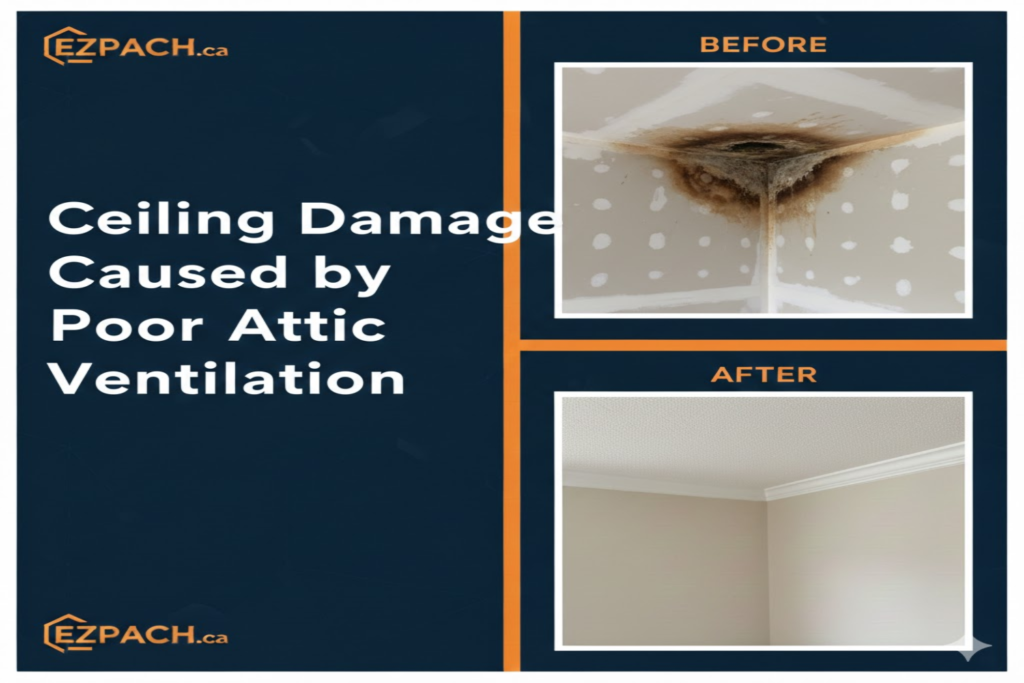
How Poor Attic Ventilation Leads to Ceiling Damage
What occurs in an attic with inadequate ventilation is an imbalance in air exchange. Warm, moist air from the living space rises and becomes trapped under the roof deck. During the winter, this warm air condenses on the colder surfaces of joists and rafters. In summer, trapped heat stresses wooden structural components, causing warping and weakening drywall.
Heat Buildup in the Attic
When attics lack proper ventilation, heat accumulates quickly, especially in the summer months. High temperatures cause roof decking and ceiling joists to expand. This expansion pushes against drywall or plaster, leading to bulges and potential sagging. Over time, repeated expansion and contraction can crack seams and compromise structural integrity.
Moisture Condensation
Moisture from showers, cooking, and even breathing rises into the attic. If ventilation is poor, this moisture condenses on cold surfaces such as rafters or roof decking. Prolonged exposure to condensation can weaken wooden joists, cause metal fasteners to corrode, and reduce drywall stability.
Insulation Degradation
Insulation in poorly ventilated attics can absorb moisture, compress, or deteriorate. This not only reduces its effectiveness but also creates an uneven ceiling surface below. Wet insulation contributes to the cycle of condensation and further ceiling damage.
Signs of Ceiling Damage from Poor Attic Ventilation
What homeowners should look for includes visible changes on the ceiling, but also subtle warning signs. Early detection prevents structural failure.
Common Signs
- Yellow or brown water stains on ceilings
- Sagging or bowing drywall, particularly near joists
- Mold or mildew growth along seams or corners
- Cracks along corners or load-bearing intersections
- Peeling paint, bubbling, or warped surfaces
- Musty odors indicate moisture accumulation
- Stains around light fixtures, vents, or attic entry points
- Uneven surface texture or “soft spots” under gentle pressure
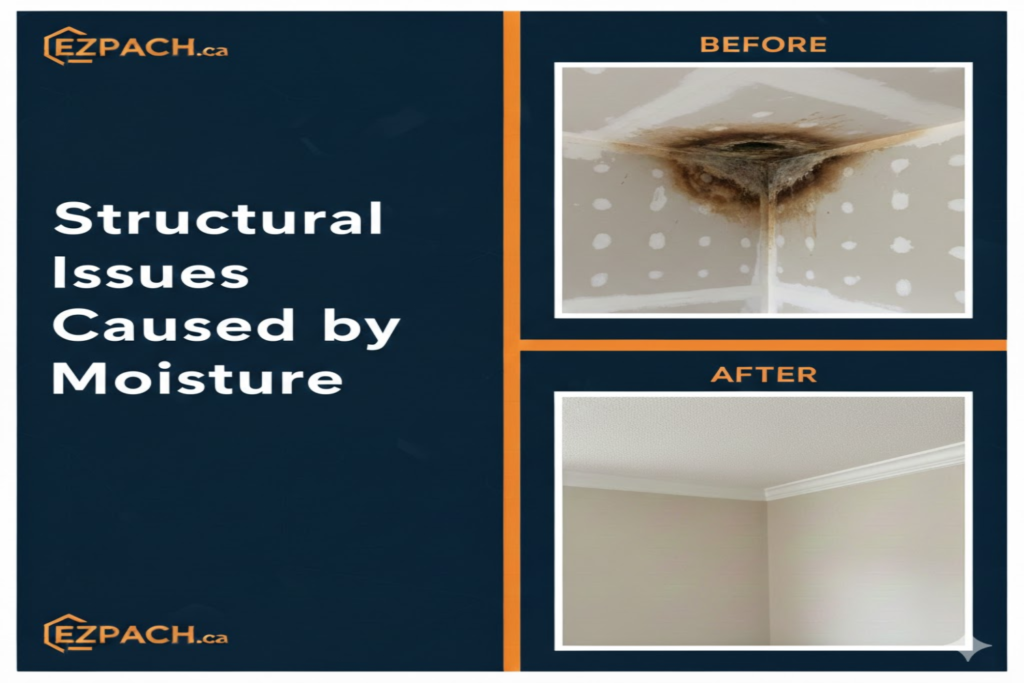
Structural Issues Caused by Moisture
How trapped moisture affects the ceiling structure can have serious safety implications. Wood joists can lose strength, metal fasteners can corrode, and drywall may deteriorate.
Joist Weakening
Wooden joists exposed to persistent moisture soften over time. Their load-bearing capacity is compromised, increasing the risk of sagging or collapse. Engineers may need to assess the extent of weakening before repairs.
Drywall Deterioration
Drywall absorbs moisture, causing seams to separate and panels to sag. Cracks may form along corners and seams, and paint may bubble or peel. Over time, sagging panels can detach entirely, especially in older homes.
Risk of Collapse
Neglecting early warning signs can result in localized or widespread ceiling collapse. Sagging may accelerate rapidly during wet or humid seasons. Structural evaluation is essential to prevent accidents.
Energy Efficiency and Insulation Concerns
How poor attic ventilation interacts with insulation also affects home energy efficiency. Trapped heat forces HVAC systems to work harder, increasing energy costs.
Consequences for Energy Efficiency
- Higher heating and cooling bills due to trapped heat
- Uneven temperature distribution across rooms
- Reduced insulation effectiveness due to moisture or compression
- Additional wear and tear on HVAC equipment
- Increased condensation is accelerating ceiling and insulation damage.
Heat Transfer Problems
Excess attic heat transfers to the living space, creating discomfort and uneven temperatures. Proper ventilation balances heat and moisture, protecting both the ceiling and energy bills.
Seasonal Insulation Challenges
In winter, warm air trapped beneath insulation leads to condensation on rafters and joists. In summer, trapped attic heat reduces the efficiency of insulation, causing higher cooling costs and stress on ceilings.
Preventive Measures for Ceiling Protection
What homeowners can do to prevent damage is to improve attic ventilation and maintain insulation. Proactive steps reduce the likelihood of ceiling deterioration.
Ridge and Soffit Vents
Ridge vents along the roof peak and soffit vents along the eaves allow air to flow continuously. Proper airflow reduces heat and moisture buildup, preventing sagging and mold formation.
Attic Fans
Attic fans expel hot, humid air efficiently, especially during summer. Thermostatically controlled fans turn on automatically, maintaining a balanced attic environment.
Vapor Barriers and Insulation
Installing vapor barriers prevents moisture from rising into the attic from the living space. High-quality insulation maintains consistent temperatures and protects the ceiling below.
Preventive Strategies
- Inspect vents regularly to ensure no blockages.
- Replace wet or compressed insulation.
- Seal gaps around pipes, vents, and chimneys
- Maintain consistent attic airflow with vents or fans
- Conduct seasonal inspections for moisture, mold, or heat buildup.
Repairing Damage Caused by Poor Ventilation
How ceiling repairs are approached depends on the type and extent of damage. Minor cracks may require patching, while sagging or mold-infested ceilings may need full drywall replacement.
Drywall and Plaster Replacement
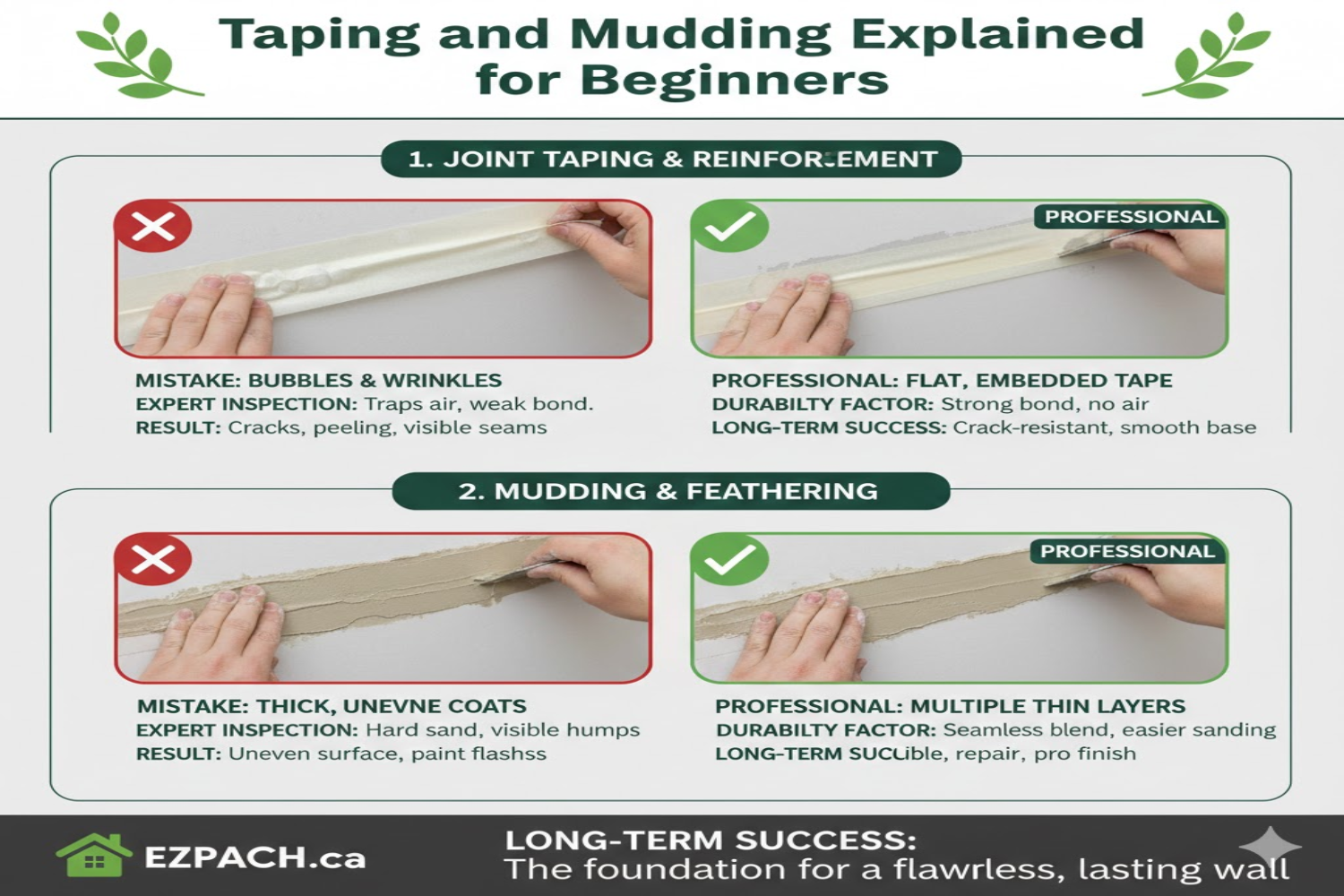
Sagging or water-damaged drywall may need partial or full replacement. Plaster ceilings may require reinforcement with mesh tape and multiple layers of compound.
Mold Remediation
Mold remediation is critical to protect indoor air quality. Professionals remove affected materials and treat remaining surfaces with anti-microbial solutions.
Long-Term Monitoring and Maintenance
What homeowners do to monitor attic conditions is essential to prevent recurring damage. Consistent inspections help catch problems early.
Seasonal Inspections
Check the attic at least twice yearly, before winter and summer. Look for condensation, sagging, mold, or insulation issues.
Moisture Sensors
Installing moisture sensors alerts homeowners to condensation or leaks early, preventing long-term damage.
Professional Evaluations
Contractors or structural engineers can identify hidden weaknesses in joists, insulation, or roof decking. Professional assessments ensure ventilation improvements are effective.
Emergency Situations Requiring Immediate Action
What constitutes an emergency includes visible sagging, pooling water, or rapid mold growth. Immediate action is critical to prevent accidents.
Emergency Indicators
- Sagging or bowing ceilings
- Rapidly spreading mold or water stains.
- Creaking or unusual noises under normal load
- Bulging drywall or plaster
- Excessive condensation around vents or light fixtures
Case Study: Real-World Ceiling Damage
How a poorly ventilated attic affected a mid-century home illustrates the dangers. The homeowner noticed minor yellow stains, which, over two years, developed into sagging and mold growth.
Assessment
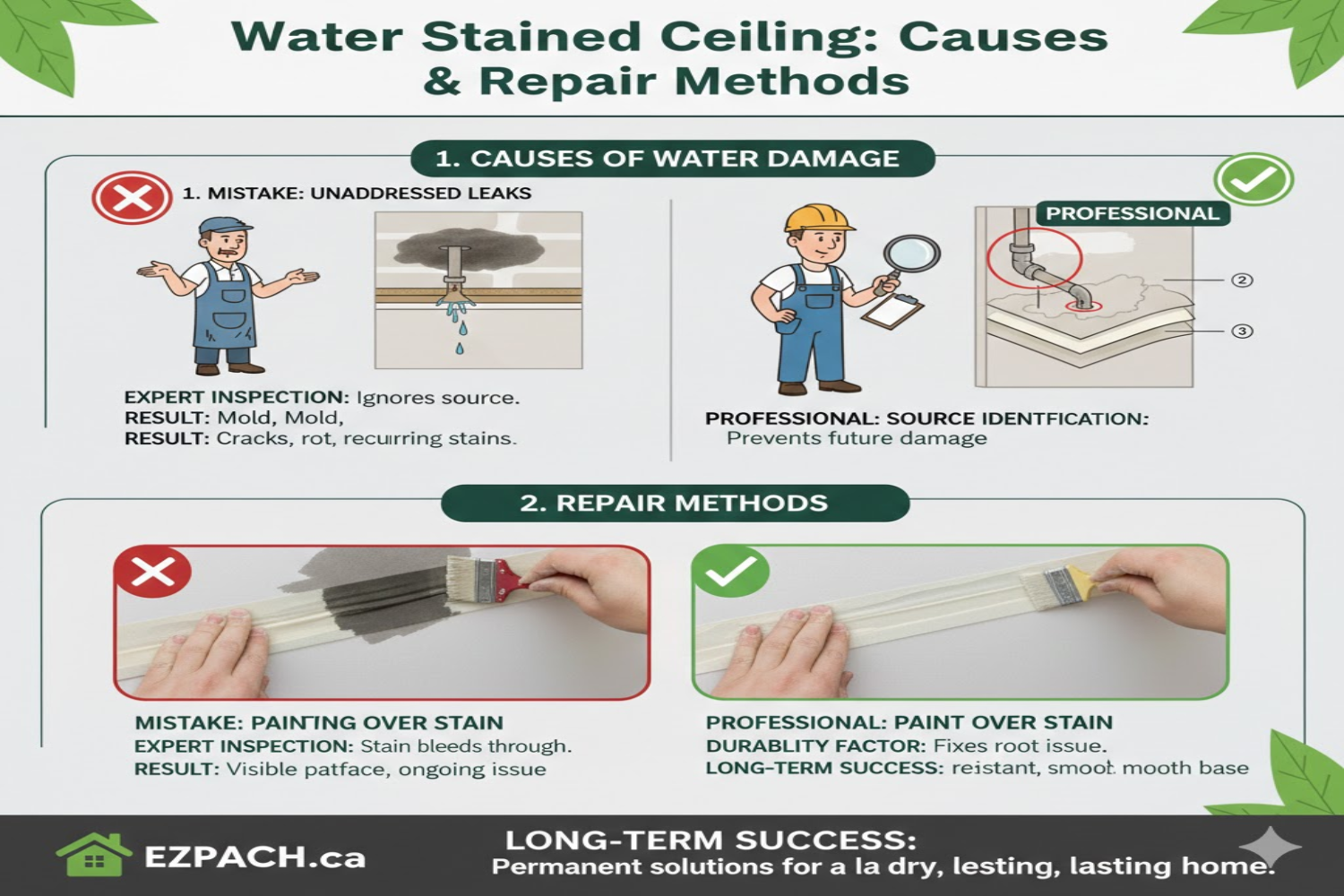
A contractor identified inadequate ridge and soffit ventilation and moisture buildup from the bathroom below.
Repair Strategy
- Remove damaged drywall and insulation
- Mold remediation
- Reinforce weakened joists
- Install ridge and soffit vents.
- Replace insulation and re-finish ceilings.
This case demonstrates how early detection and ventilation improvements can prevent long-term structural damage.
Conclusion
Ceiling damage caused by poor attic ventilation is preventable but often overlooked. Heat and moisture buildup can compromise drywall, plaster, insulation, and joists, leading to sagging, mold, and structural failure.
Homeowners can protect ceilings by improving ventilation, installing high-quality insulation, conducting regular inspections, and addressing minor issues promptly. Proper preventive maintenance ensures structural integrity, indoor air quality, and energy efficiency, while avoiding costly repairs in the future.
FAQs
1. Can poor attic ventilation cause mold on ceilings?
Yes, trapped moisture encourages mold growth, which can spread across drywall and plaster surfaces.
2. How quickly does ceiling damage occur from poor ventilation?
Damage may develop over months or years, depending on the attic’s humidity and airflow conditions.
3. Are all sagging ceilings caused by ventilation problems?
No, sagging can also result from water leaks, structural issues, or heavy fixture loads.
4. Will adding vents fix existing ceiling damage?
Improving ventilation prevents further damage, but existing sagging or mold requires repair.
5. Should insulation be replaced when repairing ventilation issues?
Yes, wet or compressed insulation should be replaced to maintain effectiveness.
6. Can poor ventilation affect energy bills?
Yes, trapped heat increases HVAC workload, raising heating and cooling costs.
7. Can ceiling cracks be repaired without fixing ventilation?
No, the underlying cause must be addressed to prevent recurring damage.
8. How often should attic inspections be performed?
At least twice yearly, ideally before summer and winter, to identify early signs of damage.
Drywall Repair Halifax
EZ Patch offers clean, professional drywall, ceiling, plaster, and water damage repair services in Halifax with minimal mess and long-lasting results.
EZ Patch – Drywall Repair Experts
Trusted drywall repair professionals serving Halifax and nearby areas.
Drywall Patch & Repair
Seamless drywall repairs for holes, cracks, dents, and damaged walls.
Ceiling Repairs
Professional ceiling repair services for stains, cracks, and water damage.
Drywall Installation
Complete drywall installation services for renovations and new builds.
Taping & Mudding
Smooth, paint-ready wall finishes by expert drywall finishers.
Plaster Repair Experts
Precision plaster repair services while maintaining original wall texture.
Water Damage Repair
Drywall and ceiling restoration for properties affected by water damage.
Texture Matching
Accurate texture blending so repaired areas match existing finishes.
Installation, Repair & Removal
End-to-end drywall installation, repair, and removal solutions.